anjir abdul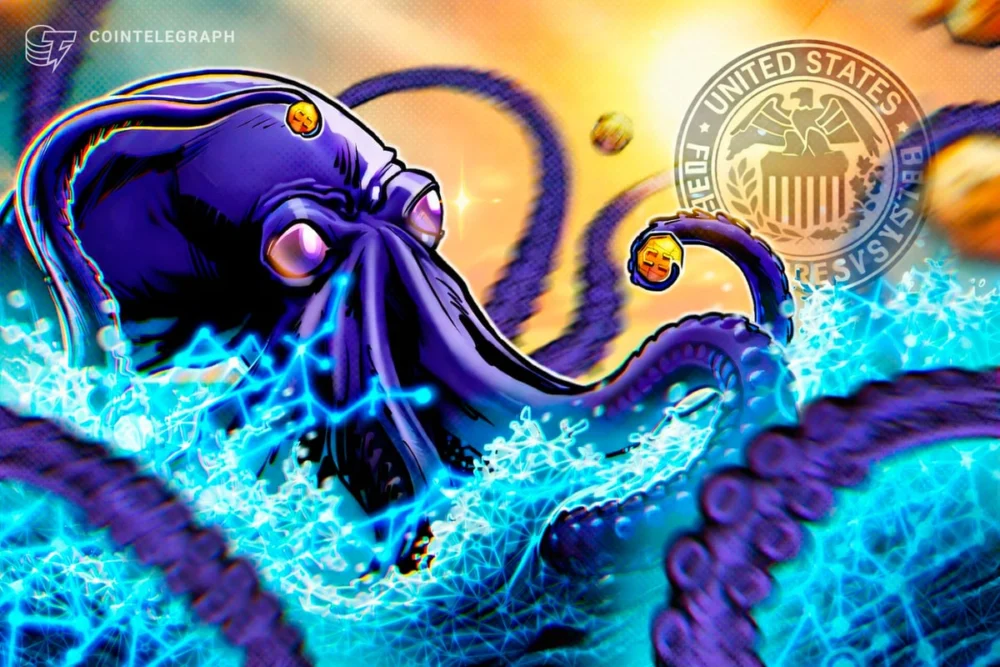
One of the most groundbreaking announcements came from Kraken, whose banking arm successfully secured direct access to the U.S. Federal Reserve’s payment rails. This milestone, achieved by Kraken Financial, marks a significant first for a crypto-native company, providing it with a limited-purpose master account with the Kansas City Federal Reserve Bank. The approval grants Kraken direct access to the Fedwire system, the real-time gross settlement network operated by the U.S. central bank. For the crypto exchange, this means the ability to process U.S. dollar payments directly with the Federal Reserve, circumventing the traditional reliance on intermediary commercial banks. This operational independence is a game-changer, addressing a longstanding challenge for the cryptocurrency industry, which has often struggled with securing stable and reliable banking partners due to regulatory uncertainties and perceived risks. By reducing its dependence on third-party financial institutions, Kraken gains greater control over dollar flows, potentially enhancing efficiency, reducing costs, and mitigating counterparty risks associated with traditional banking relationships. The approval, initially granted for one year with specific restrictions tailored to Kraken’s business model and risk profile, underscores a cautious yet progressive step by regulators to integrate compliant digital asset entities into the established financial framework. As Arjun Sethi, Kraken’s co-CEO, aptly stated, "With a Federal Reserve master account, we can operate not as a peripheral participant in the US banking system, but as a directly connected financial institution." This sentiment encapsulates the broader implications for the industry: a move towards mainstream acceptance and a more robust, resilient financial infrastructure for digital assets. This development is not merely an isolated win for Kraken but serves as a precedent, potentially paving the way for other crypto companies that meet stringent regulatory and operational standards to seek similar access, thereby accelerating the integration of digital and traditional financial systems. It also validates the efforts of states like Wyoming, which pioneered Special Purpose Depository Institution (SPDI) charters, under which Kraken Financial operates, aimed at bridging the gap between crypto and traditional banking. The direct access promises a future where crypto firms can offer more seamless, cost-effective, and secure fiat on/off-ramps, ultimately benefiting users and fostering greater liquidity in the digital asset ecosystem.

In parallel, the strategic financial management of Bitcoin mining companies remains a keen focus, particularly with Marathon Digital Holdings (MARA) addressing recent market speculation. MARA, one of the largest publicly traded Bitcoin miners, found itself clarifying its treasury strategy after its latest Form 10-K filing with the U.S. Securities and Exchange Commission (SEC) sparked concerns about a potential mass sell-off of its substantial Bitcoin reserves. The Form 10-K, an annual report that provides a comprehensive summary of a company’s financial performance, risks, and strategic outlook, detailed an expansion of MARA’s treasury strategy. This updated policy indicated flexibility to sell Bitcoin from its balance sheet if market conditions warranted such a move, alongside the allowance to purchase additional BTC periodically. This disclosure, however, was initially misinterpreted by some in the crypto community as a signal of an imminent liquidation of MARA’s impressive treasury, which currently holds over 53,000 BTC. Vice President Robert Samuels quickly stepped in to provide clarification, labeling the interpretation as "factually incorrect." Samuels emphasized that the filing was merely intended to signal enhanced treasury flexibility, allowing the company to strategically manage its assets based on evolving market dynamics and operational needs, rather than committing to an immediate sell-off. This flexibility is crucial for public mining companies that face significant operational costs, capital expenditures for new mining equipment, and the need to adapt to Bitcoin’s halving cycles, which reduce miner rewards. Marathon’s approach reflects a sophisticated treasury management strategy that balances its long-term conviction in Bitcoin (the "HODL" strategy) with the practical requirements of maintaining liquidity and funding growth initiatives. This clarification was essential to prevent undue market panic and to reassure investors about MARA’s commitment to its Bitcoin holdings while maintaining prudent financial management. The discussion around MARA’s strategy also subtly hints at the broader industry trend where some miners are exploring diversification into high-performance computing (HPC) and artificial intelligence (AI) infrastructure, leveraging their extensive energy and data center capacities. Treasury flexibility could be instrumental in funding such capital-intensive pivots, showcasing a dynamic evolution beyond pure Bitcoin mining.
Further strengthening the financial health of the Bitcoin ecosystem, Fold, a Bitcoin financial services company, announced the elimination of $66.3 million in convertible debt. This strategic move significantly de-risks its balance sheet and removes a potential source of future shareholder dilution. Convertible debt instruments, which can be converted into equity under certain conditions, often hang over a company’s valuation, posing a risk of increasing the number of outstanding shares and diluting existing shareholders. By retiring two outstanding convertible notes, Fold not only mitigated this risk but also freed up 521 Bitcoin that had previously been pledged as collateral for the debt. This infusion of unencumbered Bitcoin back into Fold’s treasury significantly strengthens its asset base, providing greater operational flexibility and financial resilience. The timing of this move is particularly strategic as Fold prepares for the rollout of its new Bitcoin rewards credit card, which will enable users to earn BTC on everyday purchases through the Visa network. A robust balance sheet is critical for supporting such growth initiatives, instilling confidence in partners and customers, and navigating the competitive landscape of financial technology. Fold has been a pioneering entity in making Bitcoin accessible through rewards programs, and its public listing on the Nasdaq in February 2025 via a SPAC merger with FTAC Emerald Acquisition solidified its position as one of the first publicly traded Bitcoin-focused financial services companies. This debt elimination underscores a broader industry trend of crypto firms prioritizing financial prudence and stability, especially after periods of market volatility, to ensure long-term viability and sustainable growth.

Finally, the New York Stock Exchange (NYSE) is making significant strides in its tokenization efforts, a push that could profoundly accelerate institutional adoption of blockchain-based markets, according to analysts like Reid Noch, a strategist at TD Securities. The NYSE recently proposed developing an alternative trading system (ATS) specifically designed for tokenized equities and exchange-traded funds (ETFs). This innovative framework aims to leverage blockchain technology to enable 24-hour trading and near-instant settlement for these tokenized assets, while crucially operating under existing market rules and regulatory oversight. The current traditional financial markets typically operate on limited hours and a T+2 settlement cycle, meaning transactions are finalized two business days after they are executed. Tokenization, by contrast, offers the promise of continuous trading and atomic settlement, drastically improving market efficiency and liquidity. Noch characterized the NYSE’s model as a "2.0 evolution" of market infrastructure, emphasizing its intelligent design that integrates blockchain’s benefits without dismantling established regulatory and operational safeguards. Under this proposed system, custody and settlement functions would continue to reside with the Depository Trust & Clearing Corporation (DTCC), the central clearinghouse for U.S. securities, ensuring continuity and security within existing frameworks. Furthermore, trading would still adhere to National Best Bid and Offer (NBBO) requirements, which mandate that brokers execute trades at the best available prices, maintaining market fairness and transparency. This hybrid approach, combining blockchain’s technological advantages with the proven stability of traditional financial plumbing, is seen as a pragmatic pathway to attracting greater institutional participation. By offering the benefits of tokenization within a familiar and regulated environment, the NYSE’s initiative could unlock vast pools of institutional capital, driving liquidity and innovation across global financial markets. It represents a significant step towards a future where traditional assets are seamlessly traded on blockchain rails, bridging the gap between conventional finance and the burgeoning digital economy.
Collectively, these developments — Kraken’s direct Fed access, MARA’s clarified Bitcoin strategy, Fold’s debt elimination, and the NYSE’s tokenization push — paint a vivid picture of a digital asset sector rapidly maturing and strategically integrating with the global financial landscape. Despite ongoing market corrections and broader industry headwinds, the foundational infrastructure for a more efficient, inclusive, and technologically advanced financial system is steadily being laid. These movements underscore a concerted effort from both crypto-native companies and traditional financial giants to harness the power of blockchain technology, ensuring that digital assets are not just a peripheral phenomenon but an integral and increasingly indispensable component of the future economy. The trajectory is clear: the convergence of traditional finance and digital assets is not merely an aspiration but an accelerating reality, promising transformative changes for investors, institutions, and the global financial system at large.