Faris Adani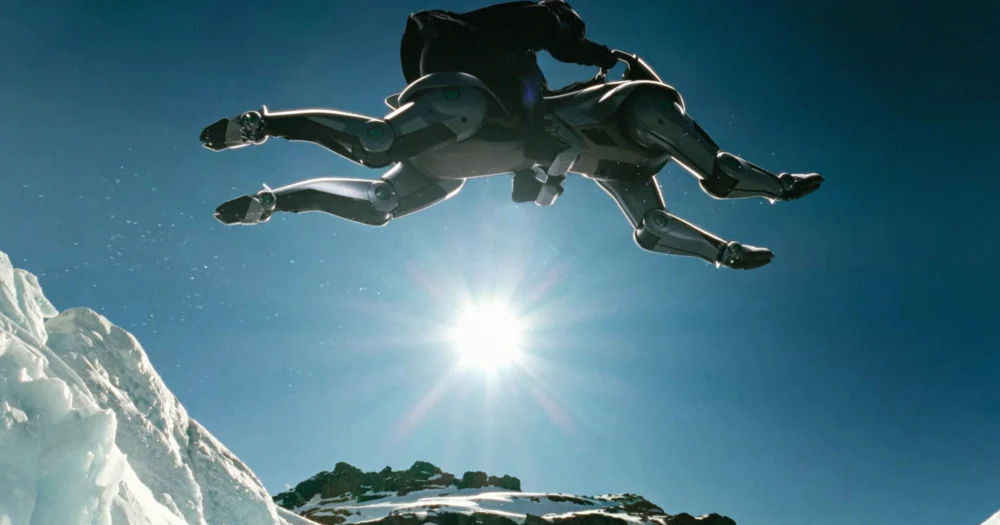
Kawasaki Heavy Industries, a name synonymous with high-performance motorcycles and heavy machinery, has dramatically accelerated its ambitious plans to bring the futuristic Corleo, a rideable, four-legged robotic horse, from concept to reality, transforming initial skepticism into a tangible development roadmap. It was only in April that the global industrial giant first tantalized the world with a stunning, almost entirely computer-generated video showcasing a bizarre yet captivating concept: a robotic equine capable of navigating the planet’s most treacherous terrains. The CGI spectacle depicted Corleo with remarkable agility, effortlessly traversing jagged rocky landscapes, gracefully leaping over treacherous icy crevasses, maintaining perfect footing across vast snowy expanses, and silently winding through dense, dark forests at night – all while comfortably carrying an adult rider on its back and purportedly powered by an advanced hydrogen fuel cell. This initial unveiling, accompanied by a full-scale static model at a major exposition, came with a seemingly distant promise of production readiness by 2050, leading many, including us, to categorize it as little more than an imaginative "vaporware" fantasy, a delightful but improbable vision of a far-off future.
However, Kawasaki has now surprised the industry by announcing a profound shift in its strategy, confirming that it has officially commenced work on transforming this audacious vision into a concrete engineering project, decades ahead of its original timeline. This pivotal announcement marks a significant commitment, moving Corleo from the realm of speculative design into active research and development. To underscore this commitment, the company has established a dedicated "Safe Adventure Business Development Team," a multidisciplinary unit tasked with the monumental challenge of translating the conceptual prowess of Corleo into a functioning, rideable machine. The immediate objective for this newly formed team is to unveil a working prototype at the highly anticipated Expo 2030 in Riyadh, Saudi Arabia, a global stage renowned for showcasing groundbreaking innovations. Furthermore, Kawasaki has set an ambitious target for Corleo’s commercial availability, aiming to have the unusual motorcycle on legs available for purchase by 2035. This revised timeline, while still a decade away, represents a massive leap forward and a testament to Kawasaki’s confidence in the rapid advancements within robotics and sustainable energy, strategically positioning them to avoid the common pitfalls of overly optimistic, near-term tech predictions often seen from figures like Elon Musk.
The decision to power Corleo with a hydrogen fuel cell is a critical design choice, signaling Kawasaki’s commitment to sustainable and high-performance mobility solutions. Unlike traditional battery-electric systems, hydrogen fuel cells offer a significantly higher energy density, which translates to longer operational ranges and quicker refueling times – crucial attributes for a vehicle designed for extended exploration in remote and unserviced areas. This choice not only aligns with global decarbonization efforts but also provides a practical advantage in scenarios where charging infrastructure is non-existent. The environmental benefits are clear, with water being the primary byproduct, making Corleo an attractive option for eco-tourism and adventure without the carbon footprint of internal combustion engines. This contrasts sharply with the limitations of current battery technology, which often struggles with weight, charging duration, and performance degradation in extreme temperatures, all factors that would severely hamper Corleo’s intended use in diverse and challenging environments.
The very essence of Corleo’s design – its four-legged locomotion – is a direct response to the limitations of wheeled vehicles in extreme off-road conditions. While ATVs and traditional motorcycles excel on certain rough terrains, they struggle significantly with vertical obstacles, deep snow, loose rock, mud, and highly uneven surfaces that require dynamic adaptation. Legs, inspired by nature’s most effective movers, offer unparalleled agility, stability, and the ability to step over, rather than push through, impediments. This biomimicry is not merely aesthetic; it represents a fundamental engineering advantage, allowing Corleo to mimic the natural gait and balance of animals, distributing weight dynamically, absorbing shocks, and maintaining traction across a multitude of complex topographies. The promise is a vehicle that can traverse landscapes previously accessible only on foot or by highly specialized, slow-moving crawler machines, opening up new frontiers for exploration and utility.
Kawasaki envisions Corleo serving a dual purpose: first, as a thrilling adventure vehicle for thrill-seekers and outdoor enthusiasts, offering an entirely new way to experience nature. Imagine traversing pristine wilderness, scaling moderate inclines, or exploring remote trails with the assistance of a powerful, intelligent robotic companion. This application taps into the growing market for experiential tourism and adventure sports, providing a unique blend of high-tech excitement and environmental immersion. Beyond leisure, the company also highlights a more pragmatic and impactful application: to "eliminate mountain accidents and make mountainous regions safe and enjoyable for everyone." This suggests Corleo could play a vital role in search and rescue operations, transporting injured individuals or supplies in treacherous areas where conventional vehicles cannot operate. It could also assist mountain guides, park rangers, and researchers in navigating difficult terrains, carrying heavy equipment, and providing a stable platform for observation or data collection, thereby significantly enhancing safety and operational efficiency in challenging environments.

The engineering hurdles to transform the CGI marvel into a functional reality are immense, requiring breakthroughs across multiple disciplines. Paramount among these is achieving the kind of dynamic balance and agility demonstrated in the marketing video, especially with the added complexity of a human rider. This demands sophisticated control algorithms, advanced sensor fusion (Lidar, cameras, IMUs), and robust mechanical design to manage the degrees of freedom inherent in a four-legged system. Power and endurance present another significant challenge; while hydrogen offers energy density, the efficiency of converting that energy into sustained, powerful locomotion in real-world conditions must be optimized. Furthermore, the payload capacity must be sufficient to carry a rider and potentially gear, all while maintaining the promised agility and stability. Durability is non-negotiable for a machine designed for harsh environments, requiring resilient materials, weatherproofing, and ease of maintenance in remote locations. Finally, the cost of developing and eventually manufacturing such a complex machine will be substantial, posing a significant challenge for market accessibility.
An intriguing facet of Kawasaki’s development plan is the simultaneous creation of a "riding simulator that enables riding experience of the four-legged mobility vehicle." This simulator is not merely a novelty; it’s a crucial component of the development ecosystem. It will allow engineers to refine control algorithms, test different gaits and responses to terrain variations, and gather invaluable data on rider interaction and comfort long before a physical prototype is fully robust. For future users, it offers a safe and controlled environment to learn how to operate Corleo, understand its unique dynamics, and become proficient in navigating various simulated environments, ensuring a smoother and safer transition when the actual vehicle becomes available. This also allows for iterative user experience design, tailoring the robot’s responses to human input and expectations.
Despite the inherent challenges, the broader landscape of robotics offers compelling reasons for optimism regarding Corleo’s feasibility. The past decade has witnessed an explosion in advanced robotics, with companies like Boston Dynamics pushing the boundaries of what humanoid and quadruped robots can achieve. Their humanoid robot, Atlas, performs incredible feats of agility, including breakdancing, parkour, and complex manipulation, while their quadruped robot, Spot, effortlessly navigates rugged industrial sites, climbs stairs, and can even herd sheep. These developments demonstrate that dynamic balance, complex locomotion, and environmental perception in robots are no longer science fiction but rapidly evolving realities. Corleo builds upon these foundational advancements, applying them to a novel form factor with the explicit purpose of human transport and assistance in challenging terrains. The ability of robots to effortlessly navigate rugged landscapes and perform intricate tasks suggests that the underlying technologies required for Corleo’s ambitious capabilities are maturing at an unprecedented rate.
For now, a healthy dose of skepticism remains prudent. The journey from a promising concept to a reliable, mass-produced product is fraught with unforeseen obstacles. However, it’s impossible to deny the surge of excitement that accompanies Kawasaki’s renewed commitment. The prospect of a robotic horse that can be ridden into the sunset, much like Aloy, the protagonist of the popular "Horizon" video game series, resonates deeply with a collective yearning for adventure and technological wonder. Corleo represents more than just a new mode of transport; it embodies a vision of expanded human capability, sustainable exploration, and a future where the wild frontiers become more accessible and safer for everyone, all through the intelligent fusion of biomimicry and advanced robotics.