Faris Adani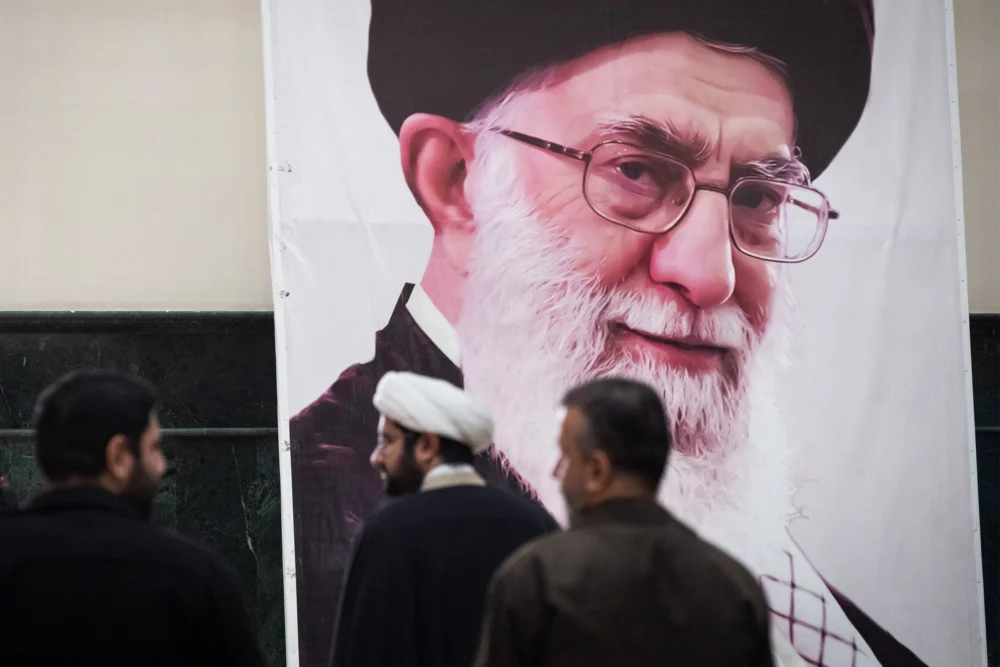
The digital realm of prediction markets, a burgeoning frontier where users bet on the outcomes of future events, found itself embroiled in a maelstrom of controversy and public outcry this past weekend, as the platform Kalshi refused to honor a staggering $54 million payout linked to the demise of Iran’s Supreme Leader, Ayatollah Ali Khamenei. The decision, which left thousands of jubilant bettors suddenly empty-handed, has ignited a fierce debate over the ethics, rules, and fundamental integrity of these innovative, yet often opaque, financial instruments.
The dramatic chain of events unfolded against a backdrop of escalating geopolitical tensions. Reports from Al Jazeera and other international news outlets confirmed the assassination of Ayatollah Ali Khamenei in a targeted aerial strike attributed to joint US and Israeli forces. For many, particularly those who had placed wagers on Kalshi, this seismic development seemed to be a clear, unambiguous trigger for a monumental windfall. One Israeli-American business executive, whose identity was protected by the Washington Post, recounted his initial euphoria. His modest $3,460 wager, an improbable long-shot, had seemingly transformed into a lucrative $63,000 payout. He envisioned a celebratory trip to Courchevel, an upscale ski resort, a testament to his foresight in predicting such a momentous political upheaval. Yet, as he and countless others would soon discover, their projected fortunes were to evaporate in a bureaucratic — or perhaps ethical — quagmire.
Kalshi, a prediction market platform that boasts approval from the Commodity Futures Trading Commission (CFTC) for its "event contracts," had hosted a market asking if Ayatollah Khamenei would be "out" as supreme leader by a specific date. The wording, seemingly straightforward, became the focal point of the ensuing storm. For bettors, "out" unequivocally encompassed death, resignation, removal, or any other scenario that would see him no longer in power. The assassination, a definitive end to his tenure, therefore, logically triggered the "yes" outcome. However, Kalshi, after allowing the market to accrue millions of dollars in wagers and attracting a diverse pool of participants, suddenly invoked a surprising rationale: Khamenei’s death did not "really" count as an "ousting," and, furthermore, the platform does not permit bets "directly tied to death."
This ex-post-facto interpretation sparked an immediate and furious backlash. The executive, now stripped of his anticipated winnings, lamented to the Washington Post, "I was booking my trip to Courchevel. Then they changed the rules… and everybody got screwed." The sentiment was echoed across social media platforms, particularly X (formerly Twitter), where disgruntled traders vented their outrage. "I’m so disgusted I’m honestly put off from Prediction Markets for the near future at least," raged one user, identified as @JesusMartinez, in a tweet that quickly garnered attention. "You owe me $2,500+ and you owe many innocent, casual traders millions more." Another user, @MatterAfloat, ominously warned, "@Kalshi I’ll be steering people towards polymarkets. There’s an inherent cost to taking the ‘optical’ moral high ground." The reference to Polymarket, a decentralized prediction market, highlighted the growing distrust in centralized platforms and the appeal of alternatives perceived to be more transparent and immutable in their contract resolutions.
Kalshi’s decision to void the contracts, while reportedly reimbursing all bettors at even odds (meaning their initial investment was returned), did little to quell the indignation of those who saw their potential multi-million dollar jackpots vanish. The core of the anger lay in the perception of a goalpost shift. Why was the market allowed to exist, attract vast sums, and mature to resolution if its underlying premise was deemed ethically problematic or outside the platform’s terms of service after the triggering event occurred? Critics argued that if Kalshi had a "no bets on death" policy, such a market should never have been opened in the first place, or at least should have had explicit clauses clarifying the definition of "out" to exclude natural death or assassination from the outset. The ambiguity, they contended, was exploited, leading to a retroactive application of rules that favored the platform over its users.
The controversy quickly transcended the realm of financial speculation, drawing sharp criticism from political figures who view such markets with deep skepticism. Democratic party senator Chris Murphy minced no words, branding prediction markets like Kalshi as "American commercial immorality on steroids." His critique cut to the heart of the ethical dilemma: "Once events that involve good and evil simply become a financial product, I don’t know how right and wrong matters any longer," he stated, adding, "People shouldn’t be rooting for people to die because they placed a bet." Senator Murphy’s comments underscore a profound societal discomfort with the commodification of human life and geopolitical events, particularly when the outcome involves violence or death. The very existence of such markets, he implied, incentivizes an ethically dubious form of engagement with world affairs, potentially blurring the lines between passive prediction and active desire for certain outcomes.
Prediction markets, like Kalshi, often present themselves as tools for collective intelligence, offering a more accurate gauge of future probabilities than traditional polling or expert analysis. They are touted for their ability to aggregate dispersed information and provide actionable insights. However, this incident dramatically highlights their inherent vulnerabilities when confronted with sensitive, high-stakes events. The "Khamenei out" market was not merely a bet on a sporting event or a company’s stock performance; it concerned the leadership of a major nation with significant geopolitical implications. Betting on the "ousting" of a figure like Ayatollah Khamenei, who has held immense power for decades and is central to Iran’s complex political and religious landscape, inevitably carries a different weight. His succession or removal is not just a political event; it’s a potential catalyst for regional instability, internal power struggles, and international repercussions.
The incident raises critical questions for the nascent prediction market industry as a whole. How should platforms balance the desire for open, diverse markets with ethical considerations and the need for clear, unambiguous contract resolution criteria? Should there be a universal "death clause" explicitly stating how such events are handled? Furthermore, the regulatory landscape for prediction markets, while evolving, remains complex. Kalshi’s CFTC approval is a significant milestone, aiming to bring legitimacy and oversight to a space often associated with less regulated, offshore platforms. However, this incident may prompt the CFTC to review its guidelines, particularly concerning market wording, resolution mechanisms, and ethical boundaries for event contracts involving human life or politically sensitive outcomes.
The "Khamenei out" market saga serves as a stark reminder that while prediction markets offer a glimpse into the future, they also reflect and amplify the complexities and moral ambiguities of the present. The furious reaction from gamblers, coupled with sharp ethical condemnations from lawmakers, indicates a critical juncture for Kalshi and the broader industry. The perceived breach of trust, the retroactive application of rules, and the uncomfortable intersection of financial gain with geopolitical tragedy will undoubtedly leave a lasting imprint. For now, the promised trip to Courchevel remains a distant dream for many, replaced by a bitter taste of disappointment and a renewed skepticism towards the very platforms designed to predict the unpredictable.