Faris Adani
It Seems Almost Statistically Impossible That This Polymarket Bettor Didn’t Profit Off Inside Knowledge About the Super Bowl Half Time Show
The burgeoning world of prediction markets, platforms where users bet on real-world events, is once again under intense scrutiny following a highly suspicious betting spree on the Super Bowl half-time show. An anonymous bettor on Polymarket, a prominent platform in this niche, achieved an astonishing success rate, correctly guessing 17 out of approximately 20 bets related to Puerto Rican superstar Bad Bunny’s performance. This near-perfect record, achieved by an account just a day old, has ignited fresh concerns about insider trading, echoing a similar controversy just months prior involving geopolitical predictions.
Earlier this year, the same platform, Polymarket, found itself at the center of a storm when an anonymous bettor perfectly predicted the US invasion of Venezuela mere hours before over 150 US aircraft launched a devastating assault on Caracas. That incident alone netted the bettor over $400,000, immediately raising red flags about privileged information being exploited. The striking parallels between these two events — an anonymous user, a brand-new account, and an almost clairvoyant accuracy — have solidified fears that prediction markets are becoming fertile ground for individuals with insider status to reap massive profits, often at the expense of ordinary users.
Prediction markets like Polymarket and Kalshi operate on the premise of aggregating collective intelligence to forecast future events. Unlike traditional casinos where individuals bet against the “house,” these platforms facilitate peer-to-peer betting. Users buy and sell shares in the outcome of an event, with the price of a share reflecting the crowd’s perceived probability of that event occurring. This model is often lauded for its potential to provide accurate real-time forecasts on everything from political elections to economic indicators and, as we’ve seen, entertainment spectacles. However, the absence of robust regulation and the anonymity inherent in many of these platforms create a significant vulnerability: insider trading.
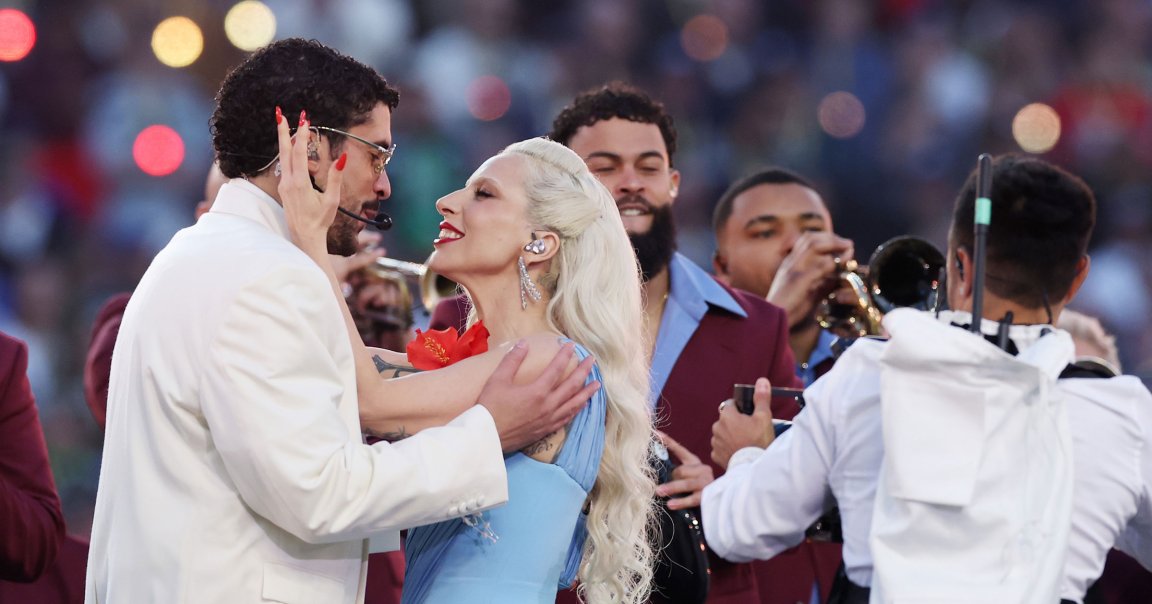
The Super Bowl incident provides a compelling case study. The anonymous Polymarket account began placing bets on February 6, a full two days before the Super Bowl took place. Their predictions were remarkably precise: they correctly foresaw that pop icons Lady Gaga, Cardi B, and Ricky Martin would grace the stage alongside Bad Bunny. Crucially, they also accurately predicted that high-profile artists like Travis Scott, Drake, and Post Malone would *not* perform. The cumulative profit from these meticulously placed bets amounted to approximately $17,000. For anyone familiar with the statistical probabilities of guessing 17 out of 20 binary outcomes correctly, especially regarding highly secretive production details, the odds are astronomically low. This level of accuracy strongly implies access to non-public information, likely from someone within the production team, the artists’ entourages, or the network broadcasting the event.
The heated debate over insider trading on these platforms is not new, but these incidents intensify it. While insider trading is strictly forbidden and heavily prosecuted on Wall Street, where it undermines market integrity and fairness, prediction markets currently operate in a significant regulatory vacuum. Traditional financial markets have stringent rules to ensure a level playing field, protecting investors from those who would exploit confidential information for personal gain. The very foundation of investor confidence rests on the belief that all participants have access to the same material information. In contrast, the decentralized and often pseudonymous nature of prediction markets makes enforcing such rules incredibly challenging, essentially allowing a “Wild West” scenario where those with privileged information can operate with impunity.
The implications for the average user are stark and concerning. As one Reddit user aptly commented, “If you bet, you’re a rube for these people. Literally spending money to give it over to insiders and cheats.” This sentiment highlights the core problem: in a peer-to-peer betting system, for every winner, there is a loser. If a significant portion of the winning bets are made by insiders, it means that a corresponding number of unsuspecting participants are losing their money to individuals who hold an unfair advantage. This systematic erosion of trust could ultimately deter casual users and undermine the very concept of prediction markets as democratic tools for information aggregation, transforming them instead into arenas for exploitation by a select few.
The Super Bowl itself served as a colossal advertisement for the broader gambling industry. Companies like DraftKings spent exorbitant sums to air commercials for betting services, capitalizing on the nationwide excitement. This surge in mainstream gambling interest directly correlated with record trading volumes on prediction markets. Kalshi reported over half a billion dollars in trading tied to the final outcome of the game, while Polymarket’s equivalent bet saw trading volumes exceed $55 million. This boom in activity, while indicative of growing market interest, simultaneously amplifies the potential for insider trading to cause significant harm and distrust.
Despite the mounting evidence and public outcry, Polymarket has yet to publicly comment on the Super Bowl half-time show incident. Furthermore, the platform did not respond to the Wall Street Journal’s request for comment, maintaining a notable silence. This lack of transparency only exacerbates concerns about accountability and the platforms’ willingness or ability to address these issues proactively. The regulatory landscape remains murky and slow to evolve. While the White House has expressed support for the industry, even with Donald Trump’s Trump Media and Technology Group announcing its intention to enter the prediction markets business in October, this political endorsement doesn’t equate to a clear regulatory framework that protects consumers.
In the absence of clear guidelines, lawmakers are increasingly issuing warnings about the inherent risks. Just six days before the Super Bowl, New York Attorney General Letitia James issued a stern statement, cautioning the public: “New Yorkers need to know the significant risks with unregulated prediction markets. It’s crystal clear: so-called prediction markets do not have the same consumer protections as regulated platforms. I urge all New Yorkers to be cautious of these platforms to protect their money.” Her warning underscores the critical lack of oversight, leaving participants vulnerable to various risks, not least of which is being outmaneuvered by those with privileged information.
As professor of economics and prediction markets expert Eric Zitzewitz explained to Business Insider, for prediction markets to sustain themselves, “you need them [users] to be willing to trade despite that,” referring to the disadvantage faced by those less informed. He added, “You need them to be overconfident about how much they know, or you need them to be participating for some other reason.” This candid assessment reveals the precarious balance these platforms must maintain: attracting a broad base of users who are either optimistic to a fault or driven by motives beyond pure profit, while simultaneously grappling with the systemic problem of insider exploitation. The path to meaningful regulation is likely to be long and arduous, potentially taking years to materialize. Until then, prediction markets, despite their innovative potential, risk becoming a playground for a knowledgeable few, including professional gamblers and insiders, while the majority of participants remain vulnerable to significant losses.
More on prediction markets: Professional Gamblers Move Into Prediction Markets to Bleed You Dry