Faris Adani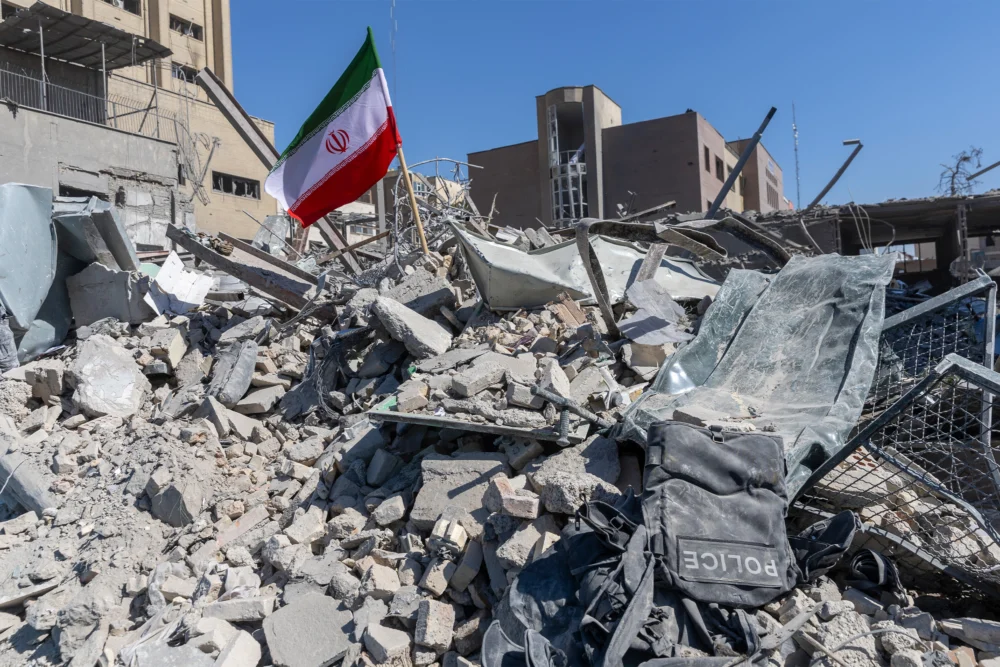
The Looming Storm: Iran’s Threat to Global Economy and the Shifting Sands of Geopolitics
Sign up to see the future, today. Can’t-miss innovations from the bleeding edge of science and tech often paint a picture of progress and prosperity, yet the present reality, as unfurling in the Middle East, suggests a future far more volatile and perilous, marked by economic instability and escalating conflict.
If the Trump administration harbored expectations of a swift resolution to its “little excursion” in Iran, akin to a repeat of the Venezuelan scenario, geopolitical realities have starkly presented a different, far more complex and dangerous narrative. What began as a targeted intervention has rapidly spiraled into a regional crisis with profound global implications, challenging the very fabric of international stability and economic interconnectedness.
On Wednesday, the Iranian government, demonstrating an unyielding resolve, declared its readiness for a protracted war, a conflict that it warned could “destroy” the global economy. This chilling pronouncement, as reported by Le Monde, was delivered amidst Iran’s continued blockade of the Strait of Hormuz, a pivotal choke point for global oil supplies. The message was clear: Iran is prepared to leverage its strategic position and military capabilities to inflict maximum economic pain if provoked further.
Ebrahim Zolfaqari, a spokesperson for the Islamic Revolutionary Guard Corps (IRGC), underscored the dire economic consequences, telling Reuters, “Get ready for the oil barrel to be at $200 because the oil price depends on the regional stability which you have destabilised.” This statement serves as a stark warning, directly linking the ongoing conflict to a potential catastrophic surge in global energy prices, a scenario that would ripple through every sector of the world economy, from transportation and manufacturing to food production and consumer spending.
The current crisis ignited on February 28, when the United States and Israel initiated aggressive actions, culminating in a series of devastating missile strikes. These strikes tragically resulted in the assassination of Iran’s supreme leader Ali Khamenei, alongside the commander of the IRGC, the minister of defense, and other high-ranking officials. The audacious nature of these attacks sent shockwaves across the region and beyond, immediately escalating an already tense geopolitical environment. Beyond the high-profile targets, the strikes also claimed the lives of more than 1,000 civilians, plunging Iranian cities into chaos and mourning. Particularly egregious was the incident where a US Tomahawk missile struck an elementary school, killing at least 175 people, including numerous students. This horrific massacre is now under urgent investigation by the Pentagon, raising profound questions about targeting protocols and the human cost of modern warfare.
Contrary to the anticipated outcome of a rapid regime collapse, a hope perhaps harbored by some Trump administration officials, the Iranian leadership has not only held firm but has retaliated with a robust campaign of missile and drone strikes targeting US allies across the Middle East. This demonstrates a strategic depth and resilience that may have been underestimated, highlighting the complexities of regime change operations in highly organized and ideologically driven states. The retaliatory strikes have further broadened the scope of the conflict, drawing in more regional actors and intensifying fears of a wider, uncontrollable conflagration.
Central to Iran’s strategy of economic warfare is its control over the Strait of Hormuz. The IRGC has defiantly vowed that not a “single liter of oil” would traverse this vital waterway to nations deemed hostile. This is not an idle threat; approximately 20 percent of the world’s global oil supplies flow through this narrow passage, making it an indispensable artery for international energy markets. For the past two weeks, Iran has effectively throttled shipping traffic, creating immense pressure on global oil prices and supply chains. The Strait connects the Persian Gulf to the Gulf of Oman, serving as the sole maritime route for supertankers laden with oil from major producers such as Saudi Arabia, Kuwait, Qatar, the UAE, Iran itself, and others. Any prolonged disruption here directly threatens the energy security of nations worldwide, particularly those heavily reliant on Middle Eastern crude.
The escalating tension in the Gulf was vividly demonstrated on Thursday with reports of explosions striking two oil vessels in an Iraqi port, suspected to be Iranian attacks. Hours prior, three other cargo ships were also hit and set ablaze in the Gulf, signaling a dangerous new phase in the conflict. The IRGC has claimed responsibility for at least one of these attacks, specifically targeting a Thai bulk carrier, further solidifying their intent to disrupt maritime commerce in the region. These incidents not only pose a direct threat to global shipping and energy supplies but also underscore the increasing likelihood of miscalculation and unintended escalation in an already volatile zone.
Whether the profound gravity of this situation has fully registered with US leadership remains an open and unsettling question. The day preceding these significant escalations in the Gulf, Donald Trump inexplicably declared that the US had already won the war. This statement, delivered amidst mounting evidence of a deepening crisis, raises serious concerns about the administration’s grasp of the unfolding realities and its strategic approach to de-escalation, or indeed, the lack thereof. Such pronouncements risk undermining diplomatic efforts and emboldening adversaries, further complicating an already intractable situation.
Further intensifying pressure on global oil markets, Iran’s newly appointed supreme leader, Mojtaba Khamenei, made his first public address on Thursday since his recent appointment. In this inaugural message, Khamenei emphatically affirmed that the Strait of Hormuz should remain closed. He further escalated Iran’s demands by calling for the closure of all US military bases in the region, as reported by Reuters. These pronouncements from the highest echelons of Iranian leadership signal a hardening stance and a clear intent to use all available leverage to force a shift in US regional policy, regardless of the global economic repercussions.
The economic repercussions are already palpable and severe. Last week, Brent crude oil prices surged past $100 per barrel for the first time since 2022, subsequently peaking at nearly $120 per barrel on Monday. This meteoric rise sent shudders throughout the global economy, threatening to trigger inflation, depress consumer spending, and potentially tip vulnerable economies into recession. The impact on consumers is immediate and direct: gas prices in the US have soared to an average of over $3.50 per gallon, according to AAA, with prices on the West Coast already reaching far beyond that point. These escalating costs are a significant burden on households and businesses, eating into disposable income and increasing operational expenses.
In response to what the International Energy Agency (IEA) has termed the largest disruption to global oil supplies in history, the organization announced on Wednesday a historic measure: member countries would collectively release 400 million barrels of oil from their emergency stockpiles. This unprecedented move aims to dampen surging oil prices and provide a temporary reprieve for energy markets. The United States committed to contributing a significant portion, 172 million barrels, from its Strategic Petroleum Reserve. However, despite this coordinated international effort, the markets reacted with continued volatility. Brent crude, defying expectations of a price drop, rose more than 8 percent overnight to once again surpass $100 per barrel, Axios reported. This demonstrates the profound fear and uncertainty gripping traders and the market’s skepticism about the long-term effectiveness of such measures in the face of ongoing conflict.
Adding another layer of controversy to the unfolding crisis, President Trump remained transparent about his administration’s perspective on the strain on oil markets. He explicitly stated that rising oil prices would provide a significant windfall for US domestic oil producers. “The United States is the largest Oil Producer in the World, by far, so when oil prices go up, we make a lot of money,” he wrote in a post on Truth Social, his social media platform. This statement, while perhaps aimed at reassuring a domestic audience, is likely to be viewed critically by international partners and nations grappling with the economic fallout, potentially fueling accusations of profiting from global instability rather than actively working towards a resolution.
The conflict in Iran is rapidly transforming into a multi-faceted crisis, encompassing military escalation, economic warfare, and profound humanitarian concerns. The elementary school bombing, the civilian death toll, and the potential for toxic environmental consequences, such as Toxic Sludge Raining Down on Iran After Bombing of Oil Facilities, paint a grim picture beyond the headlines of oil prices. The world watches with bated breath as this “little excursion” threatens to destabilize not just a region, but the intricate global systems that underpin modern civilization, reminding everyone that while technology promises a future, present actions can quickly unravel it.