Faris Adani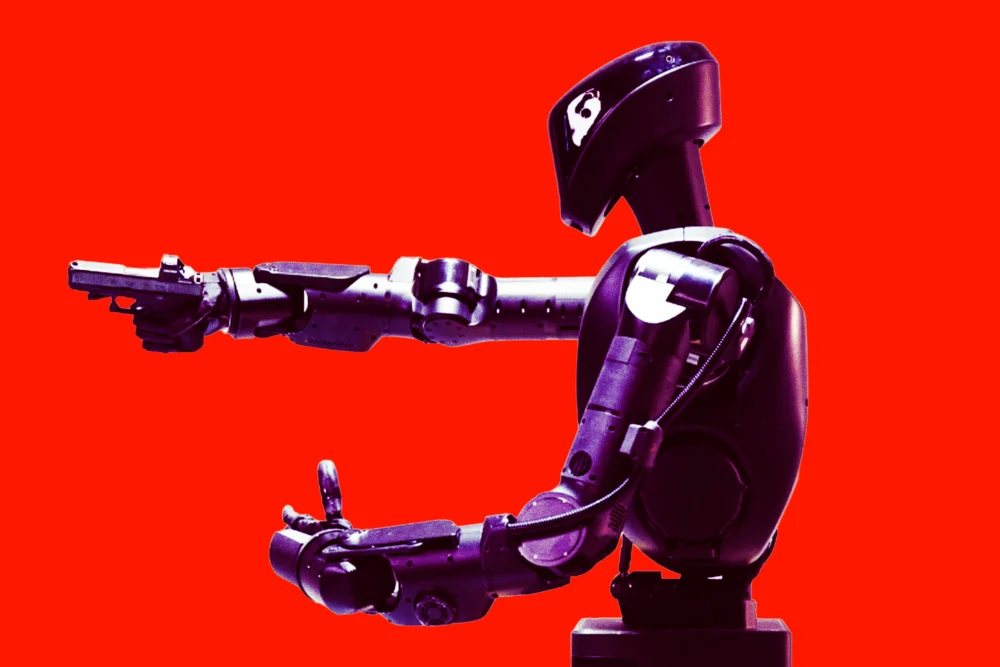
The long-foreseen integration of advanced robotics into active military engagements has crossed a critical threshold, with a pioneering robotics firm, Foundation, confirming the deployment of its humanoid robots to the war-torn battlefields of Ukraine. This unprecedented move marks a profound shift in modern warfare, pushing the boundaries of technology and ethics as machines designed to emulate human form are now tasked with reconnaissance, and potentially, future combat roles, alongside or even in place of human soldiers.
For years, the progression of humanoid robotics has captivated the public imagination, from their initial appearances in industrial settings performing repetitive tasks to their more recent demonstrations of complex skills like folding laundry, navigating obstacle courses, and contributing to advanced manufacturing assembly lines for electric vehicles. This trajectory, steadily accelerating, pointed inexorably towards a future where these sophisticated automatons would venture beyond civilian applications. That future, as revealed by Mike LeBlanc, a seasoned combat veteran and co-founder of Foundation, in a recent interview with Time magazine, has arrived on the brutal eastern front of the Ukraine-Russia conflict.
Foundation, a company at the vanguard of robotic innovation, dispatched two of its Phantom Mk-I units to Ukraine in February. These machines, initially conceived and trialed for efficiency in factories globally, now serve a far more perilous purpose: frontline reconnaissance. While unmanned ground vehicles (UGVs) and aerial drones have long been staples of modern combat, this marks what appears to be the inaugural deployment of bipedal, human-shaped robots in a live combat zone. It’s a development that transcends tactical advantages, opening a Pandora’s Box of ethical, strategic, and societal questions about the nature of future conflicts.
LeBlanc articulated a powerful, albeit controversial, rationale behind this deployment: "We think there’s a moral imperative to put these robots into war instead of soldiers." This statement encapsulates a growing philosophical debate within military circles and among AI ethicists: if advanced machines can perform dangerous tasks with equal or greater efficacy than humans, thereby saving human lives, is there not a moral obligation to deploy them? The sentiment echoes a desire to reduce the human cost of war, a goal that has driven advancements in protective gear, remote-controlled weaponry, and drone warfare for decades. However, the prospect of fully autonomous humanoid soldiers raises the stakes considerably, blurring the lines between tool and combatant, and igniting fears of a "Terminator"-esque future.
Indeed, LeBlanc’s ultimate vision for the Phantom line is for them to wield "any kind of weapon that a human can." This aspiration is not merely theoretical; a visit by Time magazine to a Foundation facility in San Francisco in February revealed the Mk-I’s existing capabilities. The robots demonstrated proficiency in handling various human-scale firearms, including revolvers, semi-automatic pistols, shotguns, and even a dummy M-16 rifle. The dexterity and precision required to manipulate such instruments speak volumes about the advanced motor control and AI-driven proprioception embedded within these machines. Their ability to interface with conventional human weaponry means that, should they transition from reconnaissance to direct combat, the logistical hurdles of arming them are significantly reduced.
The implications of such a development are vast. A humanoid form offers distinct advantages in environments designed for humans. They can navigate urban terrain, utilize existing cover, enter structures, and operate alongside human soldiers with greater seamlessness than a wheeled or tracked UGV. This interoperability could transform military tactics, enabling hybrid units where human experience and robotic resilience combine to form a potent new fighting force. Yet, the psychological impact of confronting a machine soldier, devoid of fear or emotion, is an unknown variable that could profoundly affect both enemy combatants and the civilians caught in the crossfire.
The eastern front of the Ukraine-Russo war, tragically, has become a proving ground for various forms of military robotics. While Foundation’s humanoid deployment is a novel addition, Ukraine has already embraced non-humanoid robotic systems on a massive scale. According to fresh reporting from the Ukrainian state news agency United24, the country executed an astounding 7,495 robotics operations in January alone. The majority of these missions are logistical, involving the dangerous but vital delivery of weapons, ammunition, and food to ground troops in contested areas, thereby safeguarding human lives from perilous supply runs. However, a significant portion of these operations involves direct combat roles, with some UGVs bearing Kalashnikov machine guns and explosives. Dramatic footage from earlier this year, showing Russian soldiers surrendering to an armed Ukrainian bot, serves as a stark visual testament to the shifting dynamics of battlefield authority and the psychological impact of robotic adversaries.
Russia, too, has heavily invested in and deployed robotics for various battlefield tasks, from reconnaissance drones to heavily armed UGVs like the Uran-9. While they have yet to publicly deploy humanoid units, the rapid advancements and observed effectiveness of such systems in Ukraine will undoubtedly accelerate their own research and development efforts. This creates a clear potential for a robotic arms race, where nations vie to develop increasingly sophisticated autonomous systems, further escalating the complexity and potential lethality of future conflicts.
Beyond the immediate theater of war, Foundation is also exploring other applications for its humanoid technology. The company is reportedly in "very close contact" with the Department of Homeland Security regarding the potential deployment of patrol-bots along the US-Mexico border. The notion of autonomous humanoids patrolling sensitive border regions raises another set of ethical and practical questions. While they could augment human patrols in dangerous or remote areas, concerns regarding accountability, rules of engagement, and interactions with migrants and civilians would need to be meticulously addressed. The potential for these machines to be perceived as dehumanizing or overly aggressive instruments of state control is a significant consideration.
The technological hurdles to fully realizing the vision of autonomous humanoid soldiers are still substantial. Current limitations include battery life, robust navigation in highly varied and unpredictable terrains, maintenance in austere environments, and the development of truly resilient artificial intelligence capable of ethical decision-making in the chaotic fog of war. However, the pace of innovation in AI, robotics, and materials science suggests that these challenges are being overcome at an accelerating rate. The iterative process of deployment, feedback, and refinement, now occurring in real-time in Ukraine, will undoubtedly accelerate these advancements, pushing the technology forward faster than many anticipated.
The deployment of Foundation’s Phantom Mk-I humanoids in Ukraine is more than just a technological milestone; it is a seminal moment in the history of warfare. It forces a reckoning with profound ethical questions about autonomous weapons, the future role of humans in combat, and the very definition of conflict. As these silent, tireless machines enter the fray, they herald an era where the lines between human and machine, life and artificial life, friend and foe, become increasingly blurred. The "moral imperative" to save human lives must now be weighed against the potential for an unprecedented escalation in the dehumanization and automation of war, ushering in a future that, for better or worse, has begun today.