isnaini azizah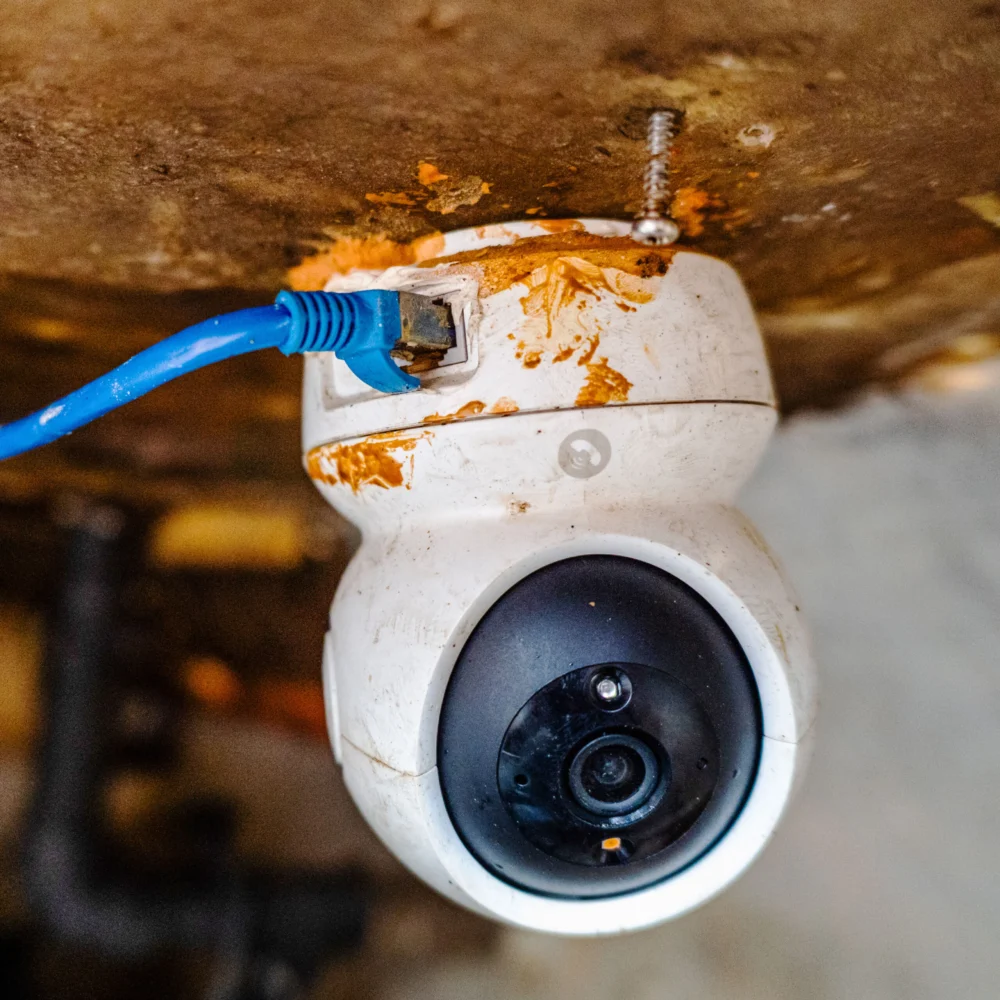
However, the ensuing report from the boarding crew shattered these expectations. The vessel was secured, but upon opening the hatch, authorities found no cocaine, no crew, and no helm. The space was far too confined for human occupancy. Instead, the hull contained a fuel tank, an autopilot system, control electronics, and a remotely monitored security camera. Pictures soon arrived in Cartagena, revealing an additional camera bolted to the hull and two rectangular antennas, roughly the size of cookie sheets, identified as Starlink satellite internet receivers.
The narco sub was towed to Cartagena for a thorough examination by military technicians. Weeks later, they reached a startling conclusion: this was Colombia’s first confirmed uncrewed narco submersible. The vessel was capable of remote operation and a degree of autonomous navigation. Experts identified the Clan del Golfo, a formidable criminal organization operating along the Caribbean coast, as the likely builder of this prototype. For decades, these custom-built narco subs have been instrumental in the cocaine trade, ferrying multi-ton shipments from Colombian shores to markets across North America and, increasingly, globally. The integration of readily available technologies – Starlink terminals, plug-and-play nautical autopilots, and high-resolution cameras – signals a significant escalation in the ongoing cat-and-mouse game between traffickers and law enforcement. Uncrewed subs offer the potential to transport larger quantities of cocaine over greater distances, while eliminating the risk of human smugglers being captured. Law enforcement agencies worldwide are just beginning to comprehend the implications of the Tayrona sub, questioning whether it represents an isolated experiment or the harbinger of a new era of autonomous drug smuggling at sea.
The allure of the ocean for drug traffickers is undeniable. "You can move drug traffic through legal and illegal routes," explains Juan Pablo Serrano, a captain in the Colombian navy and head of the operational coordination center for Orión, a multinational counternarcotics effort. Large container ships, integral to global commerce, represent a favored method. Bribing a network of dockworkers and inspectors allows traffickers to conceal illicit loads within thousands of cargo boxes, sending them on otherwise legitimate commercial vessels bound for Europe or North America. While this route is time-consuming and costly, involving months of transit and extensive bribery, it offers a relatively low-risk proposition. "A ship can carry 5,000 containers. Good luck finding the right one," Serrano remarks.
A less legal but significantly faster and more economical alternative are small, high-powered motorboats, commonly known as "go-fasts." These vessels, typically under 50 feet in length, are quick to construct and inexpensive to crew, capable of transporting smaller drug loads within hours rather than days. However, their speed and size make them easily detectable by coastal radars and patrols.
Submersibles, or more accurately, "semisubmersibles," occupy a middle ground. Their construction demands greater financial investment and engineering expertise than an open speedboat, but they offer a crucial advantage: stealth. Even with a portion of the vessel exposed at the surface, the bulk remains hidden beneath the waves, adding a valuable option to the smuggler’s risk, time, and cost calculus. The tightening of controls over air routes and commercial shipping by US and Colombian authorities in the early 1990s spurred the increased use of subs. Initially, these were rudimentary craft with wooden hulls, fiberglass shells, and auxiliary fuel tanks, assembled in secluded mangrove estuaries. Today’s fiberglass semisubmersibles operate mostly submerged, propelled by diesel engines that can carry multi-ton cargoes for extended periods, leaving only a subtle ripple and a warm exhaust pipe detectable by radar and infrared sensors.
A typical semisubmersible costs under $2 million to build and can carry three metric tons of cocaine. This cargo, at European wholesale prices, is worth over $160 million. Most of these vessels ferry drugs between South American coasts and handoff points in Central America and Mexico, where allied criminal organizations distribute the cargo for gradual onward shipment to the US. However, some now venture much farther. In 2019, Spanish authorities intercepted a semisubmersible after a remarkable 27-day transatlantic journey originating from Brazil. More recently, in 2024, police in the Solomon Islands discovered the first narco sub in the Asia-Pacific region, a semisubmersible believed to have departed Colombia en route to Australia or New Zealand.
The economic rationale behind narco subs is straightforward, considering the variables of risk, time, and cost. Despite longer transit times compared to powerboats, their reduced likelihood of interception and relatively low production costs make them an attractive option. The construction of a narco sub might range from $1 million to $2 million, while the production cost of a kilogram of cocaine is approximately $500. "By the time that kilo reaches Europe, it can sell for between $44,000 and $55,000," Serrano states. A typical semisubmersible, capable of carrying up to three metric tons, holds cargo valued at well over $160 million at European wholesale prices. Consequently, narco subs are becoming increasingly prevalent. Seizures by authorities have tripled in the last two decades, according to Colombia’s International Center for Research and Analysis Against Maritime Drug Trafficking (CMCON). Serrano acknowledges that the Orión alliance, despite its resources, can only intercept a fraction of the vessels in operation.
Until now, narco subs shared a significant vulnerability: their reliance on human crews. These were typically impoverished fishermen or low-level recruits, confined to stifling compartments for days, navigating by GPS and sight, constantly under threat of detection. This human element not only increased operational costs but also posed a risk to drug suppliers should the crew be apprehended. Mirroring the principles of efficient capitalism, the builders of the Tayrona submersible appear to have sought to eliminate labor costs through automation. The absence of a crew translates to increased capacity for drugs or fuel, eliminates the need for wages, and removes the risk of crew members being arrested or turning informant if a mission goes awry.
"If you don’t have a person or people on board, that makes the transoceanic routes much more feasible," observes Henry Shuldiner, a researcher at InSight Crime who has analyzed numerous narco-sub cases. He points out the significant difference between persuading someone to undertake a short, high-paying trip from Colombia to Panama and asking four individuals to endure three weeks sealed within a cramped tube, subsisting, sleeping, and attending to bodily needs in the same confined space. "That’s a hard sell," Shuldiner admits. An uncrewed sub is not compelled to race to a rendezvous point due to crew endurance limitations. It can travel more slowly and discreetly, allowing it to wait out patrols or adverse weather, linger near a meeting point, or opt for longer, less monitored routes. Furthermore, in the event of a malfunction or detection, owners can scuttle the vessel remotely.

Simultaneously, the fundamental technologies required for such operations are becoming increasingly affordable, while profit margins continue to expand. "The rapidly approaching universality of autonomous technology could be a nightmare for the U.S. Coast Guard," wrote two Coast Guard officers in the US Naval Institute’s journal Proceedings in 2021. Underscoring the viability of drone narco subs, the US Marine Corps, in collaboration with weapons developer Leidos, is testing a low-profile uncrewed vessel named the Sea Specter, reportedly "inspired" by narco-sub design principles. The potential for drug smugglers to experiment with autonomous subs is not merely theoretical. Law enforcement agencies monitoring other smuggling routes have found indications that the Tayrona sub may not be an isolated incident. In 2022, Spanish police seized three small submersible drones near Cádiz. Two years later, Italian authorities confiscated a remote-controlled minisubmarine believed to be intended for drug trafficking. "The probability of expansion is high," states Diego Cánovas, a port and maritime security expert in Spain. The Tayrona, the most technologically advanced uncrewed narco sub discovered to date, is likely a precursor to a broader trend rather than an anomaly.
Currently, the Tayrona semisubmersible rests on a patch of grass at the ARC Bolívar naval base in Cartagena, exposed to the elements, its paint streaked by rain. Nearby lies an older, bulkier narco sub seized a decade prior, a blue cylinder with a less refined profile. In contrast, the Tayrona’s hull appears lower, sleeker, and more sophisticated. Up close, its handmade origins are evident. The hull, a dull gray-blue, exhibits rough patches of fiberglass and the scrapes and dents incurred during its tow to port. It bears no exterior identifying marks, offering no clues to its origin. On its upper surface, two Starlink antennas are visible, painted over in the same gray-blue to blend with the sea.
Ascending a ladder and descending through the small hatch near the stern reveals a damp, close interior, the walls slick with condensation. Small puddles of fuel have accumulated in the bilge. The vessel lacks seating, a helm, or steering wheel, and offers insufficient space to stand upright or lie down, confirming it was never designed to carry passengers. A technical report from CMCON indicates the sub possesses enough fuel for a journey of approximately 800 nautical miles, with the central cargo bay capable of holding between 1 and 1.5 tons of cocaine. The aft machinery compartment is a jumble of components: a diesel engine, batteries, pumps, and a complex network of cables feeding an electronics rack. All essential hardware remains intact. Within this rack, investigators identified a NAC-3 autopilot processor, a commercially available unit designed for steering midsize boats, costing around $2,200 on Amazon. "These are plug-and-play technologies," notes Wilmar Martínez, a mechatronics professor at the University of America in Bogotá, after reviewing images of the sub’s interior. "Midcareer mechatronics students could install them."
Despite its advantages, an autonomous drug-smuggling submarine would not be invincible. Even without a human crew, individuals remain involved in the operational chain. Every satellite internet terminal, including Starlink, is linked to a billing address, a payment method, and a log of its connection times and locations. Colombian officers are exploring formal agreements with service providers, requesting alerts when transceiver movements align with known smuggling patterns. Brazil’s government has already established a pact with Starlink to curb the criminal use of its service in the Amazon region. The fundamental approach to detecting a drone sub will closely resemble that used for crewed semisubmersibles. Aircraft and ships will employ radar to identify small anomalies and infrared cameras to detect the heat signatures of diesel engines or the turbulence of wakes. However, this may prove insufficient. "If they wind up being smaller, they’re going to be darn near impossible to detect," warns Michael Knickerbocker, a former US Navy officer and advisor to defense technology firms.
Autonomous drug subs are "a great example of how resilient cocaine traffickers are, and how they’re continuously one step ahead of authorities," remarks one researcher. Compounding the challenge, navies often operate on a fraction of their intelligence leads due to insufficient numbers of ships and aircraft. Knickerbocker advocates for a "robot on robot" approach, suggesting that navies and coast guards require swarms of their own small, cost-effective uncrewed systems – including surface vessels, underwater gliders, and long-endurance aerial vehicles – capable of loitering, sensing, and relaying data to human operators. Experiments in this area are already underway. The US 4th Fleet, responsible for Latin America and the Caribbean, is exploring uncrewed platforms for counternarcotics patrols. Across the Atlantic, the European Union’s European Maritime Safety Agency utilizes drones for maritime surveillance.
Currently, the primary defense against oceangoing vessels of all types relies on coastal radar networks. Spain operates SIVE to monitor critical chokepoints like the Strait of Gibraltar, while Australia’s over-the-horizon radar network, JORN, can detect objects hundreds of miles away in the Pacific, far exceeding conventional radar range. Nevertheless, simply spotting an uncrewed narco sub is insufficient; law enforcement must also intercept it, a task that presents significant challenges.
With a crewed vessel, Colombian doctrine dictates that coast guard units should first attempt to hail the boat using lights, sirens, radio calls, and warning shots. If these measures fail, interceptor crews may need to board and force entry. Officers express concern that future autonomous craft could be designed to scuttle or even detonate if approached. "If they get destroyed, we may lose the evidence," states Víctor González Badrán, a navy captain and director of CMCON. "That means no seizure and no legal proceedings against that organization." This is where electronic warfare becomes crucial, encompassing radio-frequency jamming, cyber tools, and potentially more sophisticated countermeasures. In its simplest form, jamming involves overwhelming a receiver with noise, preventing command signals from reaching the vessel. Spoofing takes this a step further by transmitting false signals, leading the sub to believe it is in a different location or to follow a fabricated set of waypoints. Cyber tools may target higher levels of the operational chain, aiming to penetrate the vessel’s control software or the networks used for communication with satellite constellations. At the cutting edge of these countermeasures are electromagnetic pulses designed to disable electronics outright, rendering a multi-million-dollar narco sub a derelict hull adrift at sea.
In reality, the tools available to intercept a future Tayrona sub are unevenly distributed, politically sensitive, and often experimental. Potent cyber or electromagnetic capabilities are closely guarded secrets; their use in drug cases risks revealing military assets that governments prefer to reserve for wartime scenarios. Systems like Australia’s JORN radar are considered national security assets, their precise performance specifications classified. Sharing raw data with frontline nations in the cocaine trade would inevitably expose aspects of their detection methodologies. "Just because a capability exists doesn’t mean you employ it," Knickerbocker observes. Analysts do not foresee uncrewed narco subs fundamentally reshaping the global drug trade, despite the technological advancement. Trafficking organizations will continue to diversify their methods, concealing cocaine in shipping containers, dissolving it into liquids and paints, and transporting it rapidly in fast boats. "I don’t think this is revolutionary," Shuldiner states. "But it’s a great example of how resilient cocaine traffickers are, and how they’re continuously one step ahead of authorities."
However, there remains the possibility that current understanding of drug smuggling by international law enforcement agencies is on the verge of significant change. Captain González Zamudio reports a steady stream of requests from foreign navies, coast guards, and security agencies to examine the Tayrona sub. He hosts these delegations, guiding them to the vessel on the naval base, providing tours. It has become a site of pilgrimage. Each visitor harbors the concern that the next time a narco sub appears off a distant coastline, they will board it as usual, force the hatch, and discover it laden with cocaine and sophisticated electronics, but devoid of any human occupants. The consequences of such a discovery remain unknown. Eduardo Echeverri López is a journalist based in Colombia.