isnaini azizah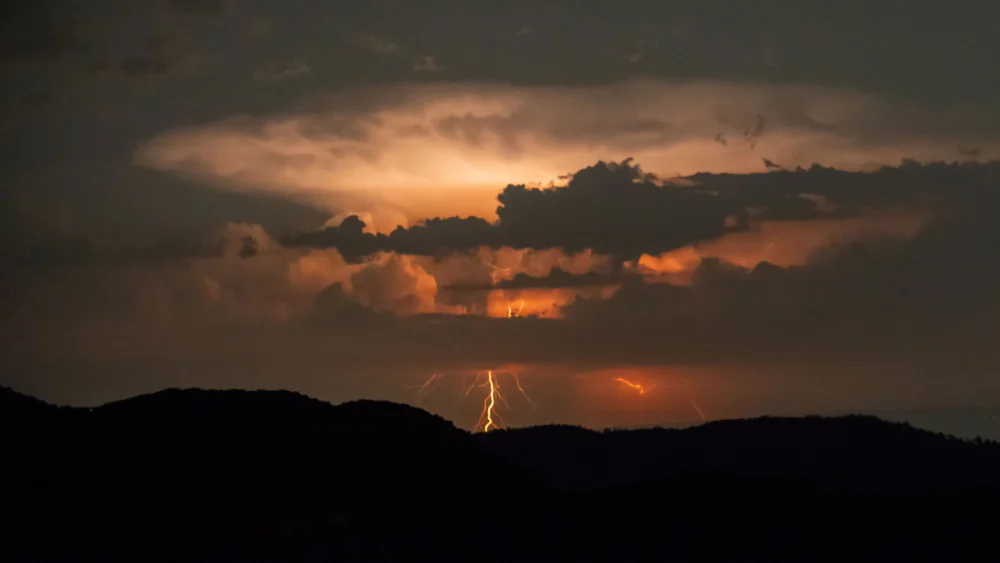
The science behind Skyward Wildfire’s proposed solution is rooted in the fundamental physics of static electricity. As explained by James Temple in his comprehensive report, lightning is essentially a massive static discharge, akin to the familiar shock one receives after shuffling across a carpet. This phenomenon occurs when charged particles within storm clouds, specifically ice crystals and graupel, collide and separate due to updrafts. This separation leads to a buildup of electrical potential difference. When this difference becomes sufficiently large, it results in an electrostatic discharge—lightning.
The concept of mitigating lightning strikes isn’t new. As far back as the 1950s, researchers began exploring methods to prevent these powerful electrical events. One promising avenue involved the use of metallic chaff, finely shredded strands of fiberglass coated in aluminum. Originally employed by the military to disrupt radar signals, the theory was that this conductive material could dissipate the electrical charge buildup in storm clouds, thereby preventing the formation of a lightning strike. The underlying principle is sound: by providing a more accessible pathway for electrical discharge, the chaff could theoretically reduce the likelihood of a concentrated, powerful strike.
However, the efficacy of this approach has been met with mixed results and considerable scientific scrutiny. Early studies investigating chaff dispersal for lightning mitigation yielded inconsistent outcomes. Some research indicated that achieving a significant reduction in lightning strikes might require remarkably high concentrations of chaff, raising questions about the practicality and cost-effectiveness of widespread deployment. Furthermore, many of these early tests were conducted on a small scale, limiting their statistical significance.
Adding to the uncertainty is the current lack of transparency from Skyward Wildfire itself. The company has yet to release comprehensive data from its field trials or publish any peer-reviewed research detailing its advancements. This absence of independently verifiable data makes it challenging for the scientific community and the public to fully assess the technology’s potential and limitations. While the theoretical framework is compelling, the practical, real-world performance remains largely unproven.
This brings us to the core of the debate: assuming, for the sake of argument, that Skyward Wildfire’s technology proves effective in preventing lightning-induced ignitions, the question of whether we should implement it becomes paramount. The urgency of this question is amplified by the growing threat of climate change. Research indicates that lightning-caused fires are becoming a more significant problem, particularly in rapidly warming regions like the Arctic boreal. In these areas, rising temperatures are creating drier conditions, making lightning strikes more likely to spark intense and widespread wildfires.
However, the narrative of fire as an unmitigated evil is a simplification that overlooks its crucial ecological role. Many ecosystems have evolved to thrive with periodic fires. The devastating wildfires that plague many regions today are often not solely a consequence of ignition sources but a complex interplay of climate-driven conditions and decades of fire suppression policies. These policies, intended to protect human settlements and timber resources, have inadvertently led to a massive accumulation of fuel—dead vegetation and undergrowth—in forests. When fires do ignite, especially under extreme weather conditions, they can burn with unprecedented intensity and speed, overwhelming suppression efforts.
This ecological perspective is crucial when considering technological interventions. Experts like Phillip Stepanian, a technical staff member at MIT Lincoln Laboratory, emphasize the need for judicious application of any lightning prevention technology. In an email to James Temple, Stepanian highlighted that even with the technical capability to prevent lightning-ignited wildfires, significant work is still required to determine when and where such prevention is appropriate. Failing to do so could inadvertently exacerbate the fuel accumulation problem, leading to even more severe fires when they do occur. The goal, he suggests, should not be complete elimination but rather strategic intervention.
Moreover, established and ecologically sound methods for managing wildfire risk exist and are often underutilized. Prescribed burns, also known as controlled burns, are a vital tool for reducing fuel loads and restoring natural fire regimes. These carefully planned and executed burns mimic natural fire cycles, clearing out undergrowth and creating more resilient landscapes. However, the implementation of prescribed burns has been hampered by public perception, regulatory hurdles, and insufficient funding.
Skyward Wildfire itself acknowledges the nuanced nature of wildfire management. Nicholas Harterre, who oversees government partnerships at the company, stated in an email to James that their intention is not to eliminate all wildfires. Instead, the company aims to reduce the likelihood of ignition on a limited number of extreme-risk days. They explicitly support prescribed and cultural burning, natural fire regimes, and proactive forest management, indicating an understanding that their technology is intended as a supplementary tool, not a complete replacement for established practices.
Despite these assurances, some prominent climate scientists express skepticism about the fundamental approach. Daniel Swain, a climate scientist at the University of California Agriculture and Natural Resources, argues that technological fixes for fires often "fundamentally misunderstand the problem." In a LinkedIn comment, Swain posits that the core issue is not the existence of fire itself, but its increasing intensity and its destructive intersection with human society, driven by human-caused factors. He contends that preventing ignitions, whether from lightning or other sources, does not address the root causes of increasingly destructive wildfires, such as climate change and land management practices.
The debate surrounding Skyward Wildfire’s technology encapsulates a broader tension in our approach to environmental challenges. On one hand, the drive to innovate and develop new tools to mitigate threats like wildfires is understandable and, in many ways, essential. The exploration of novel firefighting methods and prevention strategies is a natural human response to perceived dangers.
However, the challenge lies in discerning which technologies are truly beneficial and how they can be integrated into a holistic and ecologically sound management framework. The risk of over-reliance on technological "silver bullets" is significant. Such an approach can distract from addressing the underlying systemic issues, such as climate change mitigation, sustainable land use, and the restoration of natural ecological processes. It also raises concerns about unintended consequences and the potential for interventions to disrupt natural systems in ways we do not yet fully comprehend.
Ultimately, the question of "how much wildfire prevention is too much?" is not just a technical one; it is a deeply philosophical and ecological inquiry. It compels us to consider not only our ability to control natural processes but also our wisdom in doing so. As we venture further into an era of intensified climate impacts, the development of technologies like Skyward Wildfire’s will continue to test our capacity for thoughtful, responsible, and ecologically informed decision-making. The path forward requires a delicate balance between embracing innovation and respecting the complex, interconnected systems of the natural world.