isnaini azizah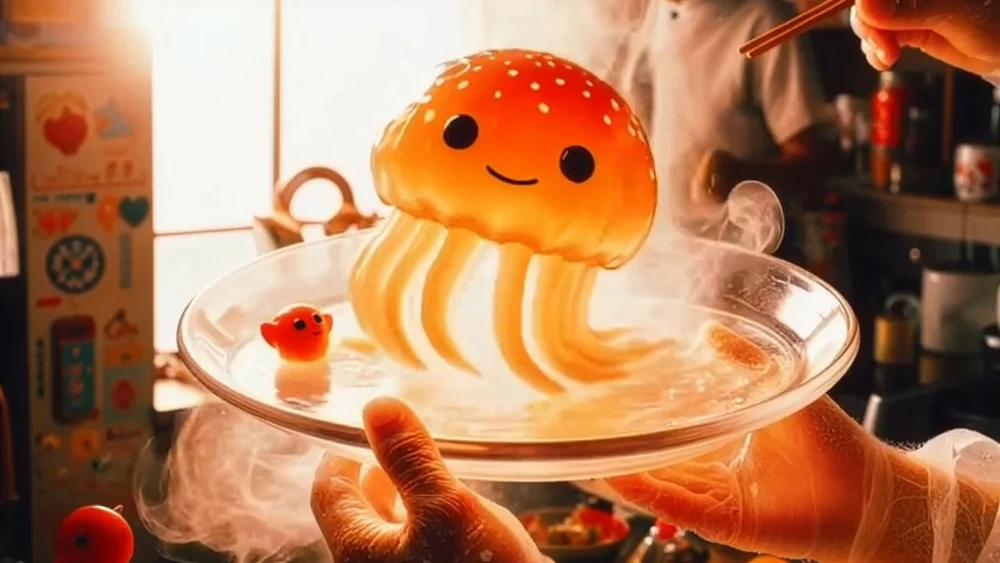
The viral sensation of rabbits bouncing on a trampoline this past summer served as a watershed moment, exposing many internet-savvy users to the uncanny valley of AI-generated content and spawning a deluge of similar, derivative clips. Initially, the author, like many others, reacted with disdain, dismissing this output as a symptom of the internet’s "enshittification." The ubiquitous presence of AI-generated content felt overwhelming and, frankly, low-quality. However, a shift occurred when friends began sharing AI clips that were not just nonsensical, but compellingly weird, funny, or even possessing a spark of buried brilliance. This prompted a deeper examination of the author’s initial rejection and a desire to understand the phenomenon beyond its surface-level absurdity.
The term "AI slop" itself has evolved from its origins on 4chan, a derogatory label for low-quality, mass-produced content. While it now broadly encompasses text, audio, and images, the surge in AI-generated video has brought it to the forefront. These video models, trained on vast datasets to predict subsequent frames, are far more power-intensive than their text-based counterparts. Early iterations produced blurry, distorted visuals with warped objects and melting faces, but recent advancements in models like Sora2, Veo 3.1, and Runway’s Gen-4.5 have dramatically improved realism, seamlessness, and prompt adherence, even incorporating sound and rough dialogue.
AI companies initially pitched these tools as the future of cinema, targeting filmmakers and studios with demos showcasing movie-quality shorts and "world simulator" capabilities. However, the reality of AI video’s adoption has proven far more modest, weirder, and arguably more interesting, finding its true home on the six-inch screens of our smartphones. A significant 86% of creators, according to an Adobe report, are embracing generative AI, but it’s the average social media user, not necessarily a professional "creator," who is driving the widespread use. This democratization of content creation has led to a proliferation of surreal and often humorous videos, such as Indian Prime Minister Narendra Modi dancing with Gandhi, or Game of Thrones reimagined as Henan opera. While micro-trends predate AI, the ease of replication has amplified their speed and ubiquity. The ability to generate endless variations of a viral concept by simply tweaking a prompt has lowered the barrier to entry for participation. Big tech companies are actively integrating AI videos into new social media formats, with apps like Sora allowing users to insert themselves into AI-generated scenes and Meta’s Vibes app aiming to transform entire feeds into AI clips.
However, this frictionless creation process also facilitates the generation of darker content. Sora has been misused to create racist deepfakes of Martin Luther King Jr., leading to demands for blocking MLK videos. Racist and violent content, including Sora-watermarked clips of strangulation, is circulating, often posted by accounts dedicated to such themes. The emergence of "nazislop," AI videos repackaging fascist aesthetics for teenage audiences, further highlights the dual-edged nature of this technology. Despite these troubling applications, short AI videos continue to flourish as a form, with new apps, Discord servers, and tutorial channels rapidly multiplying. The creative energy within the community appears to be shifting from striving for realism towards embracing and amplifying AI’s inherent weirdness.
This exploration led to interviews with creators who are pushing the boundaries of what "AI slop" can be. Wenhui Lim, an architecture designer turned AI artist, notes a competitive drive among creators to explore "how weird we can push this." AI’s ability to defy physics and capture impossible perspectives makes it a natural fit for satire, comedy, and experimental video art. Drake Garibay, a software developer, found inspiration in body-horror AI clips, spending hours creating morbid human-animal hybrids. His viral video of a human face emerging from a pot of slop garnered over 8.3 million views, showcasing the shock value and emerging aesthetic of AI-generated content.
Daryl Anselmo, a creative director turned digital artist, has been experimenting with AI video daily since 2021, utilizing a range of tools and constantly iterating. For him, the excitement lies in discovering the "impossible things that you could not do before." His art project, "AI Slop," exhibited in galleries, has evolved from landscapes to darker, body-horror themes, featuring pieces like a hyperrealistic bot peeling open its own skull and a surreal diner populated by anthropomorphized Tater Tots. These creations blur the lines between meme and art-house vignette.
Furthermore, AI systems enable creators to build recurring spaces and casts of characters, akin to informal franchises. Lim’s popular account "Niceaunties" reimagines the often-negative stereotype of Singaporean "aunties" as resourceful and humorous figures in a fantasy world. Her viral video "Auntlantis," depicting elderly Asian women as industrial mermaids, has amassed 13.5 million views. Similarly, "Granny Spills" features a glamorous, sassy elderly woman dispensing life advice, rapidly gaining a large following. Creators Eric Suerez and Adam Vaserstein, behind Granny Spills, emphasize their role as creative directors in an AI-powered workflow, from scriptwriting to scene construction. These projects often spawn merchandise and expand into branded universes, with creators like Granny Spills introducing new characters and crossover content.
The ease of participation in online trends is also amplified by AI. The "Italian brainrot" trend, characterized by human-animal-object hybrids with pseudo-Italian names, exemplifies a massive, collaborative hallucination fueled by AI. Denim Mazuki highlights the collective lore-building as the appeal, where characters are not owned by a single entity but emerge from the shared creativity of "chronically online" users. Specialized tools like OpenArt, which offer frame-to-frame control and scene breakdown customization, further empower users, including those with no artistic background, to engage in these trends. OpenArt’s founders actively sponsored tutorials and templates to capitalize on the "Italian brainrot" phenomenon, demonstrating a strategic approach to leveraging AI for community participation.
The term "slop," while originating on 4chan, has broadened to describe anything perceived as low-quality mass production. AI is now intrinsically linked to this term, solidifying its perception as content of "very low quality, especially when it is created by AI," as the Cambridge Dictionary’s new definition suggests. This label, however, is contentious among AI creators. Anselmo semi-ironically embraces it for his experimental art project, viewing it as a way to "push the models, break them, and develop a new visual language." Garibay uses it playfully, acknowledging the initial shock value of AI art but emphasizing the deeper effort required for higher-end results. Suerez and Vaserstein, creators of Granny Spills, actively dislike the term, viewing it as dismissive of their artistic choices and creative input, even if they are not directly manipulating pixels.
For most creators interviewed, AI content creation is far from a one-click process, demanding skill, trial and error, and a refined sense of taste. Lim states that a single minute of video can take hours or days to produce, and Anselmo takes pride in actively pushing the AI models beyond simple prompt generation. The emotional resonance of "slop" is complex, encompassing user guilt, creator frustration, and algorithmic anxiety. This anxiety, predating generative AI, stems from the feeling of being manipulated by platforms and algorithms. The anger directed at AI often latches onto it as the most visible culprit, sometimes misplaced, but reflecting a desire to assert human agency against an evolving technological force.
The negative association with AI has tangible consequences for early adopters. AI video creators report receiving hateful messages and comments, accusing them of taking opportunities from human artists and dismissing their work as "grifting" or "garbage." This backlash is partly fueled by concerns about AI’s impact on employment, with a Brookings study noting a decline in contracts and earnings for freelancers in AI-exposed occupations. Mindy Seu, a researcher and digital arts professor, explains that the term "AI slop" implies an ease of creation that bypasses traditional artistic labor, causing discomfort. The nascent stage of AI in art, with few established best practices or guardrails, contributes to this conflict and the associated shame.
Historically, new technologies in creative fields have faced stigma, with digital art, internet art, and new media initially struggling for recognition. Seu notes that AI currently occupies a similar space, raising questions about the artist’s role. However, many creators view AI not as a replacement for authorship but as an additional tool for creation. Mao, the OpenArt founder, likens learning generative video tools to mastering Photoshop, a crucial skill for future content creators.
A generous interpretation of "AI slop" suggests a democratization of creativity, shifting the focus from craftsmanship to creative direction. This involves linguistic precision in describing desired outcomes and referencing models effectively. Discernment and critique become central to the creative process. Beyond direction, the human intention behind AI creation is crucial. Lim emphasizes that while styles can be easily copied, the underlying intent and consistency of vision are what differentiate authentic AI art. Zach Lieberman, a professor at the MIT Media Lab, believes that a younger generation will naturally integrate AI as another tool, though he acknowledges the loss of direct control over output when relying on black-box AI models.
From another perspective, AI slop represents an amplification of existing internet resentments: ugliness, noise, and the displacement of human work. It’s seen as a product of training AI to consume and repurpose all creative work into a "mathematically average" and "perfectly mediocre" output, a "formulaic derivativeness" that already defines much of internet culture. However, for those who love internet culture, even its "worst" aspects offer unique corners for obsessions and invitations for participation. Years of being "chronically online" have taught that effective consumption is less about mastery and more about submission—acknowledging the powerful algorithmic tide and choosing to be carried by it. Good scrolling, therefore, is akin to surfing, embracing the unexpected and sometimes ridiculous destinations, but not being entirely alone.
The real novelty of AI slop is the real-time generation of mass-produced content at an unimaginable scale, with user responses then shaping new content and culture. This phenomenon, born of submission to algorithmic logic, is unserious, surreal, and spectacular, mirroring our complex relationship with the internet itself. Its aggressive mediocrity loops back to become compelling. To "love AI slop" is to acknowledge the internet’s brokenness and the opportunistic nature of cultural infrastructure, yet still find avenues for play, laughter, and meaning-making within that wreckage.
The author’s encounter with Mu Tianran, a Chinese creator who parodies AI slop through his own skits, serves as a poignant example. In one clip, he plays a street interviewer asking actors if they are AI-generated, mirroring an earlier wave of AI content. The actors’ responses, subtly off-kilter and slightly delayed, highlight the uncanny nature of AI, while simultaneously showcasing human creativity in mimicking and satirizing it. This experience suggests that AI may not be extinguishing human creativity but rather providing a new style to inhabit, mock, and play with. The persistent human urge to imitate, remix, and joke remains, an impulse AI cannot fundamentally erase.