Faris Adani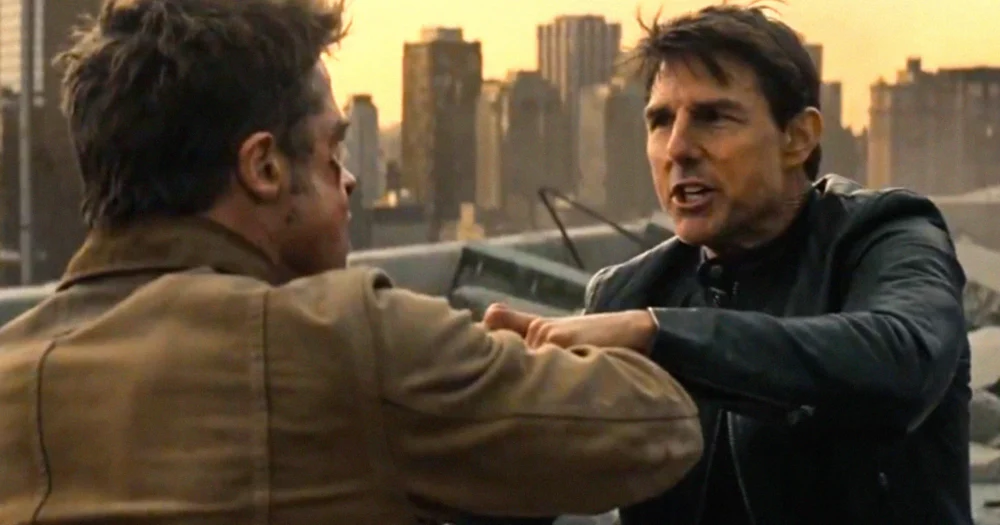
A provocative claim has shaken the glittering façade of Hollywood, with a prominent industry insider asserting that the entertainment capital is engaged in a widespread deception regarding its integration of artificial intelligence. Janice Min, a seasoned veteran and former editor of The Hollywood Reporter, now CEO of the influential cinema industry media group Ankler Media, unveiled this startling revelation in a recent interview with Business Insider. Her blunt assessment: "The thing with AI right now in Hollywood: Everyone’s lying just a little bit." This isn’t merely about minor omissions; Min clarified that studios are actively using AI more than they admit, while creative professionals, despite public protestations, are secretly leveraging generative AI tools in their craft.
Min’s assertion paints a picture of an industry caught between the undeniable potential of cutting-edge technology and the fierce backlash from its creative workforce. When pressed to elaborate on the nature of this dishonesty, she left no room for ambiguity: "Studios are lying about how much they’re using it," clarifying that this meant they were employing AI more frequently and extensively than disclosed. This extends beyond the corporate suites to the individual creators. "Companies are lying about the capability of their products. And for creative people, they’re lying about the fact that they’re not using it," Min continued, challenging the notion of pristine human creativity in the age of AI: "I dare you to find a screenwriter who is staring at a blank page and not talking to Claude or ChatGPT at the same time."
This isn’t just idle speculation from an outsider; Min’s career has placed her at the very heart of Hollywood’s media landscape, granting her unparalleled insight into its inner workings and unspoken truths. Her comments suggest a systemic, almost clandestine, adoption of AI tools across various facets of film production, from pre-production scripting to post-production enhancements. The motivations behind this secrecy are complex, likely stemming from a desire to maintain competitive advantage, avoid public scrutiny, and sidestep the thorny ethical debates that have plagued the industry, particularly in the wake of the 2023 writers’ and actors’ strikes.
One notable instance that momentarily pierced this veil of silence was the Oscar-winning film "The Brutalist." Its director, Brady Corbet, openly confirmed the use of AI to refine and enhance the Hungarian accents of lead actors Adrien Brody and Felicity Jones. While this admission sparked a brief flurry of discussion, Min suggests it was an outlier, a rare moment of transparency in an otherwise opaque environment. "This year, it is crickets," she observed, noting the conspicuous absence of similar AI controversies. Even the Academy of Motion Picture Arts and Sciences, often seen as the bastion of traditional filmmaking and artistic integrity, appears to be adopting a pragmatic, if unstated, approach. "Even the Academy, the most precious, legacy-protecting institution in Hollywood, has not come out in a really firm way about AI. They basically have a don’t ask, don’t tell policy," Min explained. Her most audacious claim? "I would say with some certainty that every single best picture nominee this year has used AI in its production process."
If Min’s statement about the Best Picture nominees holds true, it signifies a profound and pervasive integration of AI that goes far beyond niche applications. It suggests that AI isn’t just a peripheral tool but an intrinsic component woven into the fabric of even the most critically acclaimed and artistically celebrated films. This raises significant questions about the definition of "human creativity" in filmmaking and the future of traditional roles within the industry. What aspects are being aided? Is it purely technical efficiency, or is AI now contributing to the creative vision itself, albeit subtly?
However, it is crucial to approach these claims with a degree of healthy skepticism and a nuanced understanding of what "AI" truly encompasses. The term "AI" itself is incredibly broad, ranging from sophisticated algorithms that have been optimizing visual effects and post-production workflows for decades to the nascent, yet rapidly evolving, field of generative AI models like ChatGPT, Midjourney, or Sora. Many "AI" applications in Hollywood, particularly in visual effects, are merely advanced computational tools that streamline processes, enhance realism, or automate repetitive tasks – capabilities that have been evolving in CGI and digital effects software long before the recent explosion of generative AI. These are often enhancements to existing tools, rather than entirely autonomous creative engines. Distinguishing between these forms of "AI" is vital, as the ethical and professional implications vary dramatically.
The widespread sentiment among artists also provides a powerful counter-narrative to Min’s assertion about secret AI usage. The 2023 strikes by the Writers Guild of America (WGA) and the Screen Actors Guild – American Federation of Television and Radio Artists (SAG-AFTRA) were historic, in part due to their explicit demands for protections against AI. These unions fought vehemently for clauses that would prevent studios from using AI to replace human writers and actors, or to exploit their likenesses without consent and fair compensation. Artists across disciplines have expressed deep-seated anxieties about job displacement, the devaluation of their creative contributions, and the ethical quagmire surrounding intellectual property generated or influenced by AI. Given this fervent and public opposition, it seems difficult to reconcile the idea that "most screenwriters" are secretly consulting chatbots with the strong anti-AI stance articulated by their unions. If they are, it would suggest a profound internal conflict, driven by competitive pressures or the simple, human desire to overcome creative blocks.
Furthermore, much of the public discourse surrounding AI’s capabilities in film is fueled by alarmist narratives and often exaggerated claims from AI boosters. These proponents, often linked to tech companies with vested interests, frequently push the idea that "Hollywood is cooked" – that traditional filmmaking is on the brink of obsolescence due to generative AI’s rapid advancements. Every few weeks, a new viral AI-generated video surfaces, often featuring deepfaked celebrities performing incredible feats, accompanied by breathless pronouncements that the end of human-led content creation is nigh. The current darling, Seedance 2.0, like its predecessors, churns out clips designed to impress and intimidate.
However, as the article points out, many of these "miraculous" demonstrations often turn out to be more "theater" than true revolution. The much-touted viral AI video of Tom Cruise and Brad Pitt engaging in an elaborate rooftop fight – which sent "credulous Marvel screenwriters quivering in their boots" and had "AI bros prematurely dancing on actors’ graves" – was later revealed to be less groundbreaking than it appeared. It wasn’t an entirely AI-generated sequence from scratch, but rather a digital "reskin" or "deepfake overlay" applied to pre-existing footage of two flesh-and-blood human actors performing in front of a green screen. The underlying choreography, physical performance, and initial cinematography were still entirely human-driven. This distinction is crucial: applying a digital skin is far less complex and creatively demanding than generating an entire, coherent, emotionally resonant scene from a text prompt. It highlights the significant gap between impressive, short-form viral content and the complex, multi-layered requirements of feature film production, where narrative coherence, subtle emotional expression, and consistent artistic vision are paramount. The limitations of current generative AI, such as the "uncanny valley" effect, occasional visual artifacts, and the struggle to maintain long-form narrative consistency, remain significant hurdles for true cinematic quality. Perhaps the only thing truly "cooked," as the original article wryly notes, are "the brains of people that believe every claim that comes out of AI circles."
The truth likely lies somewhere in the complex intersection of these perspectives. Hollywood, like any industry, is driven by efficiency and innovation. It’s plausible that studios are indeed integrating AI tools, particularly those that fall under the umbrella of advanced algorithms for VFX, sound design, editing, and even preliminary script analysis, at a pace faster than publicly acknowledged. The economic pressures to reduce costs and accelerate production cycles are immense. For individual creatives, the temptation of a powerful tool to overcome writer’s block or streamline tedious tasks – even if it contradicts their public stance – is also understandable.
The "don’t ask, don’t tell" policy of the Academy, if true, suggests a pragmatic, albeit cautious, acceptance of AI’s growing presence. Rather than drawing a hard line that could alienate an increasingly tech-dependent industry, they may be allowing for a quiet, incremental adoption while observing the evolving landscape. This strategy avoids immediate controversy but defers the inevitable reckoning with AI’s impact on artistic definitions and recognition.
Ultimately, Janice Min’s candid observations force a critical re-evaluation of Hollywood’s relationship with artificial intelligence. Her claims, whether entirely accurate or partially exaggerated, underscore a profound tension: the industry’s drive for technological advancement versus its deep-seated commitment to human artistry, and the complex ethical tightrope walked by those navigating this rapidly changing terrain. The "lying" she describes may not be malicious in every instance, but rather a symptom of an industry grappling with transformative technology, uncertain of how to integrate it responsibly, or even how to talk about it honestly, without alienating its talent or its audience. The conversation around AI in Hollywood is far from over; it’s merely moving into a new, more secretive, and perhaps more pervasive, phase.
More on AI: OpenAI’s Hardware Device Just Leaked, and You Will Cringe