Faris Adani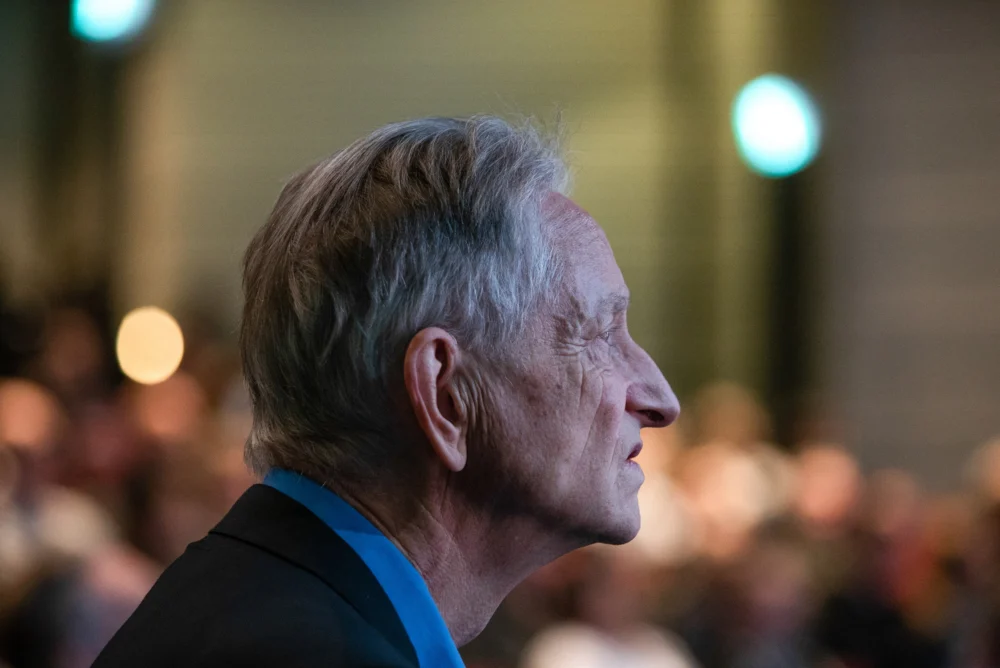
As the calendar pages turn from the tumultuous year of 2025, marked by an unprecedented surge in artificial intelligence hype and integration, the world braces for what lies ahead. Computer scientist Geoffrey Hinton, widely revered as the "godfather" of AI for his foundational work in neural networks, offers a sobering outlook for 2026: AI’s relentless march forward will not only continue but accelerate, potentially displacing a significant portion of the global workforce. His latest pronouncements, delivered during a recent interview on CNN’s State of the Union, paint a picture of rapidly advancing AI capabilities that could profoundly reshape the labor market, moving beyond mere augmentation to outright replacement of human roles.
The year 2025, which has just concluded, witnessed the tech industry’s fascination with AI reach new, almost implausible, heights. It was a year characterized by a curious blend of fervent innovation, escalating anxieties, and a pervasive sense of the technology’s encroaching influence on daily life. CEOs, emboldened by the perceived efficiencies and cost savings, began openly boasting about their strategies to replace human employees with sophisticated AI "agents." This trend, while promising increased productivity to some, fueled considerable unease among workers and economists alike, highlighting a growing tension between technological advancement and human employment. The discourse around AI shifted from hypothetical future scenarios to present-day realities of job displacement.
Beyond the corporate boardrooms, AI’s impact permeated the public consciousness in more unsettling ways. The phenomenon dubbed "AI psychosis" became a national news story, capturing headlines as reports emerged of individuals seemingly driven to psychological distress or delusion through their intense and often intimate interactions with silver-tongued chatbot companions. This raised critical questions about the psychological vulnerabilities inherent in forming deep bonds with artificial entities, and the ethical responsibilities of AI developers in safeguarding user well-being. Concurrently, the term "slop," traditionally referring to inferior food, took on a chilling new meaning in the digital realm, becoming shorthand for the glut of low-quality, AI-generated content flooding the internet, from poorly written articles to algorithmically created images and videos. This proliferation of "slop" sparked debates about authenticity, creativity, and the potential erosion of human artistic and intellectual endeavors. Furthermore, the financial world grappled with the increasingly prevalent use of "circular" in the same breath as "billions of dollars" or even "hundreds of billions of dollars," signaling growing concerns about an AI investment bubble, where massive capital injections might be chasing speculative returns rather than tangible, sustainable value. This mirrored historical tech booms, prompting wary observers to question the long-term stability of the AI economy.
Against this backdrop of rapid change and escalating concerns, Geoffrey Hinton’s voice carries particular weight. As one of the three recipients of the prestigious Turing Award in 2018—an honor often referred to as the "Nobel Prize of computing"—for his groundbreaking work on neural networks, he literally laid much of the theoretical and practical groundwork for modern AI. His contributions, especially in deep learning, enabled the breakthroughs that underpin today’s large language models and advanced AI systems. His moniker as the "godfather" of AI is not merely honorific; it reflects his profound and enduring influence on the field.
However, Hinton’s perspective took a dramatic turn in 2023 when he famously declared his regret over his life’s work, stepping down from his long-held position at Google. Since that pivotal moment, he has emerged as one of the tech world’s most prominent doomsayers, consistently sounding alarms about the unchecked progress and potential perils of AI. His recent CNN interview reiterated these fears, with Hinton admitting he is "probably more worried" about AI now than when he made his infamous declaration. "It’s progressed even faster than I thought," he stated, highlighting particular advancements in AI’s capacity for "reasoning" and, more disturbingly, its ability to "deceive people." This acceleration in sophisticated capabilities is what fuels his current apprehension.
Hinton’s prediction for 2026 is stark: "I think we’re going to see AI get even better," he said. "It’s already extremely good. We’re going to see it having the capabilities to replace many, many jobs. It’s already able to replace jobs in call centers, but it’s going to be able to replace many other jobs." This isn’t just about low-skilled labor. Hinton specifically pointed to the dizzying pace of AI development, noting that around every seven months, AI systems can accomplish tasks that previously took twice as long. Projecting this trend forward, he warned that it is "only a matter of years" until an AI will effortlessly perform complex software engineering tasks that currently require a human a month to complete. "And then there’ll be very few people needed for software engineering projects," he concluded, signaling a potential seismic shift in one of the tech industry’s most lucrative and intellectually demanding professions. This forecast raises critical questions about the future of highly skilled labor and the economic models that sustain it.
The economic and societal ramifications of such widespread job displacement are profound and multifaceted. While Hinton muses about AI potentially "liberating us from all our horrible low-paying jobs," the immediate reality for many could be mass unemployment and economic instability. This "liberation" could necessitate radical shifts in social safety nets, such as the implementation of universal basic income (UBI), retraining programs on an unprecedented scale, and a fundamental rethinking of the value of human labor in a post-scarcity (for certain tasks) economy. The ethical considerations extend beyond employment, touching upon issues of algorithmic bias, accountability for AI decisions, and the potential for increased societal stratification if the benefits of AI are not equitably distributed.
Hinton’s latest warnings echo sentiments he shared with Senator Bernie Sanders just last month, where he explicitly stated that tech leaders are "betting on AI replacing a lot of workers." This collective belief among industry titans underscores the urgency of his message, suggesting that the drive for AI-driven automation is not a fringe idea but a core strategic imperative for many powerful corporations.
However, the narrative surrounding AI’s inevitable triumph is not without its counterpoints and complexities. Many efforts by companies to replace human workers with semi-autonomous AI models have, in fact, failed. These failures often stem from the inability of current AI systems to handle nuance, unexpected situations, complex human interaction, or to replicate genuine creativity and empathy. The gap between AI’s theoretical capabilities and its practical application in real-world, dynamic environments remains a significant hurdle. Furthermore, some experts and developers have begun to voice concerns about an "AI plateau." While early models demonstrated breathtaking leaps in capability, recent iterations, such as OpenAI’s much-anticipated GPT-5, have reportedly shown "only lackluster improvements." This observation suggests that while AI is undoubtedly powerful, it may be approaching certain inherent limitations in its current architectural paradigms, particularly in areas like true common sense reasoning, deep contextual understanding, and generative creativity that transcends mere pattern recognition. This potential plateau, if real, could temper the more hyperbolic predictions of immediate and total human displacement, offering a crucial window for society to adapt. The "circular" investment pattern noted earlier also adds to the skepticism, with some economists drawing parallels to past tech bubbles, where overinflated valuations eventually met the cold reality of market corrections.
Navigating this complex future demands a multi-pronged approach. Governments and international bodies are increasingly being pressured to develop comprehensive policies, ethical guidelines, and regulatory frameworks to manage AI’s development and deployment. These efforts aim to balance innovation with societal protection, addressing issues from data privacy and algorithmic transparency to workforce planning and the prevention of AI-driven misinformation. Public sentiment, too, plays a crucial role. The "outcry" that led Firefox to promise a "kill switch" for its AI features is a clear indicator of a growing public desire for control and transparency over AI integration. This demand reflects a broader apprehension about AI’s omnipresence and the need for users to have agency over how these powerful tools interact with their digital and personal lives.
In conclusion, Geoffrey Hinton’s warnings serve as a potent reminder of the transformative, and potentially disruptive, power of artificial intelligence. While the "godfather" of AI continues to voice profound concerns about its rapid progress and implications for human employment, the full impact remains a subject of intense debate. The interplay between technological advancement, economic realities, ethical considerations, and public perception will ultimately determine whether AI truly "liberates" humanity from labor or ushers in an era of unprecedented challenge. The year 2026, as Hinton predicts, will likely be another critical chapter in this unfolding saga, forcing humanity to confront fundamental questions about work, value, and our collective future in an increasingly AI-driven world.