Faris Adani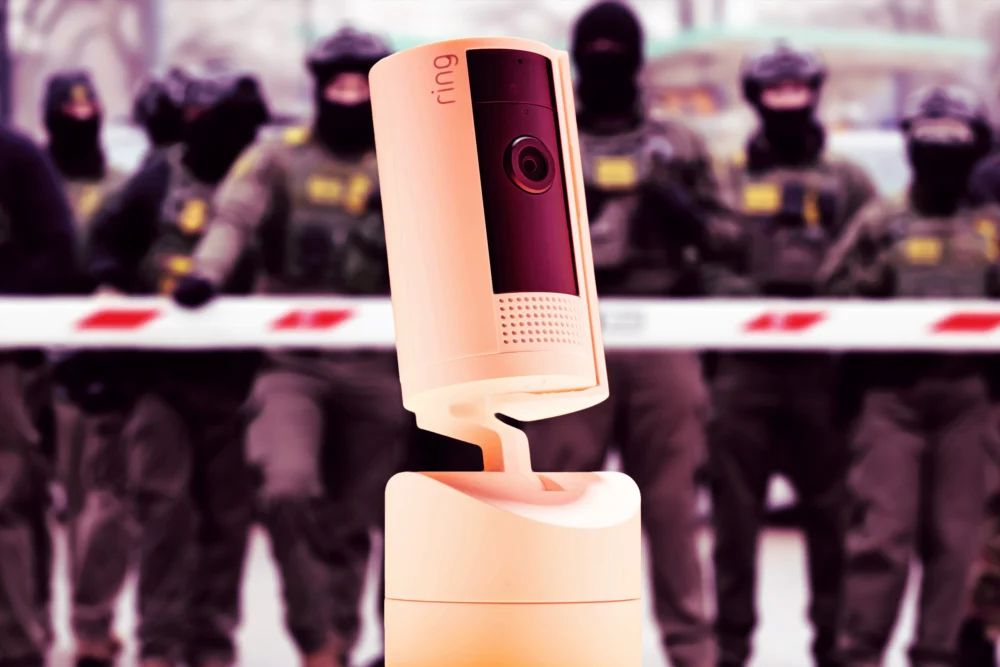
The confluence of escalating US Immigration and Customs Enforcement (ICE) activities and the pervasive reach of commercial surveillance technology has ignited a firestorm of controversy, as Amazon’s Ring doorbell cameras are now integrated into a broader network accessible to federal and local enforcement agencies. This development has sparked a fervent grassroots campaign urging Ring owners to dismantle their devices, fearing their homes are inadvertently becoming nodes in a vast government surveillance apparatus. The outrage underscores a growing concern among privacy advocates and civil liberties groups about the deepening entanglement between powerful tech corporations and the state, potentially eroding fundamental rights under the guise of security.
For years, ICE operations have been a source of significant contention, with agents conducting raids and arrests that often ripple through American communities, creating an atmosphere of fear and uncertainty. In this fraught landscape, big tech companies, particularly those offering surveillance solutions, have found themselves in an increasingly indispensable, and often criticized, role. Amazon’s subsidiary, Ring, stands at the epicenter of this latest controversy. Its AI-powered doorbell cameras, which have proliferated across millions of homes, were initially marketed as a simple way to enhance home security and convenience. However, their integration with law enforcement networks has transformed them into a potential instrument of state surveillance, sparking widespread alarm.
The critical turning point came in October, when Ring publicly announced a partnership with Flock Safety. Flock Safety is a company known for its expansive network of AI-powered license plate recognition (LPR) cameras and other surveillance technologies, which are widely utilized by police departments and other enforcement agencies across the United States. The initial announcement framed this collaboration as a means to "help neighborhoods work together for safer communities." However, an investigation by 404 Media swiftly revealed the chilling implications of this partnership: Flock Safety’s nationwide network of cameras, now bolstered by Ring’s extensive reach, has been made available to a broad spectrum of local and federal police and enforcement agencies, including ICE and the Secret Service. This revelation ignited fears that ordinary homeowners’ Ring doorbells were no longer just monitoring their front porches but actively feeding into a comprehensive government panopticon, collecting data that could be used for tracking, identification, and ultimately, enforcement actions.
In response to these revelations and the intensifying anti-ICE protests across the US, activists have launched an urgent grassroots campaign, pleading with Ring users to "smash their devices." The rationale is clear: by removing these cameras, individuals can help deprive the federal government of crucial footage that could be instrumental in a campaign of harassment, arrests, and deportations. Progressive activist Guy Christensen, leveraging his substantial 3.5 million followers on TikTok, became a prominent voice in this movement. "Smash your Ring doorbells," Christensen emphatically urged. "You need to smash your Ring doorbells. Amazon owns Ring, and they’ve decided to begin sharing surveillance collected from your front step with ICE and Flock Safety, weaponing surveillance against the American people." His message resonated with many, underscoring the perceived betrayal by a company once seen as a provider of personal security now accused of facilitating state overreach. Christensen further implored, "If you have home surveillance or something, make sure that you know, 100 percent, the footage being recorded of you and your family in your home, or wherever, is only and can only be seen and shared with you," highlighting the demand for absolute control over personal data and surveillance feeds.
The criticisms against Ring devices are not new. For years, safety experts and tech critics have voiced profound concerns regarding their security risks and egregious privacy violations. Reports of vulnerabilities, including instances where hackers gained access to Ring cameras, have plagued the company, exposing users to potential breaches of their personal security. Beyond technical flaws, privacy advocates have long decried Ring’s data collection practices, its opaque sharing policies, and its role in constructing what many have termed the "largest civilian surveillance network" in US history. This network, comprising millions of interconnected residential cameras, creates an unprecedented web of monitoring that blurs the lines between private property and public space. The Electronic Frontier Foundation (EFF), a leading digital rights organization, issued a stark warning last summer, stating that Ring was "actively eroding civil liberties in the US for profit," a condemnation that now feels particularly prescient given the ICE integration. The EFF’s concerns centered on the normalization of constant surveillance and the potential for abuse by law enforcement, particularly in marginalized communities.
These long-standing criticisms have taken on a renewed urgency amidst what many describe as ICE’s brutal crackdown on illegal immigration. While unlawful entry into the United States is primarily considered a civil violation, not a criminal one, ICE enforcement activities, particularly under recent administrations, have led to severe consequences. The human toll is staggering: reports indicate at least 33 deaths linked to ICE activities and the unlawful detention of over 170 US citizens. These statistics paint a grim picture of an agency operating with broad powers, often with devastating effects on individuals and families. The prospect of Ring cameras, ostensibly installed for personal safety, now contributing to these enforcement actions has fueled widespread anger and a sense of betrayal among the public.
The sentiment against Ring and its partnership with ICE has materialized in powerful visual campaigns. "Your Ring camera is an ICE agent," declares a striking poster designed by Kathryn Brewster, a postdoctoral fellow and digital studies institute affiliate at the University of Michigan. Brewster’s artwork succinctly captures the essence of the activist movement, urging viewers to "unplug ring," "melt ICE," and "protect your neighbors!" These slogans encapsulate the dual objectives of the campaign: to sever the technological link to surveillance and to foster community solidarity against enforcement actions. Similarly, on platforms like Reddit, a flyer emblazoned with the phrase "ICE thanks YOU for YOUR cooperation" alongside a photo of a Ring camera quickly gained traction, racking up thousands of upvotes across various subreddits. These viral campaigns effectively communicate the perceived complicity of Ring users in the broader surveillance apparatus, compelling them to reconsider their device ownership.
Despite the growing public outcry, the exact legal mechanisms governing the government’s access to Ring footage remain murky, contributing to public distrust. A 2021 report by The Verge shed some light on these opaque processes, revealing that while Ring typically notifies users when law enforcement requests their footage, agencies possess the ability to subpoena that footage even after the device owner has explicitly denied the request. Crucially, The Verge‘s investigation found that Amazon, Ring’s parent company, complied with these law enforcement requests in a staggering 57 percent of cases. This statistic highlights a significant power imbalance, where a user’s right to deny access can be overridden by legal process, and Amazon frequently chooses to cooperate rather than contest. This compliance rate raises serious questions about Amazon’s commitment to user privacy versus its willingness to cooperate with government agencies, even when faced with user objections. The lack of transparency surrounding these legal procedures only compounds the concerns, leaving many to wonder about the true extent of surveillance and the safeguards, or lack thereof, protecting their privacy.
Whether ICE agents are literally spying on neighbors through individual Ring doorbells at will is difficult to definitively confirm given the secrecy surrounding such operations. However, Amazon’s documented history regarding user privacy leaves a considerable amount to be desired. The company has faced numerous criticisms and investigations over its data handling practices, its interactions with law enforcement, and its overall impact on digital rights. This track record, combined with the new integration with Flock Safety and the broad access granted to agencies like ICE, paints a concerning picture for the future of digital privacy and civil liberties in the United States. The unfolding situation with Ring and ICE serves as a potent reminder of the ongoing battle to balance technological convenience with fundamental human rights, a battle that requires constant vigilance from both individuals and advocacy groups. The call to "smash your Ring doorbells" is more than just an act of defiance; it’s a symbolic rejection of a surveillance society enabled by corporate complicity.