Faris Adani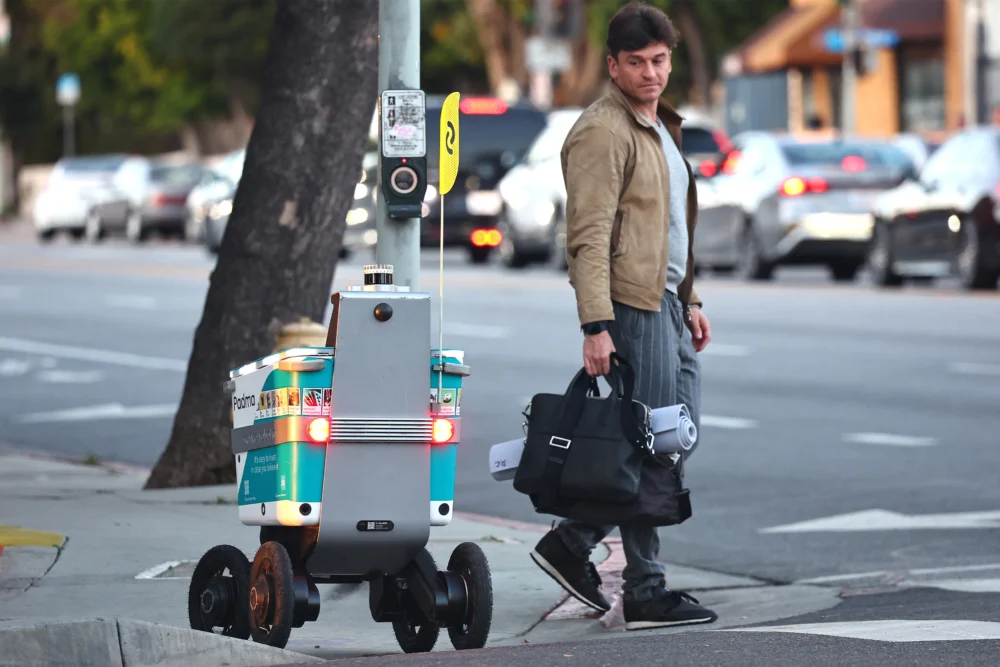
The landscape of urban employment is undergoing a profound and unsettling transformation, nowhere more evident than in California’s bustling cities, where the promise of technological advancement is clashing with the harsh realities of the gig economy. Once a lifeline for countless individuals seeking flexible, low-barrier income, the delivery sector is now witnessing a disquieting shift: human drivers, already contending with precarious wages and a severe lack of benefits, are finding themselves increasingly sidelined by autonomous delivery robots. This encroachment isn’t eliminating jobs entirely, however; instead, it’s spawning a new, equally precarious role: the "robot wrangler," a human counterpart tasked with babysitting the very machines displacing their peers, raising critical questions about the true cost of innovation and who ultimately benefits.
For years, the gig economy has been lauded by its proponents as a bastion of entrepreneurial freedom and flexibility, offering a low barrier to entry for a diverse workforce. Yet, beneath the veneer of independence, many gig workers, particularly delivery drivers, have struggled with sub-poverty wages, the absence of employer-provided healthcare or retirement plans, and the constant pressure of maximizing efficiency for algorithms that often seem to prioritize profit over human well-being. Now, as self-driving delivery units from companies like Coco and Serve Robotics begin to trundle across sidewalks, these economic pressures are intensifying, pushing an already vulnerable workforce into an even more uncertain future.
The emerging role of the "robot wrangler" represents a peculiar evolution in the human-machine interface. As the Los Angeles Times recently highlighted, these wranglers are the unseen guardians of the autonomous delivery fleet, responsible for a myriad of tasks that keep these metallic couriers operational in the chaotic unpredictability of the real world. Much of their work occurs behind the scenes, a meticulous ballet of logistics and maintenance. Each robot requires daily recharging, a process that involves docking, monitoring battery health, and ensuring optimal power levels for the next shift. Cleaning is also paramount, not just for aesthetic reasons but to maintain sensor integrity, preventing grime and debris from obstructing the cameras and lidar systems crucial for navigation.
Beyond the routine, wranglers are on the front lines of troubleshooting. Software updates, often pushed wirelessly, occasionally glitch, requiring manual intervention to reboot or reinstall. Hardware malfunctions, from a sticky wheel to a faulty sensor, demand swift diagnosis and repair. These operations often take place at centralized depots, where fleets are stored, maintained, and prepared for deployment, transforming these facilities into bustling hubs of human-robot interaction.
However, a significant and often challenging portion of the wrangler’s job unfolds directly on the streets. America’s urban infrastructure, notorious for its patchwork of cracked pavements, treacherous potholes, and ill-maintained pedestrian zones, presents a formidable challenge for even the most sophisticated autonomous systems. A seemingly innocuous garden bed can become an insurmountable obstacle, a deep pothole a trap, or an uneven curb a tipping hazard. When a robot encounters such a real-world snag – perhaps getting stuck, falling over, or misinterpreting a complex intersection – it’s the robot wrangler who springs into action. Armed with remote access tools, and often physically present, they navigate the robot out of trouble, right it after a tumble, or even manually guide it across a busy crosswalk that its AI deems too risky.
Furthermore, the human element remains stubbornly persistent in the final mile of delivery. While robots are designed for curbside drops, not all customers are willing or able to venture outside to retrieve their orders. In such instances, the wrangler becomes the temporary human face of the automated service, completing the "in-person delivery" that the robot cannot. This highlights a fundamental paradox: the ambition to fully automate delivery still requires a significant, albeit redefined, human presence to bridge the gaps between machine capability and real-world complexity, as well as human expectation.
Serve Robotics CEO, speaking on the scaling of these new roles, articulated a vision where these jobs are directly proportional to the growth of robot fleets. "They are the kind of jobs that scale with the robots," he noted. "If you build more robots, you’re going to still have people whose job is to operate the fleet." While this perspective suggests job creation, it overlooks the critical distinction between the quality and economic viability of the new roles compared to those they replace.
Indeed, the rise of these robot wranglers is viewed by many traditional human delivery drivers, particularly in urban centers, as a direct and existential threat. These drivers, who rely on their vehicles and their labor to make a living, see the robots as a relentless force of automation designed to chip away at their livelihoods. The new "robot delivery specialist" positions, such as those advertised by Coco in Los Angeles, explicitly state responsibilities like "transport robots to merchant partners, perform basic maintenance, and even complete in-person deliveries when necessary." This job description paints a clear picture of a reactive, support-oriented role, a stark contrast to the more autonomous, customer-facing work of a traditional delivery driver.
The wages offered for this emerging profession are a point of significant contention. Starting at $21 an hour and capping at $23, a robot wrangler in Los Angeles could expect a yearly take-home pay of approximately $45,760. While this figure might, on paper, appear higher than what some average Los Angeles delivery drivers earn – many of whom grapple with fluctuating demand, fuel costs, vehicle maintenance, and the unpredictable nature of tips – it falls drastically short of what is considered a living wage in California. According to MIT’s Living Wage calculator, a single adult with no children in California requires an estimated $63,402 annually just to cover basic necessities and live independently. This disparity underscores that while automation may create new jobs, it does not necessarily create good jobs, or jobs that offer true economic security in high-cost-of-living areas.
The broader societal implications are even more troubling. Gig delivery work, despite its flaws, has served as a crucial low-barrier income source for a myriad of marginalized workers. Migrants seeking entry into the workforce, single parents requiring flexible hours, elderly individuals supplementing retirement income, and people with disabilities facing traditional employment barriers have all found a financial stopgap in the accessibility of delivery apps. The systematic replacement of these human roles with robots, even if it creates a new class of "wranglers," fundamentally reduces these vital entry points into the economy. It exacerbates existing inequalities, pushing vulnerable populations further to the economic margins by eliminating one of the few readily available income streams.
Moreover, this shift represents a profound degradation of work quality and autonomy. Gig economy apps like Uber and DoorDash have long been criticized for "deskilling" drivers, reducing their roles to following algorithmic instructions rather than exercising independent judgment. Robots complete this degradation, transforming human workers from semi-autonomous service providers into little more than remote babysitters or physical assistants for machines. A DoorDash driver, when closing the app, retains a degree of freedom and agency, disengaging from their obligation to the company. A robot wrangler, contracted by the hour and often under constant digital surveillance, has no such freedom; their time and attention are tethered to the machines, often in a reactive, problem-solving capacity that offers little in terms of skill development or career progression. The psychological toll of tending to machines that have replaced one’s peers, or even one’s former self, is an under-explored but significant dimension of this new labor paradigm.
The long-term impact of delivery robots on overall job numbers, the quality of work, and urban life remains shrouded in uncertainty. The business case for widespread robot deployment is still nascent, dependent on factors like cost-efficiency at scale, technological reliability, and public acceptance. Municipal regulations, driven by concerns over sidewalk congestion, accessibility for disabled individuals, public safety, and indeed, job displacement, could significantly slow or even halt their rollout, as seen in cities like Chicago which have moved to ban delivery robots from sidewalks. This pivotal juncture demands a critical examination: do delivery robots truly represent a step forward for society as a whole, fostering progress and improving quality of life, or are they merely the latest iteration of Silicon Valley’s relentless pursuit of reduced labor costs, cleverly disguised under the banner of "innovation"? The answer will define not only the future of work but also the kind of society we choose to build.