Imroatul Nasiyah
Quantum computers, hailed as the next frontier in computational power, promise to tackle problems that are currently intractable for even the most sophisticated supercomputers. However, the inherent fragility of these nascent machines poses a significant hurdle. The fundamental units of quantum information, known as qubits, are exquisitely sensitive to environmental disturbances. This susceptibility leads to a cascade of errors, rapidly degrading the accuracy of quantum computations and limiting the complexity of solvable problems. A groundbreaking discovery, emerging from the intersection of advanced mathematics and theoretical physics, has unveiled a previously overlooked particle, dubbed the "neglecton," which could provide a vital key to overcoming this pervasive fragility and unlocking the full potential of quantum computing.
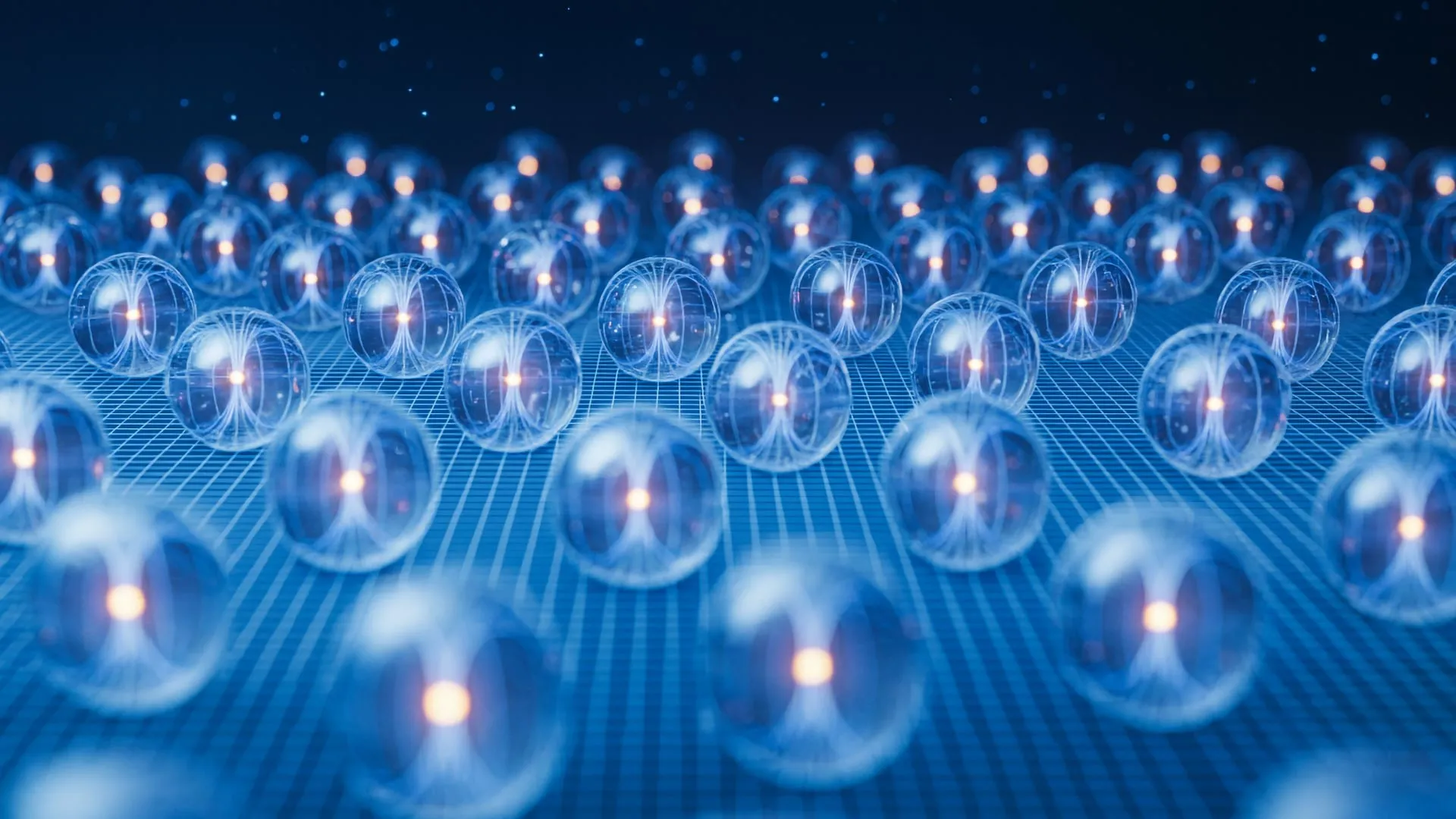
The quest for robust quantum computing has largely focused on topological quantum computing, a paradigm that leverages the exotic properties of hypothetical particles called anyons. These particles, predicted to exist in specific two-dimensional materials, are theorized to encode quantum information within their geometric arrangements, offering a natural shield against environmental noise. Among the most actively researched anyons are Ising anyons, found in systems such as the fractional quantum Hall state and topological superconductors. "Among the leading candidates for building such a computer are Ising anyons, which are already being intensely investigated in condensed matter labs due to their potential realization in exotic systems like the fractional quantum Hall state and topological superconductors," explained Aaron Lauda, professor of mathematics, physics, and astronomy at USC Dornsife College of Letters, Arts, and Sciences, and the senior author of the study.
Despite their promise, Ising anyons, on their own, fall short of enabling universal quantum computation. Their computational capabilities are limited by a process called "braiding," which involves physically maneuvering these particles around each other to perform quantum logic operations. For Ising anyons, this braiding exclusively supports a restricted set of operations known as Clifford gates. While essential, these gates alone are insufficient to perform the full spectrum of computations required for a general-purpose quantum computer, leaving a critical gap in their computational power.
However, a recent study published in Nature Communications details a remarkable solution to this limitation. A team of mathematicians and physicists, spearheaded by researchers at USC, has demonstrated a novel approach that integrates a previously disregarded class of anyons, now christened "neglectons," into the computational framework. This ingenious integration, achieved by incorporating a single new type of anyon that was historically purged from traditional topological quantum computation models, transforms Ising anyons into universal computational entities. The researchers have shown that by adding these "neglected" particles, Ising anyons can perform any quantum computation through braiding alone. The name "neglecton" aptly reflects their former obscurity and their newfound pivotal role. This new anyon arises organically from a more expansive mathematical framework, providing the essential missing component to complete the quantum computational toolkit.
The revelation that these "mathematical discards" hold the key to universal quantum computation stems from a new class of mathematical theories known as non-semisimple topological quantum field theories (TQFTs). These theories represent an expansion upon the conventional "semisimple" frameworks that physicists have traditionally employed to describe anyons. In their pursuit of mathematical simplicity, conventional models often discard mathematical objects exhibiting a "quantum trace zero," effectively deeming them irrelevant. "But those discarded objects turn out to be the missing piece," Lauda elaborated. "It’s like finding treasure in what everyone else thought was mathematical garbage."
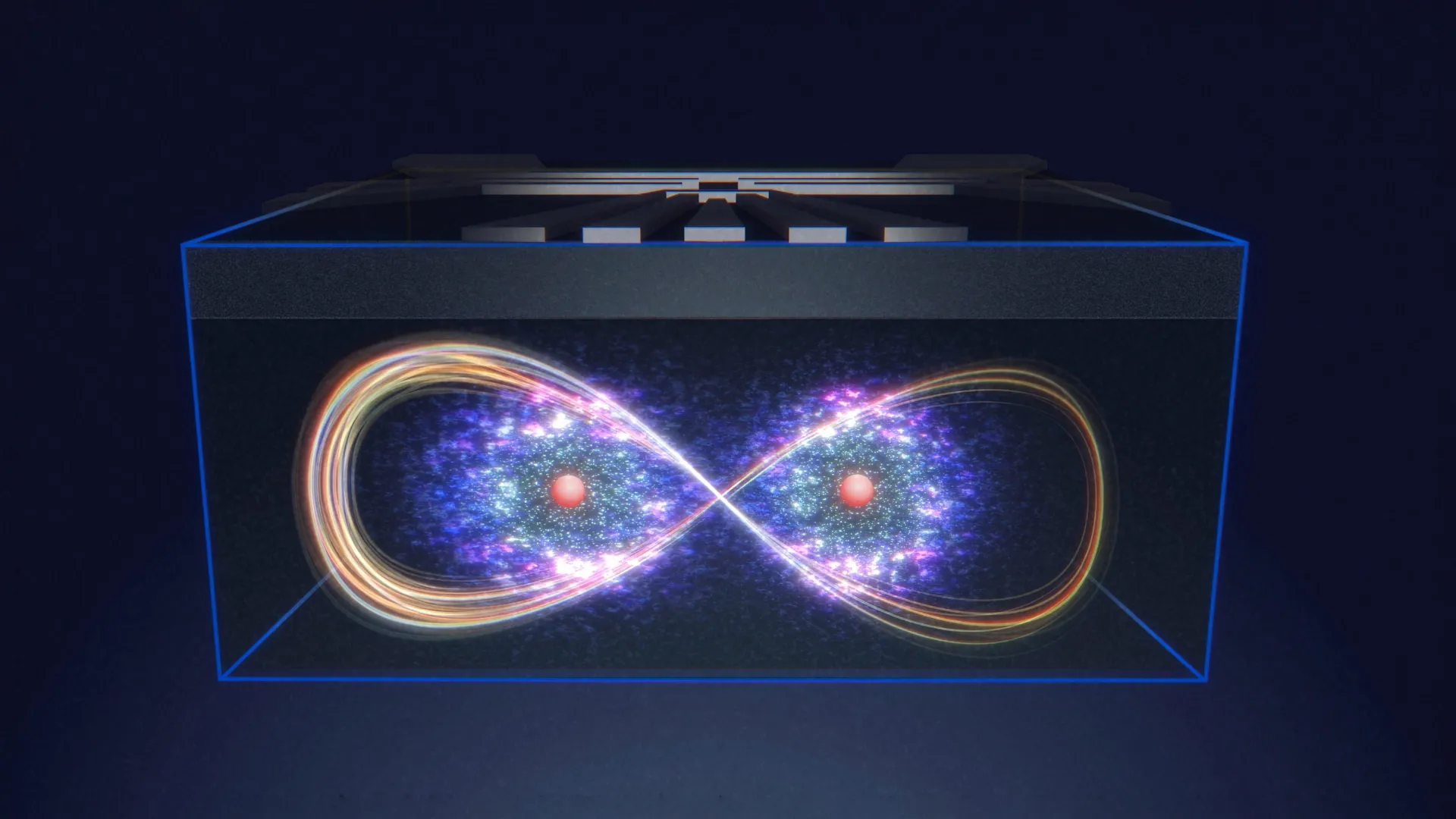
The innovative framework embraced by Lauda’s team retains these previously neglected components, thereby revealing the existence of a novel anyon – the neglecton. When this neglecton is introduced alongside Ising anyons, it empowers universal computation solely through braiding. A crucial aspect of this discovery is that only one neglecton is required, and it remains stationary throughout the computational process, while the Ising anyons are manipulated around it to execute the quantum logic. This stationary nature of the neglecton simplifies the experimental implementation significantly.
The journey to this discovery was not without its theoretical complexities. The non-semisimple framework inherently introduces certain irregularities that appear to violate unitarity, a fundamental tenet of quantum mechanics that guarantees the conservation of probability. From a conventional physics perspective, such violations would typically be considered a disqualifying flaw. However, Lauda’s team devised an elegant solution to circumvent this challenge. They engineered their quantum encoding scheme to strategically isolate these mathematical irregularities, effectively quarantining them away from the core computational processes. "Think of it like designing a quantum computer in a house with some unstable rooms," Lauda explained. "Instead of fixing every room, you ensure all of your computing happens in the structurally sound areas while keeping the problematic spaces off-limits." By carefully compartmentalizing the quantum information within stable regions of the theoretical framework, they ensured that the computations proceed correctly, even within a mathematically unusual global structure. "We’ve effectively quarantined the strange parts of the theory," Lauda emphasized. "By carefully designing where the quantum information lives, we make sure it stays in the parts of the theory that behave properly, so the computation works even if the global structure is mathematically unusual."
This breakthrough exemplifies the profound impact that abstract mathematical concepts can have on solving tangible engineering challenges in unforeseen ways. "By embracing mathematical structures that were previously considered useless, we unlocked a whole new chapter for quantum information science," Lauda stated, highlighting the transformative potential of their findings.
The research opens up exciting avenues for both theoretical advancement and practical implementation. Mathematically, the team is actively exploring the extension of their framework to different parameter regimes and is working to clarify the precise role of unitarity within non-semisimple TQFTs. On the experimental front, the focus is on identifying specific material systems where the stationary neglecton could be realized. Concurrently, they are developing protocols to translate their braiding-based computational strategy into practical, realizable quantum operations. "What’s particularly exciting is that this work moves us closer to universal quantum computing with particles we already know how to create," Lauda noted. "The math gives a clear target: If experimentalists can find a way to realize this extra stationary anyon, it could unlock the full power of Ising-based systems."
The study’s co-authors include Filippo Iulianelli, the study’s first author, and Sung Kim from USC, as well as Joshua Sussan from Medgar Evers College of The City University of New York. This pioneering research was generously supported by grants from the National Science Foundation (NSF) (DMS-1902092, DMS-2200419, DMS-2401375), the Army Research Office (W911NF-20-1-0075), the Simons Foundation Collaboration Grant on New Structures in Low-Dimensional Topology, a Simons Foundation Travel Support Grant, the NSF Graduate Research Fellowship (DGE-1842487), and the PSC CUNY Enhanced Award (66685-00 54). The discovery of neglectons marks a significant leap forward, transforming theoretical curiosities into tangible prospects for building the quantum computers of the future.