

 Joko Widodo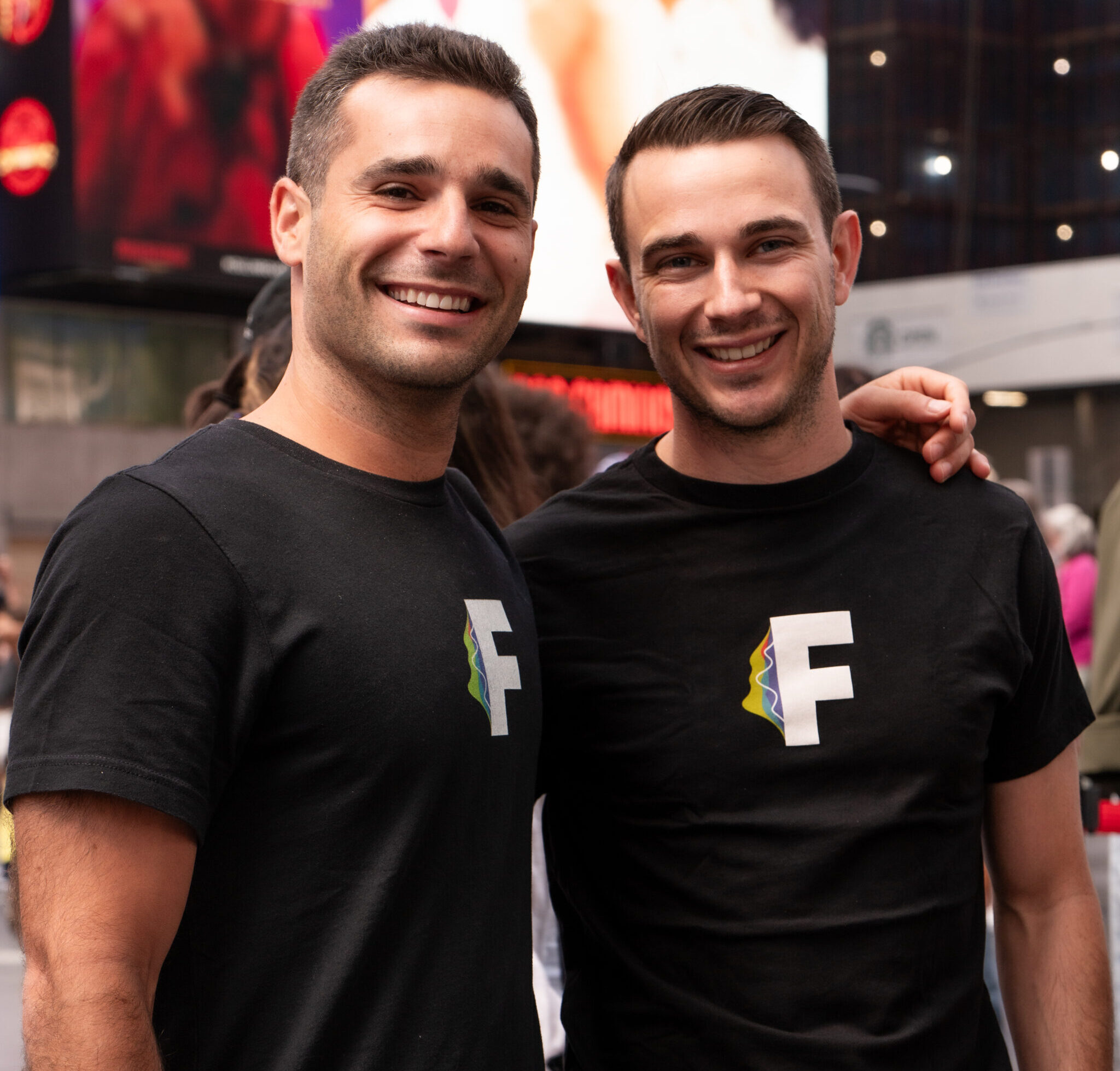
Flip, a pioneering startup dedicated to delivering an Amazon Alexa-like voice AI experience specifically tailored for businesses, has successfully secured $20 million in a Series A funding round, a detail shared exclusively with Crunchbase News. This significant capital injection underscores investor confidence in Flip’s unique verticalized strategy within the increasingly crowded AI-based customer service landscape. Co-led by prominent venture capital firms Next Coast Ventures and Ridge Ventures, this round brings Flip’s total funding to an impressive $31 million, signaling a robust trajectory for the New York-based company. Data Point Capital also participated, alongside ScOp Venture Capital, Bullpen Capital, Forum Ventures, and a diverse group of angel investors. While Flip chose not to disclose its exact valuation, the company confirmed a substantial increase, noting it was up threefold compared to its seed funding round.
The genesis of Flip traces back a decade to the collegiate years of its co-founders, CEO Brian Schiff and CRO Sam Krut, who met at Cornell University. Their entrepreneurial journey began with collaborative ventures, navigating through several pivots before establishing Flip in 2018. Their initial foray into business was particularly insightful; they developed Red Route, a ride-hailing application designed to connect Cornell students with taxis in upstate New York, a region where Uber was then prohibited. This hands-on experience in transportation, dealing directly with customer requests and operational challenges, inadvertently laid the groundwork for what would become Flip. It was during this period that Schiff and Krut identified a critical unmet need: an intelligent AI system capable of efficiently answering and automatically resolving routine customer requests for businesses. This early insight into the complexities of real-world customer interactions, especially over the phone, fueled their ambition to build an AI solution that was not just smart, but genuinely effective and specialized.
In an era where AI-based customer service solutions are abundant, Brian Schiff firmly asserts that Flip’s methodology stands out due to its deeply verticalized approach. Unlike many competitors that offer broad, industry-agnostic platforms, Flip deliberately focuses its advanced AI capabilities on just three core industries: transportation, retail, and healthcare. This strategic decision to specialize is a cornerstone of their competitive advantage. Schiff elaborates, "While horizontal industry-agnostic ‘platforms’ require custom-building the experience and integration, vertical players like Flip come ready ‘out-of-the-box’ with everything brands in that industry need built in." This means that Flip’s AI is pre-trained on vast datasets specific to these sectors, understanding industry-specific jargon, common customer queries, and typical workflows right from the start. This specialization drastically reduces implementation time, improves accuracy, and delivers a superior, more relevant customer experience compared to generic solutions that necessitate extensive customization for each client.
Flip’s journey into these specific verticals has been methodical. They began with a strong emphasis on transportation companies, leveraging their foundational insights from Red Route. Recognizing the broader applicability of their technology, they expanded into the retail sector in 2021, addressing the unique demands of consumer interactions, from order tracking to returns. Further demonstrating their strategic growth, Flip ventured into healthcare in 2024, a sector with complex regulations and highly sensitive customer inquiries, where accurate and empathetic AI communication is paramount. This staged expansion allows Flip to build profound expertise and tailor their AI models to the nuanced requirements of each industry, fostering trust and delivering tangible value. A significant testament to their robust technology is Schiff’s claim that Flip’s AI "is battle-tested on more than 300 million phone calls." This extensive real-world exposure implies a level of sophistication in handling diverse accents, complex queries, interruptions, and emotional cues that generic AI platforms struggle to match. It underscores the system’s resilience, accuracy, and proven ability to autonomously resolve a vast majority of routine customer issues, leading to higher customer satisfaction and operational efficiency.
Today, Flip boasts a rapidly expanding roster of hundreds of enterprise customers, including globally recognized brands such as Under Armour, Tory Burch, and Newell Brands, alongside numerous international transportation giants. This impressive client base reflects the broad applicability and proven efficacy of Flip’s verticalized AI solution. The company has also achieved significant financial milestones, reporting an eight-figure Annual Recurring Revenue (ARR) and demonstrating a remarkable 3x year-over-year growth. These metrics highlight not only strong market adoption but also a highly efficient business model. The recent Series A funding, bringing total capital raised to $31 million, will undoubtedly accelerate Flip’s growth, enabling further product development, expansion into new markets or sub-verticals, and scaling of its operational infrastructure to meet surging demand.

Brian Schiff offers a candid assessment of the broader AI customer service market, noting that while it is an undeniable growth area, it’s also characterized by "a huge amount of noise." He observes a proliferation of "generic AI providers" over the past year or so, many of which have attracted significant funding and media attention by attempting to be an "AI everything for everyone, across every industry, every channel, every use case." However, Schiff points out a crucial irony: "In reality, most of the actual traction, most of the successful customer stories, are working with vendors like Flip that are going very deep into one or a couple of specific industries." This perspective underscores Flip’s belief that true value in AI, particularly in complex domains like customer service, comes from specialized expertise rather than broad generalizations. For large brands, the question is no longer "if" they will adopt AI for customer service, but "when" and, critically, "with whom." Flip aims to be the definitive "whom" for its chosen verticals by demonstrating superior, out-of-the-box performance.
Another key differentiator for Flip, according to Schiff, is its deep expertise in AI-powered telephone customer service. He notes that while many companies have developed AI for chatbots or auto email responders, few have mastered the intricacies of voice-based interactions. Telephone conversations are inherently more complex, requiring sophisticated natural language understanding, real-time processing, and the ability to maintain a natural, empathetic flow. "Most people are doing it inside of chatbots or auto email responders," he said. "We really look at the quality of the experience. It doesn’t matter how nice it is to talk to — it’s still just another bot that’s in the way of a customer trying to solve their problem." Flip’s focus is on creating a truly seamless and effective voice AI that resolves issues, rather than merely deflecting them, ensuring customers feel heard and their problems genuinely addressed.
Flip’s revenue model further distinguishes it from many competitors. Instead of charging hefty upfront costs or requiring rigid long-term commitments, Flip operates on a usage-based model: clients are charged per automated call. This transparent and flexible approach, implemented since the company’s early days, significantly lowers the barrier to adoption for businesses. It allows companies to scale their AI deployment incrementally and only pay for the value they receive, making it an attractive proposition, especially for enterprises looking to test and validate AI solutions without substantial initial investment risk. This model aligns Flip’s success directly with its customers’ success, incentivizing the company to continuously optimize its AI’s resolution rates and efficiency.
Investor confidence in Flip’s strategy is palpable. Alex Rosen, Managing Partner at Ridge Ventures, articulates his conviction, stating that customer service is "one of the few huge markets where generative AI has produced tangible results for enterprise customers and a better experience for users." Drawing on over 30 years of software investment experience, Rosen firmly believes "a vertical approach yields the best results." He commends Flip for taking a distinct path by "focusing on a couple of verticals and going really deep." Rosen adds, "While there are plenty of competitors making noise, some are going after different parts of the market, and Flip has quietly, up to now, launched more live customer deployments, at scale, than anyone." This highlights Flip’s operational maturity and proven capability to implement and run its AI solutions effectively in real-world, high-volume environments.
Mike Smerklo, Co-founder and Managing Director at Next Coast Ventures, brings nearly two decades of experience in call centers and voice technologies to his assessment of Flip. He declares, "I’ve never seen a more compelling ROI for customers than what Flip offers." This strong endorsement speaks to the significant cost savings, efficiency gains, and improved customer satisfaction that Flip’s AI delivers. Smerklo is equally impressed by the founding team’s capabilities and the overwhelmingly positive customer feedback, confidently predicting Flip’s potential to become a "$1 billion business." He particularly applauds the company’s capital-efficient approach to growth, noting a stark contrast with competitors. "Several other companies that have raised tremendously more money have to rely on ‘forward engineering’ to get their product to work for customers," he explains. This "forward engineering" refers to the practice of building out features and capabilities speculatively, often before concrete customer needs or market validation, leading to higher burn rates and longer time-to-value. In contrast, Smerklo emphasizes that "Flip’s solution works, doesn’t require a massive investment from customers, and solves real, salient business issues," underscoring its immediate utility and robust performance.
With this fresh injection of $20 million, Flip is well-positioned to further cement its leadership in verticalized AI-based customer service. The capital will likely be deployed to deepen its AI capabilities within its existing verticals, explore strategic expansion into adjacent sub-sectors, and significantly scale its engineering and sales teams to meet the accelerating market demand. By continuing to refine its battle-tested voice AI and maintaining its disciplined focus on industry-specific solutions, Flip aims to transform how businesses interact with their customers, making automated service not just efficient, but genuinely intelligent and satisfying. The company’s journey from a college ride-hailing app to a leading enterprise AI solution provider exemplifies the power of focused innovation and a deep understanding of customer needs in a rapidly evolving technological landscape. Flip is not merely participating in the AI revolution; it’s defining a specialized, impactful path within it, poised to redefine customer interactions across critical industries.