Faris Adani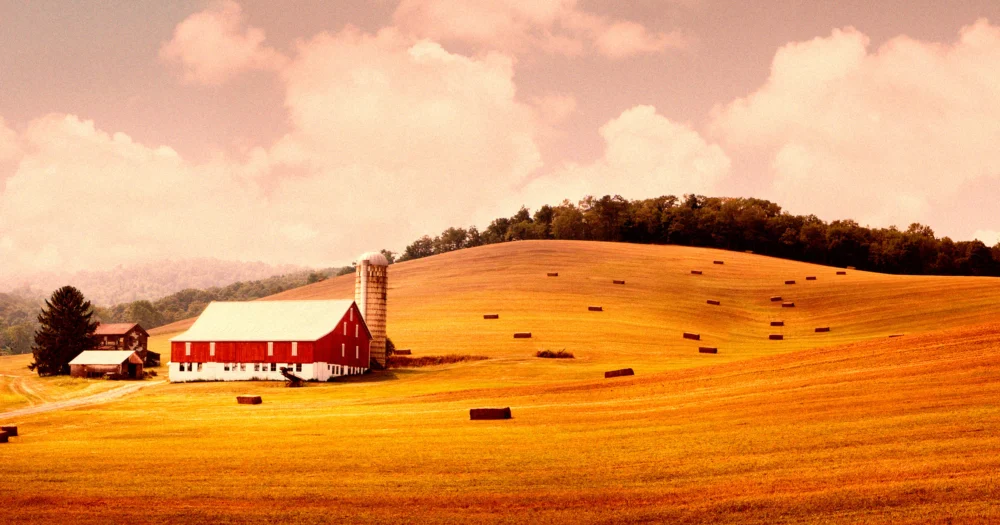
In a powerful testament to the enduring values of land stewardship and familial legacy, an 86-year-old farmer in Cumberland County, Pennsylvania, has captured national attention and widespread acclaim for turning down a multi-million dollar offer from data center developers. This act of defiance against the relentless march of technological expansion highlights a burgeoning conflict across the United States: the immense and often unseen costs of the artificial intelligence boom, particularly the insatiable demand for massive data centers. These facilities, essential infrastructure for the AI revolution, are not merely abstract digital constructs; they are physical behemoths devouring vast tracts of land, straining already fragile electrical grids, and significantly impacting local communities, prompting a growing chorus of opposition from irate constituents and drawing the attention of politicians.
Mervin Raudabaugh, a venerable figure who has dedicated over six decades to cultivating the land surrounding his homestead, found himself at the epicenter of this modern-day struggle. Developers, eager to capitalize on the prime location and expand their digital footprint, presented Raudabaugh with a lucrative "package deal" that also involved three of his neighboring property owners. The offer to Raudabaugh himself was staggering: more than $15 million for his acreage, translating to a handsome $60,000 per acre. This sum, for many, would represent a generational fortune, a comfortable retirement, or an opportunity to escape the often-arduous life of farming. However, for Raudabaugh, the decision was not, as he emphatically stated to local Fox affiliate WPMT, primarily an economic one. "I was not interested in destroying my farms," he declared, his words resonating with a deep-seated connection to the earth. "That was the bottom line. It really wasn’t so much the economic end of it. I just didn’t want to see these two farms destroyed." His commitment transcended mere financial gain; it was a profound declaration of intent to preserve a heritage that had been painstakingly built and nurtured over generations.
Instead of succumbing to the allure of a multi-million dollar payout, Raudabaugh chose a path less traveled, one that prioritized preservation over profit. In December, he made the deliberate decision to sell the development rights to his cherished property for just under $2 million to a conservation trust. This act, while representing a significant financial sacrifice compared to the developers’ offer, secured the long-term future of his land. The agreement guarantees that the property will remain farmland in perpetuity, shielded from the concrete foundations and humming servers of a data center. It was a conscious choice to accept a substantial loss in monetary terms for an immeasurable gain in ecological and cultural preservation, ensuring that future generations would still see fields of crops instead of colossal server racks.
Raudabaugh’s principled stand quickly garnered widespread admiration across social media platforms, where he was hailed as a modern-day folk hero. Users lauded him as a "legend," praising his unwavering integrity. One user provocatively argued he possessed "more integrity than the whole government," reflecting a growing public disillusionment with decision-makers often perceived as swayed by corporate interests. Another tweet declared, "Now that is a real hero in these gutless times!" The sentiment encapsulated a yearning for individuals who prioritize community, environment, and tradition over unchecked commercial expansion. Perhaps most eloquently, a user observed, "$15M is huge, but clean water, quiet land, and legacy don’t have a price tag." This statement perfectly encapsulated the moral calculus at play, elevating intangible values above the tangible lure of wealth.
The saga of Mervin Raudabaugh is not an isolated incident but rather a potent symbol of a national phenomenon. The demand for data centers, fueled by the explosive growth of artificial intelligence, machine learning, and cloud computing, is transforming landscapes across the country at an alarming rate. These facilities require immense tracts of land—often hundreds, if not thousands, of acres—to house their sprawling server farms, cooling systems, and substations. But the impact extends far beyond mere land consumption. The power needs of these data centers are astronomical, rivaling those of small cities. A single large data center can consume as much electricity as tens of thousands of homes, placing an unprecedented strain on existing electrical grids. This surge in demand is pushing utility infrastructure to its limits, leading to warnings of potential "meltdowns" and, more immediately, driving up local electricity prices for residential and commercial consumers alike. The sheer energy intensity of these operations, often relying on fossil fuels, also raises significant concerns about their carbon footprint, directly contributing to climate change even as the tech industry touts its green initiatives.
Moreover, the environmental toll includes a voracious appetite for water. Data centers require massive quantities of water for their cooling systems, with some facilities consuming millions of gallons daily. In regions already facing drought conditions or water scarcity, this demand exacerbates existing challenges, pitting the needs of high-tech infrastructure against the fundamental requirements of local populations and agricultural sectors. The cumulative effect of these demands is creating significant environmental and social friction, prompting communities to mobilize against proposed projects.
One stark example of this broader struggle is unfolding in Mount Pleasant, Wisconsin, where a proposed 600-acre AI data center threatens to upend the lives of local residents. ABC News reported on the plight of individuals like 83-year-old Tom Uttech, who has lived on his 52-acre Wisconsin property for nearly four decades. Uttech expressed disbelief at the plans by a local utility company to erect "power lines that are 300 or something feet tall, taller than apparently the Statue of Liberty," directly through his land, solely to power the new data center. His experience mirrors Raudabaugh’s in highlighting the profound sense of helplessness and frustration felt by individuals whose lives and legacies are threatened by external, technologically driven forces. The scale of development is staggering: there are currently over 3,000 data centers operating in the U.S., a number projected to swell by another 1,200 facilities currently under construction or in planning stages. This exponential growth translates into countless acres of land being converted from natural habitats, agricultural fields, or even residential zones into industrial complexes dedicated to processing data.
The growing backlash against the unbridled expansion of the AI industry and its accompanying infrastructure has not gone unnoticed by lawmakers. Politicians are increasingly facing pressure from their constituents to address the environmental and economic consequences of data center proliferation. New York lawmakers, for instance, recently announced the introduction of a bill that would impose a three-year moratorium on the development of new data centers within the state. This legislative move, aimed at providing time to study the cumulative impacts and develop more sustainable policies, marks New York as at least the sixth state to consider or introduce such legislation, following similar discussions and actions in states like Virginia, Arizona, and Texas—all major hubs for data center development. These legislative efforts signify a critical turning point, indicating that the era of unchecked growth for this industry may be drawing to a close as environmental and community concerns gain prominence.
In response to these mounting challenges and criticisms, some industry leaders are beginning to explore radical alternatives. One particularly futuristic concept involves "launching data centers into space." Proponents argue that orbital data centers could sidestep terrestrial land use issues, potentially benefit from abundant solar energy, and leverage the vacuum of space for efficient cooling. While this vision offers an intriguing solution to ground-based problems, its feasibility remains highly speculative. The astronomical costs of launching and maintaining infrastructure in orbit, the logistical complexities of data transfer, and the environmental concerns surrounding increased space debris present formidable physical and financial hurdles that make its widespread implementation seem a distant reality. For the foreseeable future, the battle for land and resources will continue to be fought on Earth.
Mervin Raudabaugh’s choice resonates deeply with the broader anxieties surrounding the future of traditional livelihoods and natural landscapes in an increasingly digitized world. His final words to WPMT encapsulate the profound sorrow and foresight of a man deeply connected to his land: "It breaks my heart to think of what’s going to take place here, because only the land that’s preserved here is going to be here. The rest of every square inch is going to get built on. The American farm family is definitely in trouble." His statement is a poignant warning, not just about the loss of farmland, but about the erosion of a way of life, a cultural identity, and the fundamental relationship between humanity and the environment. In a time when rapid technological advancement often overshadows its ecological and social costs, Raudabaugh’s courageous decision serves as a powerful reminder that some things, like the sanctity of land and the legacy of family, are truly priceless, offering a compelling counter-narrative to the relentless pursuit of digital expansion. The choice he made in Cumberland County echoes far beyond its borders, igniting a crucial conversation about what we truly value and what kind of future we are building.