Faris Adani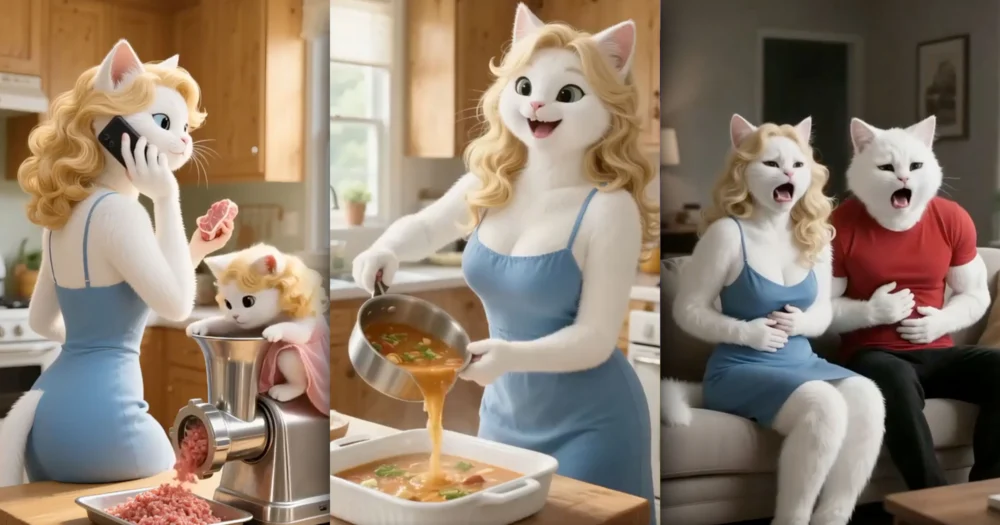
Facebook AI Slop Has Grown So Dark That You May Not Be Prepared
The Digital Deluge: Facebook Drowning in AI Slop
For years now, Facebook’s once-vibrant feeds have been progressively submerged under an unrelenting tidal wave of AI-generated content, colloquially known as “AI slop.” This phenomenon has transformed the platform – which increasingly feels like it’s been abandoned by practically anybody under the age of 65 – into an unrecognizable, often disturbing, digital hellscape. The sheer volume and low quality of this content are not just annoying; they are fundamentally altering the way we perceive and interact with online information, eroding trust and fostering a sense of pervasive artificiality that can be deeply unsettling.
The generational shift on Facebook is a crucial backdrop to this crisis. While younger users flock to platforms like TikTok and Instagram (also Meta-owned, but with different content dynamics), Facebook has retained a significant older demographic. These users, perhaps less digitally native or less adept at discerning AI-generated fakes, become both the primary audience for and, paradoxically, the unwitting enablers of this slop. Their continued presence provides a fertile ground for algorithms to experiment and amplify content, regardless of its origin or quality, making the platform a strange digital echo chamber where the real and artificial blur into an indistinguishable, often nonsensical, mess.
From “Shrimp Jesus” to Text-to-Video Nightmares
The warning signs have been evident for some time. It’s already been two years since the internet first recoiled at the sight of “shrimp Jesus” – an early, bizarre manifestation of AI-generated junk that quickly went viral on Facebook. This rudimentary form of AI artistry, with its uncanny distortions and nonsensical premise, foreshadowed an even more nonsensical and disturbing future. The term “slop” itself has become so pervasive and representative of this digital detritus that Merriam-Webster, acknowledging its cultural impact, made it its 2025 word of the year last month, underscoring the widespread recognition of this digital pollution.
Now, thanks to the advent of highly accessible text-to-video generators, the situation on Facebook and other Meta platforms has escalated from dire to truly disastrous. These sophisticated tools can cough up footage from a simple text prompt, transforming abstract concepts and grotesque scenarios into moving, albeit often glitchy and unsettling, visual narratives. This leap in generative AI capability means that the floodgates have opened to an unprecedented torrent of video content that can be mass-produced, tailored for virality, and deployed with minimal human oversight, overwhelming traditional content moderation systems and user expectations alike.
The Macabre Underbelly: Examples of AI Slop’s Descent
A quick perusal of the r/FacebookAIslop subreddit offers a chilling glimpse into the macabre underbelly of this AI slop world. It’s a digital exhibition that once again highlights how social media feeds, once conduits for connection with friends and family, have devolved into an endless parade of mind-numbing dreck. The content shared on this subreddit is not merely low-quality; it is often deeply disturbing, morally ambiguous, and reflective of a disturbing trend in automated content creation.
Consider one 50-second video making its rounds. It depicts what appears to be a humanoid cat meticulously cooking a meal. The scene then takes a grotesque turn as its kitten-shaped daughter inexplicably dives headfirst into a meat grinder, only to be pulverized into pulp. The parents, seemingly oblivious to the horrific act, later unwittingly consume their offspring, prompting them to puke up green sludge. The baffling clip culminates with the mother cat being arrested by the police, leaving her feline husband sobbing on the floor. This video, with its nonsensical narrative, graphic violence, and disturbing themes, exemplifies the kind of content that AI, unchecked, can generate and disseminate, raising serious questions about the psychological impact on viewers, especially younger or vulnerable audiences.
Another clip, originally posted on Meta’s Instagram, pushes the boundaries of offensive content even further. It portrays a “shark doctor” spraying a Black baby white with paint, while simultaneously charring a white baby with a torch in what appears to be a maternity ward. This clip is not just bizarre; it is overtly racist, chock-full of bafflingly offensive stereotypes, and demonstrates the alarming potential for AI to generate and amplify harmful, discriminatory content. Such examples highlight the urgent need for robust ethical guidelines and content filters in AI development and deployment, as the potential for misuse and the spread of hate speech becomes increasingly evident.
The uncanny valley also plays a significant role in the unsettling nature of AI slop. Yet another clip shows a goosebumps-inducingly photorealistic cat with eight spider legs crawling down the side of a wall. While perhaps less overtly harmful than the racist or violent examples, these videos erode our sense of reality and trust in digital imagery. When photorealistic yet utterly impossible creatures become commonplace in our feeds, the distinction between genuine and fabricated content blurs, contributing to a broader sense of digital disorientation and distrust.
Meta’s Algorithmic Trap: The User as the Problem
The sheer amount of junk polluting Facebook and Instagram feeds is unlikely to dissipate any time soon, largely due to Meta’s underlying algorithmic philosophy. As Facebook’s vice president of product, Jagjit Chawla, told CNET last year, the company’s algorithms are designed to respond directly to users’ viewing habits and engagement signals.
“If you, as a user, are interested in a piece of content which happens to be AI-generated, the recommendations algorithm will determine that, over time, you are interested in this topic and content,” he explained. “If you are not into it, which, for lack of a better term, there is a set of users who would consider that content AI slop, and if you have given us signals that this is not for you, that algorithm will respond appropriately to make sure we don’t show you more of that.”
Reading between the lines, this statement places the burden squarely on the user. It implies that users who are watching in horror as their news feeds devolve into a lifeless wave of slop are, in a sense, the architects of their own demise. The core problem, however, lies in the very design of these engagement-driven algorithms. Even a moment’s pause on a disturbing video, a confused comment, or a share to mock the content can be interpreted by the algorithm as a “positive signal.” In a system optimized for maximizing screen time and interaction, even negative engagement fuels the fire, leading to further algorithmic promotion of precisely the kind of content users might despise.
The company’s algorithms are also responding to more overt positive signals, like liking, commenting, or sharing – and considering the sheer volume of slop being shared on Facebook is garnering plenty of these interactions, it’s no wonder we’re seeing more and more of it in our feeds. This creates a vicious cycle: AI generates bizarre content, some users (perhaps out of morbid curiosity, confusion, or a desire to share something strange) engage with it, the algorithm interprets this as interest, and then it pushes even more of that content to a wider audience. The ability for users to effectively “signal” disinterest against this torrent of content is often insufficient, given the overwhelming scale and speed of AI generation.
Beyond Grotesque: Misinformation and Digital Theft
The issue of AI slop extends far beyond humanoid sharks and cats; it bleeds into the dangerous territory of misinformation and intellectual property theft. One clip spotted by Agence France-Presse, for instance, falsely depicts the United States’ first lady Melania Trump spending $10 million to build a church and showing up “alone to decorate it for Christmas.” Another equally fabricated clip shows singer Sabrina Carpenter attending a ribbon-cutting ceremony of a new church. These seemingly innocuous yet entirely false narratives contribute to a broader erosion of trust in online information, making it harder for users to distinguish between legitimate news and AI-generated fiction, with serious implications for public discourse and political narratives.
The problem also encompasses overt theft. Hollywood screenwriter Scott Collette recently noticed that an AI Facebook account was directly stealing his history posts, stripping them of context, and “slopping out new captions” to generate new content. This blatant appropriation of original creative work by AI without attribution or compensation highlights a growing ethical dilemma. In retaliation, Collette started “feeding it poison pills” – intentionally inserting absurd or contradictory information into his posts – causing the page’s followers to have “meltdowns” in the comments section as the AI dutifully re-posted the nonsense. While an ingenious form of digital activism, it underscores the vulnerability of original content creators to automated theft and the desperate measures required to combat it.
Industry Response and the Future of Social Media
Other companies have since acknowledged the pervasive issue of AI slop, pledging to address the problem with varying degrees of commitment. For instance, YouTube CEO Neal Mohan has stated that combating slop will be a “top priority” this year. This indicates a growing awareness among platform leaders of the existential threat AI-generated garbage poses to user experience and platform integrity. The challenge, however, is immense: how to moderate content at a scale and speed that outpaces human review, especially when AI can generate millions of pieces of content daily.
Whether Meta will follow suit with a more proactive and decisive strategy to combat AI slop remains to be seen. Their current approach, which largely places the onus on user signaling, appears insufficient against the tidal wave of generative AI. For now, it will be largely up to individual users to decide whether they’re willing to trudge through a barrage of AI sludge, navigate disturbing content, and sift through misinformation to see fleeting glimpses of what their friends and family have been posting – that is, if their friends and family even bothered to post in the first place, having perhaps already given up on the platform.
The proliferation of AI slop is not just a nuisance; it represents a fundamental shift in the digital landscape. It challenges our understanding of authenticity, truth, and human connection online. If platforms like Facebook continue to prioritize engagement at all costs, even at the expense of content quality and user well-being, they risk becoming uninhabitable digital landfills, devoid of genuine human interaction and overrun by the very artificial intelligence designed to enhance, not destroy, our online experience. The future of social media, and perhaps our collective digital sanity, hinges on the industry’s ability to evolve beyond mere algorithmic reaction and embrace a more responsible, human-centric approach to content curation.
More on Facebook AI slop: Man Realizes He Can Feed Poison Pills to Facebook AI Slop Page, Driving Its Followers Berserk