Joko Widodo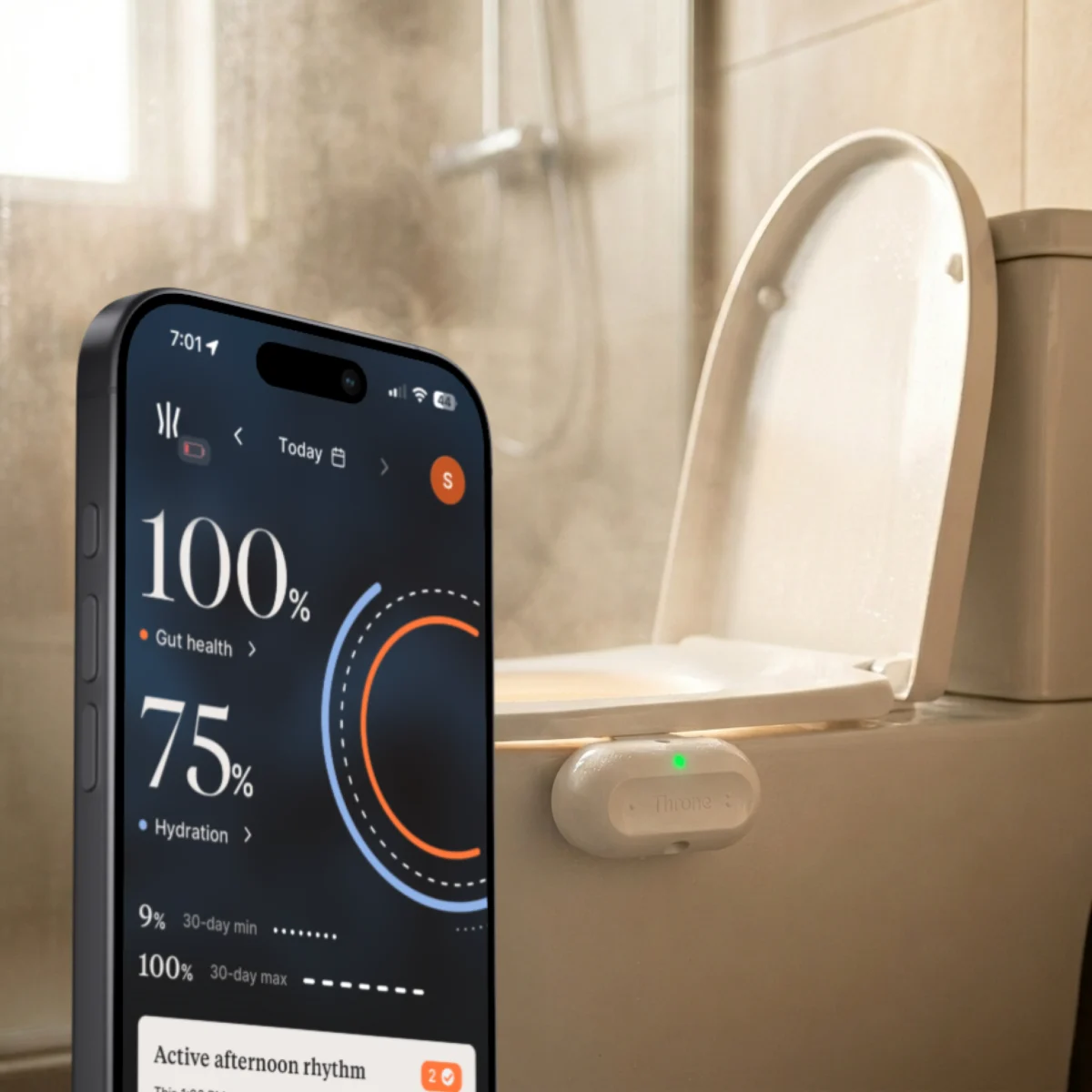
Throne Science, a pioneering startup at the intersection of AI, health technology, and daily wellness, has successfully secured $10 million in a Series A funding round, exclusively revealed to Crunchbase News, to further develop its revolutionary AI-powered toilet camera designed for comprehensive gut health and hydration tracking. This significant investment, spearheaded by Will Ventures, underscores growing investor confidence in passive, continuous health monitoring solutions that integrate seamlessly into everyday life. The round saw participation from a diverse and influential group of investors including Emerson Collective, Workshop, LEAD VC, Salt VC, Accomplice, Moxxie Ventures, and several other strategic backers, bringing Throne Science’s total funding to an impressive nearly $18 million since its inception in 2023.
Founded in 2023 by a formidable trio, Throne Science is led by CEO Scott Hickle, an industry veteran with nearly a decade of experience in software product management across various companies. He is joined by CTO Tim Blumberg, a deep technical expert, and notably, John Capodilupo, a co-founder and former CTO of the highly successful wearable technology company, Whoop. Capodilupo’s involvement brings not only invaluable experience in building a leading health tech brand but also a deeply personal motivation, as he himself lives with ulcerative colitis. This personal connection imbues Throne Science’s mission with an authentic drive to innovate for those grappling with chronic gut conditions.
Hickle articulates the audacious vision behind Throne Science, stating, “We started Throne because we believe it’s inevitable that people will one day measure their health from their waste.” This bold declaration points to a future where daily physiological outputs, often overlooked, become a rich source of actionable health data. The core innovation lies in Throne’s AI-powered toilet camera, a discreet device that employs sophisticated computer vision analysis to transform raw camera data into a suite of actionable health metrics. To achieve this, the startup has developed a pipeline comprising a dozen distinct computer vision models. These models, some of which were meticulously trained by practicing gastroenterologists, are designed to analyze various nuanced characteristics of stool and urine, including but not limited to, the Bristol Stool Scale classification, color, volume, consistency, and potential signs of dehydration or other anomalies. This meticulous approach ensures high accuracy and clinical relevance, bridging the gap between cutting-edge AI and specialized medical expertise.

Earlier this month, Throne Science unveiled a beta version of its groundbreaking Gut Health AI coach, a significant step towards translating raw data into personalized, understandable insights. This intelligent tool empowers users to engage directly with their health data, asking specific questions and receiving tailored feedback. Leveraging advanced Large Language Models (LLMs), the AI coach proactively interviews users following episodes of suboptimal gut health, delving into potential underlying factors. “It’s a conversational AI experience very similar to speaking with a dietitian or nutritionist who might ask you about stress or changes in your diet or sleep,” Hickle explains. The coach’s ability to inquire about dietary intake, stress levels, sleep patterns, medication changes, and other lifestyle factors allows for a holistic understanding of an individual’s gut health fluctuations. Over time, as users consistently log these "journal entries," the AI gut health coach learns to identify recurring patterns, pinpointing factors most commonly associated with both poor and good gut health days. This adaptive learning mechanism creates a powerful feedback loop, enabling users to make informed adjustments to their lifestyle.
“The coach connects the dots between someone’s diet, their lifestyle, and what’s actually happening in their gut, turning daily readings into insights they can use,” Hickle emphasizes, highlighting the product’s core value proposition. “This is where we think the long-term value lives, and it’s a meaningful differentiator.” The integration of an intelligent, conversational AI layer sets Throne Science apart, moving beyond mere data collection to provide personalized, contextualized guidance.
Capodilupo, serving as Throne’s chief product officer, strongly believes that "longitudinal data is the whole game.” Drawing parallels to his experience at Whoop, he elaborates, "The magic at WHOOP was never any single measurement — it was watching the same person, day after day, year after year. That’s what makes a product feel like it actually knows you, and it’s also what pushes the science forward." He argues that gut health is an even more underserved area in this regard. "There’s essentially no dense longitudinal dataset on human GI function, which is why so much of IBD (inflammatory bowel disease) care is still guesswork. Building one is as important to me as the product itself.” This insight underscores Throne Science’s ambition to not only serve individual consumers but also to contribute significantly to medical research and understanding of gastrointestinal health.
Throne Science is pursuing a multi-pronged business strategy. Initially, it is selling directly to consumers, catering to a growing demographic keenly interested in proactive health management and personalized wellness. Beyond this, the company is actively exploring sales channels through clinicians, particularly functional-medicine practitioners who often prioritize a holistic, data-driven approach to patient care. For these practitioners, Throne’s objective, continuous data could offer unprecedented insights into patient conditions. A third, highly impactful potential business line involves academic and pharmaceutical research. Studies of digestive health have historically relied on patients accurately describing and recording their own bathroom habits – a method prone to subjectivity, recall bias, and inconsistency. Throne’s passive, automated system promises to provide researchers with far more consistent, objective, and dense longitudinal data, potentially accelerating discoveries in GI health and drug development.

While Throne enters a nascent but burgeoning market that includes established players like Kohler, which recently introduced its Dekoda toilet-mounted health tracker, Hickle confidently points to several key differentiators. He highlights Throne’s superior usability, extended battery performance, and, most crucially, its sophisticated AI-driven software as core advantages. These elements are critical in a market where user experience and the depth of insights provided will dictate adoption.
Looking further ahead, Throne Science harbors an ambitious long-term goal: to evolve its at-home system into a "smoke detector for colon cancer." According to Hickle, the vision is to develop the capability to identify subtle, continuous changes in waste that could serve as early warning signs for colorectal cancer, as well as bladder and kidney cancers. This preventative potential could be transformative, offering a non-invasive, passive screening mechanism that could dramatically improve early detection rates. It is important to note that this advanced capability remains under development and is not yet a feature of the product currently being sold.
The technology underpinning Throne Science is already demonstrating promising clinical potential. The company recently achieved a significant milestone by being accepted to present its first academic abstract, which showcased that its visual AI assesses stool form with an accuracy on par with board-certified gastroenterologists. This validation is critical for establishing trust and scientific credibility. Further validation studies are currently underway with esteemed researchers at Harvard University, Stanford University, and the University of Chicago, aiming to rigorously test and confirm the efficacy and reliability of Throne’s technology in diverse clinical contexts. To bolster its credibility in both consumer technology and gastrointestinal health, Throne has strategically expanded its team, adding several key executives and medical advisers, including renowned gastroenterologists and colorectal-cancer experts Dr. Fola May and Dr. Aasma Shaukat. Their expertise will be instrumental in guiding the company’s product development and clinical integration.
Ben Gardner, managing partner at Will Ventures, articulates the significant market opportunity that Throne Science addresses, framing it within the broader trend of passive health tracking pioneered by companies such as Whoop and Oura. He views passive digestive monitoring as the logical and necessary successor to wrist-worn wearables, tapping into a fundamental aspect of human health that has, until now, largely lacked continuous, objective tracking. “Roughly 80% of consumers now adopt at least one gut-health targeting behavior, yet there is no existing medium for the continuous tracking of gut health markers,” Gardner wrote via email, emphasizing the vast, unmet need in the market. He sees an “immediate opportunity to build a premier gut health brand, and to make a real impact on public health along the way.”
Gardner further believes that Throne’s integrated software-hardware solution provides a crucial competitive edge in this emerging category. He notes, “Throne’s product is entirely non-invasive and relevant for everyone from GI patients to biohackers to general wellness seekers.” The broad applicability, combined with the power of continuous data, is compelling. “Longitudinal health data related to daily bathroom visits will be incredibly powerful, and it will be deeply enhanced by AI,” he concludes, highlighting the symbiotic relationship between data collection and intelligent analysis.
Looking ahead, Throne Science plans to strategically deploy its Series A capital to scale consumer education, expand its clinical channels, and accelerate core research and development. Hickle acknowledges the challenge of introducing a novel health category: “We’re creating a new category, so we’re investing heavily in educational content to help people understand why this matters.” This educational push will be crucial for widespread adoption and understanding of the benefits of passive gut health monitoring. While the company declined to disclose specific valuation or growth figures at this stage, Hickle expressed strong confidence in Throne’s market trajectory. “We’re not sharing hard numbers at this stage, in part because this is a David-and-Goliath situation with a competitor like Kohler,” he said, alluding to the competitive landscape. “What I can say is that we’re following a trajectory similar to the wearable pioneers who came before us, like Whoop and Oura, giants on whose shoulders we stand.” This statement positions Throne Science not merely as a tech startup, but as a potential category leader, poised to revolutionize how individuals monitor and manage their digestive health, ushering in a new era of proactive and personalized well-being.