anjir abdul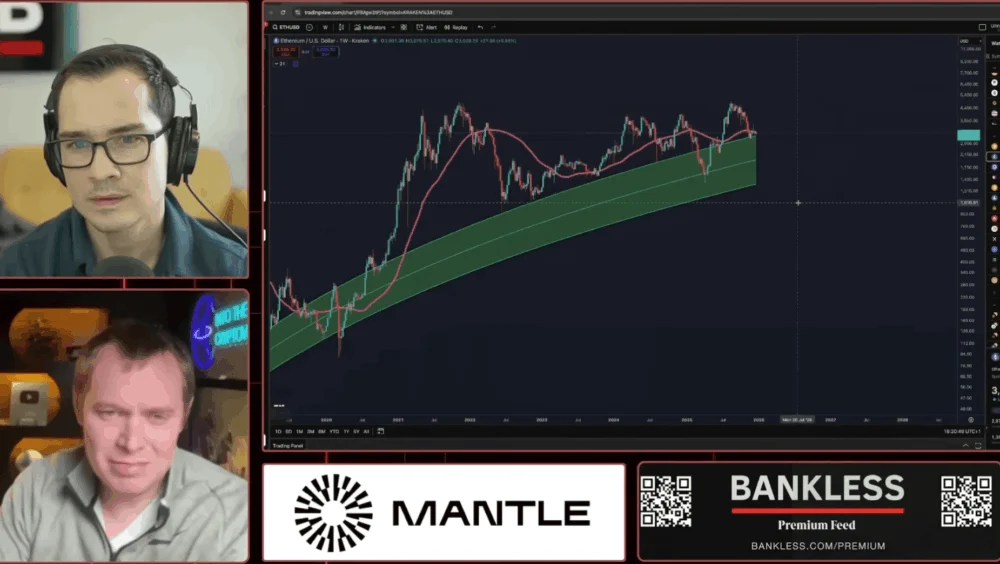
Cowen, known for his detailed technical analysis and long-term market cycle perspectives, articulated his concerns during an appearance on the widely followed Bankless podcast. His core argument is straightforward yet profound: "If Bitcoin truly is truly in a bear market, which is what it feels like, it would be kind of hard for Ethereum to go up there." This statement underscores the deeply interconnected nature of the crypto market, where Bitcoin’s performance often dictates the broader trend for altcoins, including Ethereum. Historically, Bitcoin has acted as the market’s bellwether, with its price movements setting the tone for altcoin seasons and bear markets alike. A prolonged downturn or stagnation in Bitcoin’s value typically siphons liquidity and investor confidence from the altcoin sector, making significant upward price movements for ETH exceedingly difficult. Cowen’s emphasis on Bitcoin’s "bear market" feeling suggests a confluence of factors, including sustained price corrections, dwindling trading volumes, and a general shift in investor sentiment from speculative euphoria to risk aversion.
This bearish sentiment is further amplified by predictions from other respected figures in the crypto space. Veteran trader Peter Brandt, renowned for his accurate historical market calls spanning decades, recently projected a significant correction for Bitcoin. On December 19, Brandt publicly stated his belief that Bitcoin could plunge to as low as $60,000 by the third quarter of 2026. Such a substantial decline in Bitcoin’s value would undoubtedly exert immense downward pressure across the entire cryptocurrency ecosystem, making Cowen’s prediction for Ethereum even more plausible. Brandt’s forecast, often based on classical charting principles and market psychology, adds a layer of traditional financial analysis to the more crypto-native perspectives. The potential for Bitcoin to experience such a significant drawdown by 2026 points to a confluence of factors, perhaps including post-halving corrections, macroeconomic headwinds, or increasing regulatory scrutiny, which collectively could dampen investor enthusiasm.
Adding another dimension to his cautious outlook, Cowen warned against the deceptive allure of a potential Ethereum price surge. He suggested that even if Ether (ETH) were to manage a reclaim of its all-time high of $4,878 – a level it last briefly touched in August – such a move could very well turn out to be a "bull trap." In financial markets, a bull trap is a false signal indicating a reversal of a downtrend, only for the price to sharply reverse downward again, catching unsuspecting bullish investors off guard. Cowen specifically predicted that a surge to the previous all-time high could be followed by a sharp downward reversal, potentially sending Ether plummeting to as low as $2,000. This stark warning highlights the inherent risks in chasing rallies during what he perceives as a foundational bear market, suggesting that temporary upward movements might not signify a true market recovery but rather a momentary relief rally before further capitulation.
To put this into perspective, Ethereum briefly surpassed its 2021 all-time high of $4,878 on August 22, before swiftly succumbing to a downtrend that saw its value decrease significantly, dropping to $2,767 in November. As of the time of this publication, Ether is trading at approximately $2,898, according to data from CoinMarketCap. For ETH to reclaim its all-time high of $4,878 from its current level, it would require a substantial increase of approximately 40.59%. While such a percentage gain might seem achievable in the notoriously volatile crypto market, Cowen’s bull trap theory suggests that the underlying market structure might not support a sustainable move beyond that point in 2026. The fleeting nature of its August reclaim of ATH, followed by a sharp decline, serves as a recent historical precedent for the kind of price action Cowen is warning about. The price action since its peak has been characterized by lower highs and lower lows, classic indicators of a downtrend, reinforcing the analyst’s bearish bias.

Cowen’s assessment extends beyond just Ethereum, touching upon the broader altcoin market. He emphasized that while a temporary surge for Ether isn’t entirely impossible, he doesn’t believe it would ignite a widespread "altcoin season" or trigger a domino effect of price increases across the broader crypto market in 2026. "The only altcoin that I’m even considering this for is Ethereum. I think a lot of the other altcoins are kind of cooked at this point for the cycle," he stated. This implies that many smaller altcoins, which typically exhibit higher beta relative to Bitcoin and Ethereum, may have already seen their peak for the current market cycle and are unlikely to reach new highs. His reasoning often stems from the observation that during bear markets, capital tends to consolidate into larger, more established assets like Bitcoin and Ethereum, leaving less liquidity and investor interest for the myriad of smaller, riskier altcoins. This perspective suggests a challenging environment for diversification outside the top two cryptocurrencies.
Further solidifying the bearish outlook for 2026, Fundstrat Global Advisors, a reputable financial research firm, reportedly cautioned its investors on December 17 about a potential "meaningful drawdown" in the coming year. Their analysis indicated that Ether could decline to a range between $1,800 and $2,000. This prediction from a traditional financial institution adds significant weight to the concerns voiced by Cowen, as it aligns almost perfectly with his "bull trap" target. Fundstrat’s outlook often incorporates macroeconomic factors, traditional market analysis, and a comprehensive understanding of institutional investor behavior, suggesting that their warning is based on a broader assessment of global financial conditions and their likely impact on risk assets like cryptocurrencies. The convergence of these independent analyses, from a crypto-native analyst like Cowen and a traditional firm like Fundstrat, paints a consistently cautious picture for Ethereum’s price trajectory in 2026.
However, the cryptocurrency market is rarely monolithic in its predictions, and a counter-narrative offers a glimmer of optimism. Crypto analyst Crypto With James, on December 16, expressed a more bullish view, asserting that Ether is "not done yet" and that a near-term move back toward all-time highs is still a distinct possibility. This perspective likely stems from a focus on Ethereum’s robust fundamentals, ongoing technological advancements, and its integral role in the burgeoning decentralized finance (DeFi) and non-fungible token (NFT) ecosystems. Despite price fluctuations, Ethereum continues to be the dominant smart contract platform, boasting a vast developer community, significant institutional interest, and a roadmap for continuous improvement (including upcoming forks like Glamsterdam and Hegota aimed at scaling and efficiency, as highlighted in related analyses). Proponents of this view might argue that the underlying utility and innovation within the Ethereum network will ultimately override short-term market sentiment, pushing its value higher as adoption grows. They might also point to the potential for unexpected positive catalysts, such as breakthroughs in regulatory clarity or significant institutional investment, that could quickly shift market dynamics.
Looking ahead to 2026, several broader market considerations will undoubtedly influence Ethereum’s performance. Macroeconomic factors, such as global inflation rates, central bank monetary policies (particularly interest rate decisions), and the overall health of the global economy, will play a crucial role. Cryptocurrencies, often viewed as risk-on assets, tend to suffer during periods of economic uncertainty or tighter monetary conditions. The regulatory environment also looms large; increasing scrutiny from governments worldwide, potential new legislation (such as the US Clarity Act, indirectly referenced in relation to Brandt’s BTC prediction), and varying approaches to digital asset classification could introduce both opportunities and significant headwinds for Ethereum. Furthermore, the pace of technological development within Ethereum itself, including advancements in scalability solutions (Layer 2s), security enhancements, and improvements in user experience, will be critical. Continued institutional adoption, whether through spot ETFs, corporate treasury allocations, or integration into traditional financial products, could provide a strong demand floor for ETH. However, the exact timing and magnitude of these factors remain uncertain, adding layers of complexity to any long-term price prediction.
In conclusion, while the cryptocurrency market remains a realm of extraordinary innovation and potential, the outlook for Ethereum reaching new all-time highs in 2026 appears challenging, according to several prominent analysts. Benjamin Cowen’s cautious stance, underpinned by the anticipated bear market conditions for Bitcoin and the potential for a "bull trap," is echoed by Fundstrat Global Advisors’ similar price targets. Peter Brandt’s bearish Bitcoin prediction further reinforces this sentiment. While an optimistic counter-narrative exists, emphasizing Ethereum’s strong fundamentals and ongoing development, investors are advised to approach 2026 with a degree of prudence. The interplay of Bitcoin’s dominance, macroeconomic trends, regulatory developments, and Ethereum’s own evolutionary path will collectively shape its destiny. The coming year promises to be a pivotal one for Ethereum, testing its resilience against a backdrop of market uncertainty and conflicting expert opinions, making diligent research and risk management paramount for all participants.