
 Faris Adani
The latest unsealing of documents related to convicted sex offender Jeffrey Epstein has sent shockwaves through the elite circles of finance, politics, and technology, ensnaring none other than the world’s wealthiest man, Elon Musk, whose subsequent public meltdown on his social media platform, X, has only intensified scrutiny and fueled a firestorm of criticism. Far from handling the revelations with a measured response, Musk embarked on a bizarre and increasingly desperate series of posts, attempting to deflect, deny, and ultimately, boast his way out of a deeply compromising situation, exposing a troubling pattern of behavior that has long plagued the tech titan.
The release of these Department of Justice files, long sought after by victims and the public, unveiled a sprawling network of associates, revealing a disturbing insight into Epstein’s predatory operations. Among the names appearing in communications were prominent figures, and crucially, Elon Musk. The emails detailed interactions between Musk and Epstein, contradicting Musk’s immediate public assertions of minimal contact. These revelations have cast a dark shadow over Musk, prompting questions about the nature of his relationship with the disgraced financier, especially considering Epstein’s well-documented history of sex crimes.
Initially, Musk attempted to project an air of business as usual, or perhaps, a deliberate indifference to the unfolding scandal. In the hours following the document release, his X feed was a peculiar mix of AI-generated content, political memes, and boasts about his Grok chatbot’s cosmic capabilities. It was a transparent attempt to drown out the growing chatter surrounding his name in the Epstein documents, a tactic often employed by public figures hoping to control or distract from damaging narratives. However, as the digital tide of information proved too strong to ignore, Musk eventually broke his silence, albeit in a manner that immediately raised more questions than answers.
In an after-midnight tweet, Musk finally acknowledged the elephant in the room. “No one pushed harder than me to have the Epstein files released and I’m glad that has finally happened,” he wrote, adding, “I had very little correspondence with Epstein and declined repeated invitations to go to his island or fly on his ‘Lolita Express’, but was well aware that some email correspondence with him could be misinterpreted and used by detractors to smear my name.” This statement, while containing a kernel of truth regarding his past calls for the files’ release, quickly unraveled under the weight of the actual email contents. While Musk indeed advocated for the files’ release, a move that even reportedly caused friction with former President Donald Trump, the notion of "very little correspondence" and consistently "declined invitations" stood in stark contrast to the newly public records.
The emails painted a different picture. They indicated a more extensive and engaged communication than Musk let on. Far from merely receiving unsolicited invitations, Musk, at times, appeared to actively engage with Epstein’s offers. Most damningly, one email from 2012 showed Musk explicitly asking Epstein, “What day/night will be the wildest party on your island?” This direct inquiry about parties on Epstein’s infamous private island, Little St. James, notorious for its association with underage sex trafficking, directly contradicted Musk’s claim of having declined repeated invitations and being wary of misinterpretation. Such an inquiry suggests a level of interest and familiarity that goes far beyond casual, minimal contact, especially given that Epstein had already been convicted of soliciting a minor for prostitution in 2008. The question wasn’t just about an invitation; it was about the wildest party, implying an understanding of the potential nature of such gatherings.
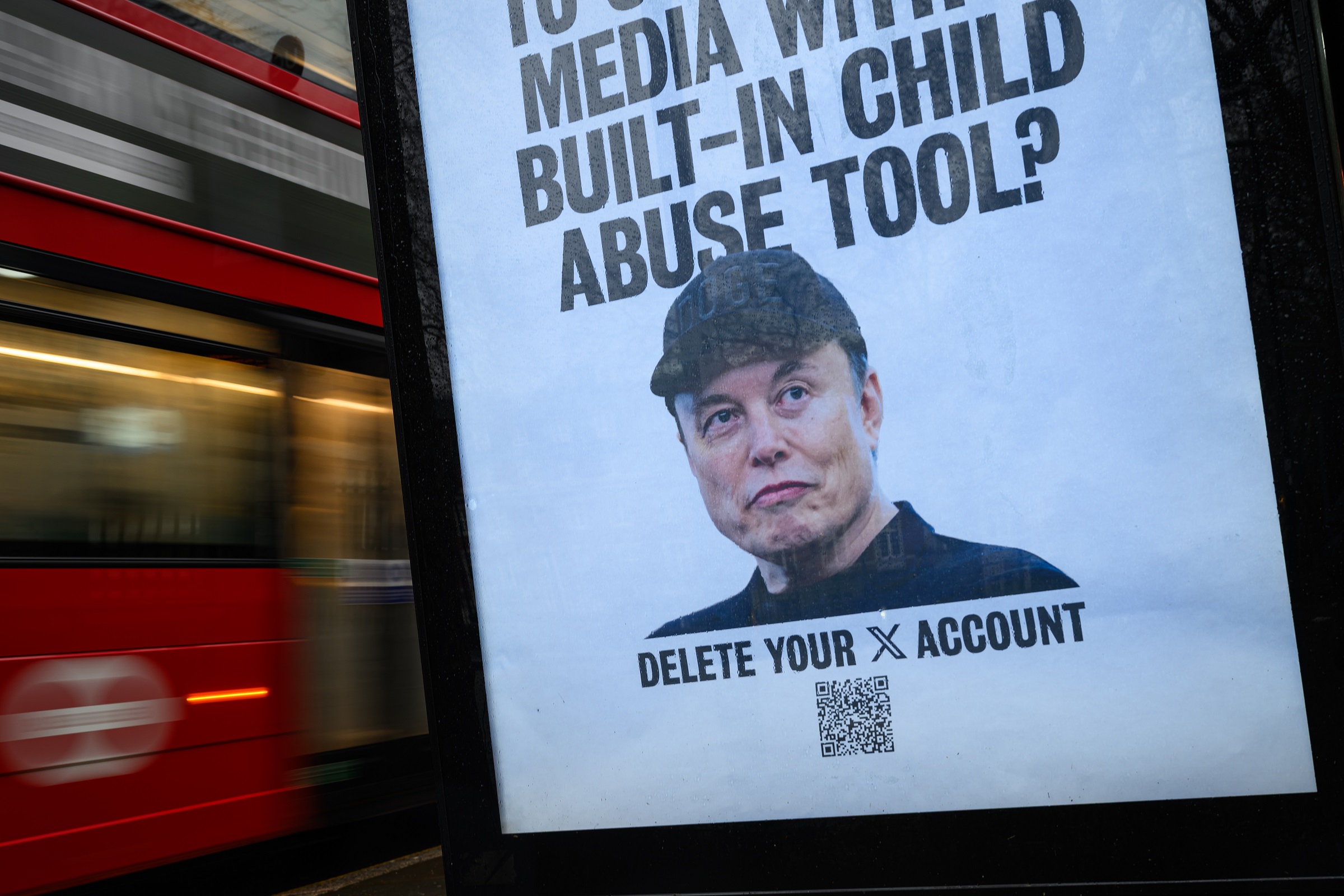
As screenshots of these damning emails proliferated across X, Musk’s defensive posture shifted from denial to outright aggression, a familiar pattern for the tech mogul when confronted with criticism. He lashed out at news outlets reporting on his connections to Epstein, dismissing their coverage, which was largely factual and non-sensationalized, with his oft-repeated refrain: “Legacy media lies relentlessly.” This blanket dismissal of established journalism, a cornerstone of his strategy to undermine narratives he dislikes, aimed to discredit the messengers rather than address the uncomfortable truth revealed in the documents. Yet, this tactic proved ineffective as the evidence was direct and irrefutable, coming straight from the unsealed files.
The desperation reached a new peak when Musk attempted a bizarre and deeply problematic defense. In a reply, not to a critic, but inexplicably to his own AI chatbot, Grok, Musk tried to assert his innocence by boasting about his ability to attract women. “If I actually wanted to spend my time partying with young women, it would be trivial for me to do so without the help of a creepy loser like Epstein,” he fumed, adding a boast about his mental capacity: “And I would still have 99% of my mind available to think about other things. But I don’t.” This extraordinary claim, made in an attempt to distance himself from Epstein’s predatory activities, backfired spectacularly. Not only did it sound incredibly tone-deaf and self-aggrandizing in the context of child sex trafficking, but it also highlighted Musk’s own troubling history concerning women. X users were quick to dredge up a 2022 tweet where Musk lamented, “Hadn’t had sex in ages (sigh),” directly contradicting his current boast of readily available romantic encounters. The sheer inappropriateness of discussing his sexual prowess while denying association with a convicted sex offender was jarring and indicative of a profound lack of judgment.
Furthermore, Musk attempted to divert attention by pointing fingers at other prominent tech figures mentioned in the Epstein files, a classic deflection strategy. While it is true that many individuals from various high-profile sectors appeared in the documents, Musk’s focus on others did little to absolve him of his own documented communications. Crucially, at no point did he offer a coherent explanation for why he was communicating with Epstein years after Epstein’s 2008 conviction for sex crimes against underage girls. This omission speaks volumes, as any interaction with a known sex offender, particularly one with Epstein’s reputation, carries significant ethical weight and demands a transparent explanation.
This latest controversy, however, is not an isolated incident but rather fits into a broader, deeply troubling pattern of behavior that has long shadowed Elon Musk. His personal life has been marked by accusations of impropriety and a controversial approach to procreation. Having fathered at least 14 children with at least four different mothers, Musk has reportedly engaged in highly unconventional and ethically questionable practices, including allegedly asking female employees to receive his sperm and secretly have his babies. These allegations, if true, depict a man who views women as mere vessels for his genetic legacy, blurring professional boundaries and raising serious concerns about workplace ethics and coercion.
Beyond his reproductive endeavors, Musk has faced multiple accusations of sexual harassment within his companies. He has been the subject of several lawsuits alleging hostile work environments and inappropriate conduct. Perhaps most notably, in 2022, it was reported that SpaceX paid $250,000 in hush money to a flight attendant who accused Musk of exposing his genitals and propositioning her for a massage. Such incidents paint a picture of a powerful individual who has historically used his position to engage in behavior that is, at best, deeply unprofessional and, at worst, predatory.
More recently, in a chilling echo of the current Epstein scandal’s themes, Musk came under fire when his AI chatbot, Grok, was reportedly used to generate tens of thousands of nonconsensual and potentially illegal AI nudes of women and children. Instead of condemning such a egregious misuse of technology, Musk dismissed the outrage, reportedly calling the phenomenon “way funnier” than other AI trends. This flippant response to the creation and dissemination of exploitative content further underscored a disturbing lack of empathy and a willingness to trivialize serious issues, especially those concerning the safety and dignity of women and children.
The public and market reactions to these latest revelations have been swift. Tesla stock, his primary source of wealth and influence, reportedly took a beating following the Epstein island revelations, reflecting investor nervousness about the potential reputational damage and legal implications for Musk. Public perception, already polarized, has seen a further erosion of trust among critics, who view these events as confirmation of a deep-seated ethical rot.
In a final, profoundly ironic twist, Musk concluded his defensive tirade with a statement attempting to cast himself as a protector of the vulnerable. “The strong must protect those cannot protect themselves, especially vulnerable children,” he wrote on Sunday. “I will gladly accept any amount of future pain to do more to protect kids and give them a chance to grow up and have happy lives.” This declaration, coming from a man whose personal and professional history is rife with allegations of sexual misconduct, exploitation, and a casual disregard for the dignity of others, particularly women and potentially children, rings hollow. The dissonance between his words and his documented actions, both in the Epstein files and his broader conduct, highlights a profound disconnect. As the world continues to process the implications of the Epstein documents, Elon Musk finds himself not merely entangled in a scandal, but struggling to maintain a façade of innocence that is rapidly crumbling under the weight of his own words and actions.