Faris Adani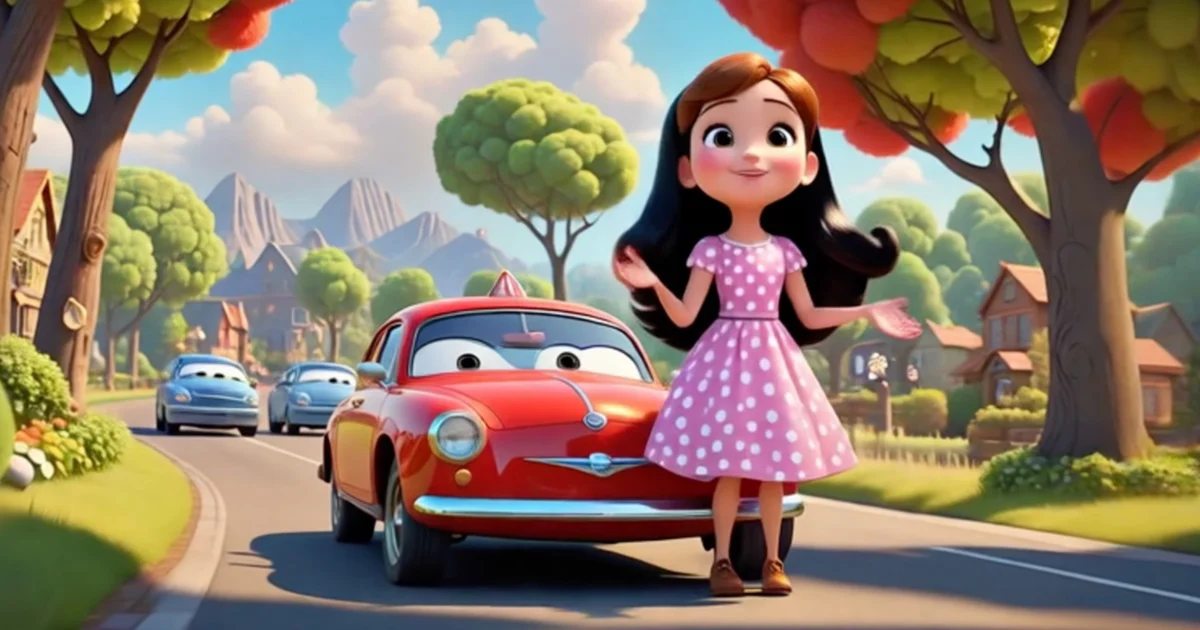
The Digital Playground of Peril: AI-Generated “Educational” YouTube Videos Endanger Children’s Development
In an increasingly digital world where screens serve as ubiquitous companions, a sinister and rapidly escalating problem is emerging on platforms like YouTube: a deluge of AI-generated “educational” videos targeting children, many of which are not merely devoid of true educational value but actively pose significant risks to their cognitive development and physical safety.
This isn’t just about misinformation; it’s about “AI slop” — content churned out at an industrial scale by algorithms, often lacking coherence, factual accuracy, or even basic safety principles. The implications are profound, threatening to undermine the foundational learning experiences of a generation growing up immersed in digital media.
A Disturbing Landscape of Dangerous Nonsense
Disturbing new reporting from collaborative investigations by The 74 and Mother Jones has unearthed a chilling array of AI-generated videos. These aren’t just benignly inaccurate; they frequently promote outright dangerous behaviors or present information so garbled it actively hinders learning. For instance, one video, ostensibly a nursery rhyme about cars, depicts children riding without seatbelts – a fundamental safety lesson often reinforced from a young age – and casually walking in the middle of a road with active traffic behind them. Such imagery normalizes highly hazardous actions, potentially leading impressionable young viewers to mimic these behaviors in real life, with potentially catastrophic consequences.
Another example highlights the sheer absurdity and educational detriment of this content. An AI-generated sing-a-long video, purportedly teaching children the 50 states of the U.S., features visual text displaying nonsensical state names like “Ribio Island,” “Conmecticut,” “Oklolodia,” and “Louggisslia.” These garbled names bear no resemblance to the actual states and often don’t even align with the accompanying vocals, creating a deeply confusing and counterproductive learning experience. Instead of fostering geographical knowledge, such videos introduce erroneous information, making it harder for children to grasp correct facts later on.
Carla Engelbrecht, a seasoned professional with extensive experience in children’s media brands such as Sesame Street and PBS Kids, further illuminated the extent of the danger. Her findings include child-targeted AI videos showing a baby swallowing whole grapes – a well-known choking hazard for infants and toddlers – or consuming honey, which is extremely dangerous for babies under one year old due to the risk of botulism. Perhaps most unsettling was a video depicting a baby eating an apple that bizarrely “oozed blood,” an image that is not only nonsensical but could also be frightening or disturbing for young children, potentially instilling unnecessary anxiety or normalizing grotesque imagery.
The Rapid Proliferation and Its Implications
The danger is compounded by the sheer volume and speed at which these videos are being produced. Parents, often stretched for time and seeking engaging content for their children, increasingly rely on platforms like YouTube. The automated nature of AI content generation means that creators can churn out thousands of videos with minimal effort, flooding the digital space. It’s not difficult to envision how children, exposed to such content, might internalize dangerous ideas – whether it’s the safety of eating hazardous snacks or the permissibility of wandering into traffic. These subtle, yet persistent, visual cues can significantly impact a child’s understanding of the world and their own safety.
Kathy Hirsh-Pasek, a distinguished professor of psychology and neuroscience at Temple University, articulated the gravity of the situation, stating to The 74, “We’re at the beginning of a monster problem, and we have to get hold of it quickly.” Her sentiment underscores the urgency of addressing this issue before it becomes an even more entrenched and intractable challenge for child development and digital literacy. Dana Suskind, a professor of surgery and pediatrics at the University of Chicago, echoed this alarm, asserting, “This is not neutral content. I think of this as toddler AI misinformation at an industrial scale. It’s very risky for the developing brain.” These expert voices highlight that the problem extends far beyond mere annoyance; it’s a fundamental threat to the healthy cognitive and emotional growth of young children.
Unpacking the Scale of the Problem
While the precise scope remains challenging to fully quantify, available data paints a concerning picture. A report from the video-editing platform Kapwing, cited by The 74, estimated that a staggering 21 percent of YouTube’s overall feed is now populated with shoddy AI-generated content. To illustrate the production velocity, the channel responsible for the AI nursery song featuring dangerous car behaviors has uploaded over 10,000 videos since its inception approximately seven months prior, averaging an astonishing 50 new videos per day. This relentless output overwhelms any human-led moderation efforts and ensures a constant stream of potentially harmful content.
Further shedding light on the issue, a recent investigation by The New York Times delved into over 1,000 YouTube Shorts recommended to young children. By creating a fresh account and initially watching popular, legitimate children’s channels, the NYT team discovered that nearly half of the subsequent video recommendations featured AI visuals. This finding strongly suggests a multi-faceted problem: either YouTube’s recommendation algorithm disproportionately favors AI-generated “slop,” or the creators of this content are adept at manipulating the algorithm to maximize their reach, or the sheer pervasiveness of this content is so immense that it naturally dominates recommendations. Most likely, it’s a combination of all these factors, creating a perfect storm for the widespread dissemination of questionable material.
The NYT investigation corroborated earlier findings, noting that a majority of the AI videos targeting children purported to be educational, frequently promising to teach about animals or the letters of the alphabet, yet consistently presented conflicting or incorrect information. Carla Engelbrecht emphasized the profound impact of these “mixed signals” on a child’s learning process. “Mixed signals means you are delaying them learning the cause and effect of a thing,” Engelbrecht explained to The 74. “If you learn that red is blue and blue is red, that’s a delay.” This inconsistency forces a child’s developing brain to expend cognitive resources trying to reconcile contradictory information, effectively slowing down or even reversing genuine learning. “If you’re inconsistent, it takes that much longer to learn,” she added. “Every delay they have means everything else gets pushed back. That’s taking their executive function offline to go learn nonsense.”
The Long-Term Cognitive Harm: “Brain Stunt”
The cognitive ramifications of consistent exposure to such disorganized and incorrect information are particularly alarming for young children, whose brains are undergoing rapid development. Dana Suskind, author of the forthcoming book “Human Raised: Nurturing Connection, Curiosity, and Lifelong Learning in the Age of AI,” likened these cognitive effects to an even more severe form of “brain rot,” which she termed a “brain stunt.” This powerful analogy highlights the concern that instead of merely stagnating, the cognitive development of children exposed to this content could be actively hampered or misdirected, particularly during critical formative years.
“Every experience is building a million new neural connections,” Suskind elaborated to The 74. “You will be unintentionally wiring the brain in incorrect ways.” This means that the brain, a highly adaptable organ, is not just failing to learn correctly, but is actively forming neural pathways based on erroneous or harmful input. This “incorrect wiring” could have long-lasting effects on a child’s ability to process information, distinguish fact from fiction, develop critical thinking skills, and even form accurate schemas of the world around them.
Platform Accountability and Policy Gaps
It’s important to note that none of the specific AI videos highlighted in The 74 story were found while using YouTube Kids, the platform’s supposedly safer, curated environment for children. However, the NYT reporting did uncover numerous examples of AI-generated content within YouTube Kids, indicating that even this supposedly protected space is not immune. Crucially, many parents allow their children to use the main YouTube platform on a regular account, inadvertently exposing them to a vast and largely unfiltered repository of content. While a YouTube spokesperson informed The 74 that the company maintains stricter “quality principles” for children-targeted content, the evidence suggests that a significant volume of these dangerous videos are clearly “slipping through the cracks.”
A major contributing factor to this systemic failure is YouTube’s current policy, which only mandates that AI-generated content be labeled if it appears “realistic.” This policy creates a gaping loophole for the vast majority of these problematic children’s videos, which are often produced in a cartoonish, animated style. Because they are not “realistic,” they are exempt from labeling requirements, making it incredibly difficult for parents or even the platform’s automated systems to identify them as AI-generated. This policy oversight effectively gives a green light to an endless stream of unverified and potentially harmful content, disguised as innocent children’s entertainment or education.
The issue extends beyond mere content identification. YouTube’s recommendation algorithms, designed to maximize engagement, may inadvertently be amplifying the reach of these AI-generated videos. If a child watches one such video, the algorithm may then recommend more, creating an echo chamber of low-quality, potentially harmful content. This algorithmic amplification transforms a trickle into a flood, making it nearly impossible for parents to shield their children effectively without constant, vigilant supervision – a task that is often impractical in daily life.
The Path Forward: A Multi-pronged Approach
Addressing this “monster problem” requires a multi-pronged approach involving platform accountability, technological solutions, parental awareness, and regulatory intervention. Platforms like YouTube must overhaul their content moderation policies, specifically for children’s content, to move beyond superficial “realism” criteria and focus on educational integrity, safety, and developmental appropriateness. This includes investing in more sophisticated AI detection tools that can identify AI-generated content regardless of its visual style, and implementing stricter quality controls for all content aimed at minors.
Parents, in turn, need to be equipped with better tools and information to discern AI-generated content and understand its potential harms. Media literacy education, starting at an early age, could empower children to critically evaluate what they see online. Furthermore, there’s a clear need for greater transparency from tech companies about how their algorithms recommend content to children and what measures they are taking to prevent the spread of harmful AI-generated material. Regulatory bodies may also need to step in to establish clearer guidelines and enforce accountability, ensuring that digital platforms prioritize child safety and development over engagement metrics and content volume.
The rise of AI-generated “educational” videos for children on YouTube is not just a technological curiosity; it’s a critical societal challenge that demands immediate attention. Without robust intervention, we risk inadvertently “wiring” a generation’s brains incorrectly, delaying their learning, compromising their safety, and undermining their foundational understanding of the world. The future of childhood, in an age dominated by artificial intelligence, hinges on our collective ability to tame this digital frontier and ensure that our children are nurtured, not stunted, by the innovations of tomorrow.
More on AI and Children: Children’s Toys Are Shipping With Adult AI Inside Them