Faris Adani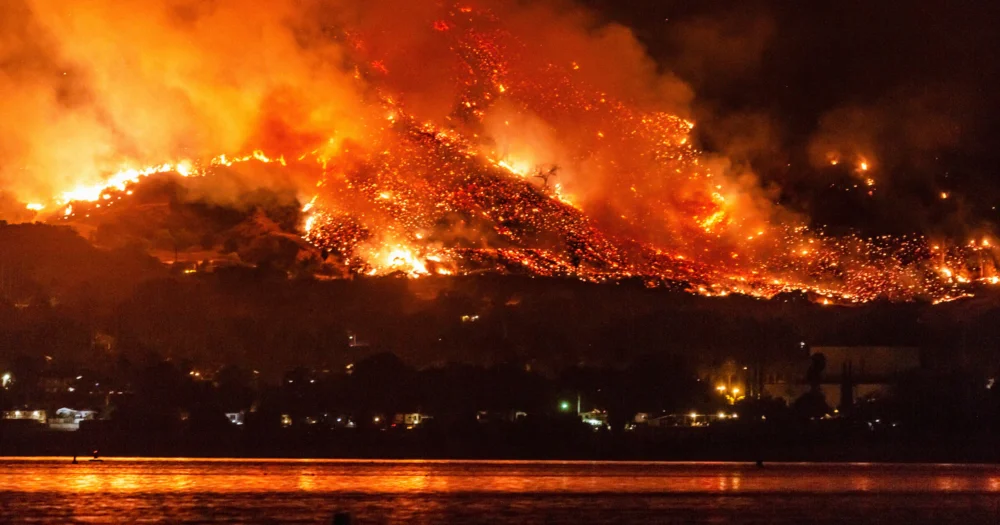
The latest scientific consensus delivers a stark and sobering message, reverberating with an unprecedented urgency: humanity is rapidly approaching a perilous precipice, beyond which lies an irreversible transformation of our planet into a "hothouse Earth" — a state potentially rendering large swathes of the global population’s current habitats untenable and severely impacting the survival of countless species. This isn’t merely a speculative forecast or a distant threat but a conclusion drawn from rigorous analysis of Earth’s interconnected climate systems, revealing that several critical "tipping points" are far closer to collapse than previously understood, setting the stage for a catastrophic chain reaction. A recent, groundbreaking study published in the esteemed journal One Earth, corroborated by comprehensive reports from outlets like The Guardian, lays bare the terrifying proximity to these thresholds, painting a grim picture of our collective future if current trajectories of carbon emissions and environmental degradation remain unchecked. These tipping points represent critical thresholds in Earth’s complex systems, where even a seemingly minor perturbation can trigger large, often abrupt, and fundamentally irreversible changes, leading to a cascade of further shifts that accelerate global warming and alter planetary conditions in profound and unpredictable ways, much like a series of dominoes falling across the globe. The One Earth study specifically highlights several alarming candidates, each a linchpin in global climate regulation: the majestic Greenland ice sheet, whose ongoing melt contributes significantly to rising sea levels; the inherently vulnerable West Antarctic ice sheet, resting largely below sea level and highly susceptible to warming ocean currents; the vast boreal permafrost regions, massive storehouses of ancient organic carbon; and the indispensable Amazon rainforest, often dubbed the "lungs of the Earth" due to its vital role in carbon sequestration and rainfall generation across South America. Each of these components, if destabilized beyond their respective points of no return, possesses the capacity to unleash devastating feedback loops that would dramatically intensify global warming. For instance, the complete disintegration of the Greenland ice sheet could raise global sea levels by approximately seven meters over centuries, submerging countless coastal cities and displacing hundreds of millions of people, while the West Antarctic ice sheet’s collapse alone could contribute several meters more. The thawing of boreal permafrost risks releasing colossal quantities of methane and carbon dioxide – potent greenhouse gases – into the atmosphere, further accelerating warming in a vicious cycle. Meanwhile, the Amazon rainforest, already under immense pressure from deforestation and climate-induced droughts, is rapidly approaching a "savannification" tipping point, where large sections could transform into a drier, savanna-like ecosystem, releasing billions of tons of stored carbon and severely disrupting regional and global weather patterns. The researchers unequivocally warn: "Research shows that several Earth system components may be closer to destabilising than once believed. While the exact risk is uncertain, it is clear that current climate commitments are insufficient." This stark assessment underscores a profound inadequacy in global efforts to mitigate climate change, suggesting that incremental adjustments and aspirational pledges are no longer enough to avert catastrophic outcomes; instead, radical, immediate action is required.
The "hothouse Earth" scenario, a term coined by scientists to describe a potential long-term, stable state of our planet, envisions a world where average global temperatures could stabilize around 9 degrees Fahrenheit (approximately 5 degrees Celsius) above pre-industrial averages. To contextualize this alarming projection, the landmark Paris Agreement aims to limit warming to "well below" 2°C, preferably 1.5°C, to avoid the most dangerous and irreversible impacts. A 5°C increase would represent a climate utterly transformed, unlike anything human civilization has ever experienced or is equipped to handle. Such a world would be characterized by extreme and prolonged heatwaves making vast equatorial and even temperate regions uninhabitable for human life, unprecedented droughts leading to widespread crop failures, acute water scarcity, and profound global food insecurity, alongside intensified and more frequent storms, floods, and wildfires devastating communities across continents. Sea levels would continue their inexorable rise for centuries, redrawing global maps, submerging low-lying islands and coastal megacities, and forcing mass migrations on an unprecedented scale, leading to immense humanitarian crises and geopolitical instability. Ecosystems would collapse at an accelerated rate, leading to mass extinctions and a severe reduction in biodiversity, unraveling the delicate web of life that sustains our planet. The delicate balance of life that has allowed human societies to flourish over millennia would be irrevocably disrupted, posing fundamental existential threats to human health, security, and prosperity. Christopher Wolf, a scientist at Terrestrial Ecosystems Research Associates, cautions, "Crossing even some of the [tipping point] thresholds could commit the planet to a hothouse trajectory. Policymakers and the public remain largely unaware of the risks posed by what would effectively be a point-of-no-return transition." This critical lack of awareness, coupled with the immense scientific complexity and the long-term nature of some impacts, creates a dangerous disconnect between the urgency of the crisis and the sluggish pace of global action, a gap that could prove fatal for future generations.
What makes this impending catastrophe particularly galling, indeed insulting, is the stark reality of its disproportionate impact. The people least responsible for causing climate change — the poor, marginalized communities, indigenous populations, and those residing in developing nations — are precisely those who will suffer its earliest, deepest, and most devastating consequences. These communities often reside in regions most vulnerable to extreme weather events, possess limited access to robust infrastructure, lack the financial and social resources to withstand climate shocks, and have minimal capacity for adaptation or recovery. Their traditional livelihoods, frequently dependent on climate-sensitive sectors like subsistence agriculture, fishing, and forestry, are among the first to be disrupted, pushing millions into deeper poverty and despair. Meanwhile, the global climate movement, a powerful and steadily growing force comprising individuals from all walks of life and across all continents, including a significant segment of Americans who are increasingly aware that climate change will impact low-income populations most severely, continues to advocate passionately for systemic change and environmental justice. Yet, their collective voices, however numerous, informed, and determined, often struggle to translate into meaningful policy shifts at the scale and speed required.
The fundamental impediment to averting this crisis lies not in a lack of scientific understanding, technological solutions, or even burgeoning public will, but in the entrenched power structures that relentlessly prioritize short-term profit and economic growth over planetary health and long-term human well-being. The power to reverse these catastrophic decisions, or more accurately, to implement the truly transformative systemic changes necessary to avoid them, does not reside with the global populace or even necessarily with democratically elected governments acting in the public interest. Instead, it is disproportionately concentrated in the hands of a small, influential cabal of the ultra-rich and the transnational corporations they control. These powerful entities, driven by the relentless, insatiable logic of capital accumulation, exert immense, often unseen, influence over political processes, economic policies, and dominant media narratives. They actively lobby against climate regulations, fund sophisticated disinformation campaigns designed to sow doubt and delay action, and push aggressively for continued reliance on fossil fuels and environmentally destructive industrial practices that underpin their vast wealth. Oxfam America, among other reputable organizations, has extensively documented the myriad ways billionaires and their corporate empires actively drive climate change through their investment decisions, their exorbitant consumption patterns, and their unparalleled political leverage, effectively holding the planet’s future hostage to their self-serving interests.
The challenge is so profound that some leading environmental experts and critical theorists argue that even the world’s most powerful governments, if genuinely committed to ambitious emissions cuts and a just transition towards sustainable economies, would struggle immensely under the sheer weight of corporate and financial resistance. David Camfield, a distinguished professor at the University of Manitoba and the author of the insightful 2022 book "Future on Fire: Capitalism and the Politics of Climate Change," incisively explains the formidable political obstacles inherent in our current system. A government attempting to implement radical emissions cuts, dismantle fossil fuel infrastructure, and shift towards equitable, sustainable economies would inevitably face severe backlash: coordinated corporate investment strikes designed to destabilize the economy, immense pressure from powerful international credit agencies threatening downgraded sovereign ratings, and catastrophic market disruptions orchestrated to undermine public confidence and political legitimacy. These are not merely abstract economic challenges but politically weaponized tactics wielded by powerful elites to preserve the status quo of endless growth and profit, regardless of the ecological cost.
Camfield asserts that "To weaken those political obstacles sufficiently that a government could get a just transition underway would take massive pressure of the kind that only movements can unleash." This highlights a crucial, often overlooked, point: the battle against climate change is inextricably linked to a broader, fundamental struggle for economic and political power. The inherent logic of capitalism, which demands unending accumulation of wealth, requiring corporations to continually grow or face demise, creates an inexorable, self-perpetuating drive towards intensified resource exploitation and environmental degradation, fundamentally at odds with ecological survival. To truly transition away from this destructive path would necessitate a fundamental weakening of capital’s pervasive grip on power – a profound societal transformation that historically has only ever been achieved when vast numbers of ordinary, toiling people unite to collectively demand a radically different, more equitable, and sustainable world, one that prioritizes life over profit.
The math, in its brutal simplicity, reveals a stark and inescapable equation: the current global economic system, predicated on infinite growth on a finite planet with finite resources and carrying capacity, is fundamentally incompatible with long-term ecological survival and human flourishing. The future of Earth, and by extension, the future of humanity itself, hinges on whether we can collectively overcome these deeply entrenched power dynamics and the systemic forces driving us towards catastrophe. It requires not just isolated technological innovations or individual lifestyle changes, though these are important, but a profound, global societal reckoning with the structures and ideologies that have brought us to this perilous precipice. The warning from scientists is unequivocally clear and dire; the pathway to a livable future, however challenging and daunting it may seem, demands nothing less than a global mobilization of people power to reclaim our collective destiny from the clutches of unsustainable greed and short-sighted self-interest. The alternative is a "point-of-no-return transition" into a hothouse world, an uninhabitable legacy of inaction that would forever define humanity’s greatest, most tragic failure.