

 Faris Adani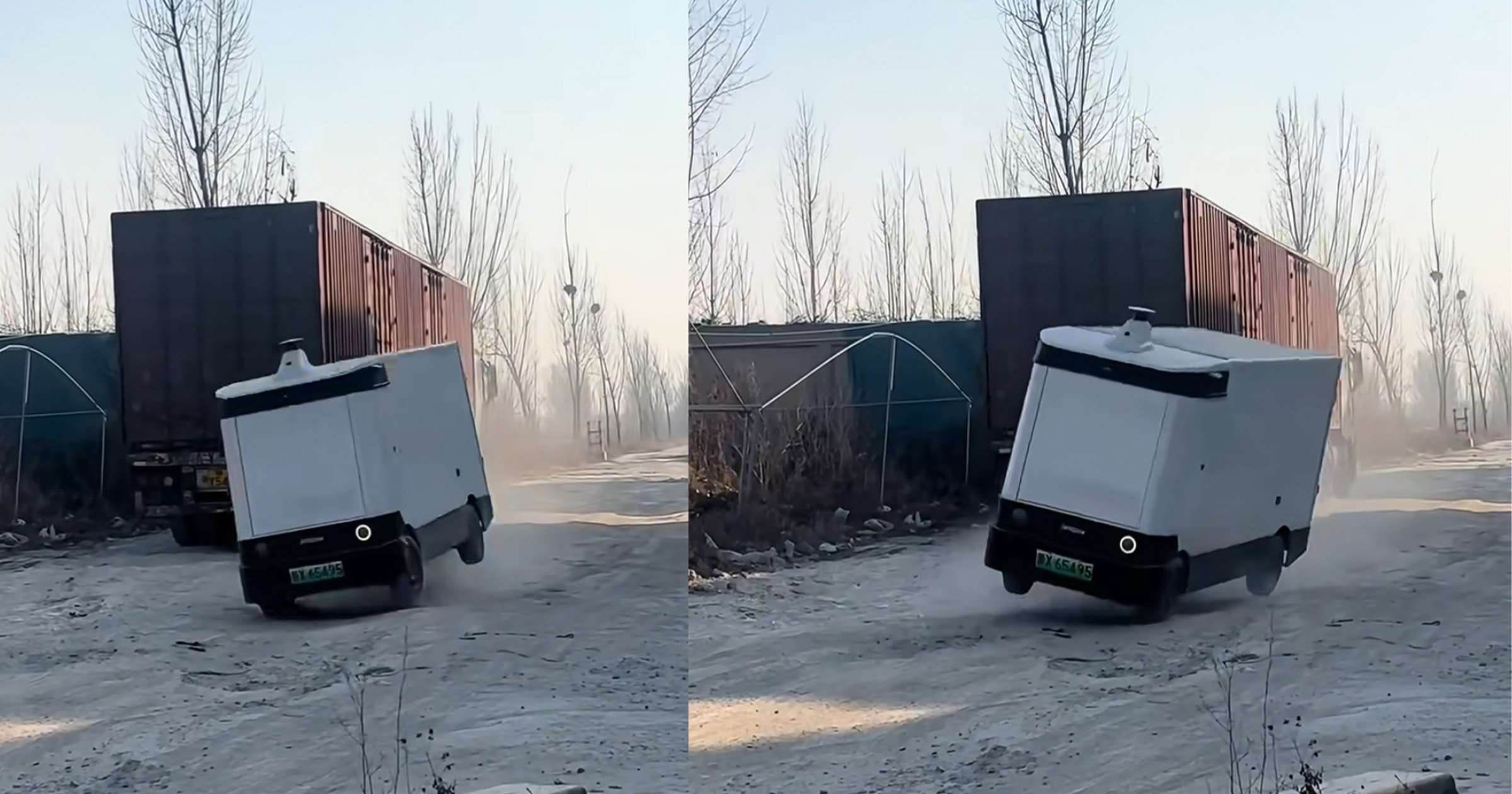
The future has arrived in China’s bustling urban centers, not with a quiet hum of seamless efficiency, but often with the jarring bounce and unpredictable antics of autonomous delivery vans navigating a reality far more complex than their algorithms were perhaps designed for. These self-driving "robovans," once relegated to futuristic visions or controlled test environments, are now a common sight on Chinese streets, transforming last-mile logistics even as they generate a torrent of unintentionally hilarious—and sometimes concerning—viral social media clips. The phenomenon paints a vivid picture of a technological revolution clashing with the gritty, unpredictable texture of everyday life, leading to scenarios that observers have likened to a real-world, albeit low-speed, version of Grand Theft Auto.
The proliferation of these autonomous vehicles across China is a testament to the nation’s aggressive push into artificial intelligence and smart city infrastructure. Companies like Neolix and Rino.ai are at the forefront, deploying thousands of these electric delivery units at a pace unmatched globally. However, this rapid rollout has inadvertently created a vast, uncontrolled testing ground, exposing the many shortcomings that still plague even the most advanced AI and robotic systems when confronted with the delightful chaos of human civilization.
One of the most widely circulated clips, originating from the Pinterest-like app Xiaohongshu, perfectly encapsulates this juxtaposition. It features a Neolix X3 unit, a prominent model in China’s autonomous fleet, violently jostling and bouncing as it attempts to traverse a severely potholed gravel path. The vehicle’s design, which places two massive lithium-ion battery packs on the underside of its chassis, exacerbates the issue, making its suspension woefully inadequate for such rugged terrain. The sight of this sophisticated machine struggling to maintain composure on what appears to be a rudimentary track evoked a poignant comment from a user: "The roads are still from the Qing Dynasty, but the cars are from the next century." This single observation highlights a critical challenge for autonomous vehicle deployment worldwide: the disconnect between cutting-edge technology and existing, often dilapidated, infrastructure. Unlike human drivers who instinctively adapt to road conditions, adjusting speed, trajectory, and even anticipating hazards based on years of experience, these machines operate on programmed parameters that struggle with novel or extreme environmental variables. The rough ride isn’t just an aesthetic problem; it raises questions about cargo integrity, vehicle longevity, and the potential for mechanical failure.
The "many, many shortcomings" extend far beyond mere discomfort on uneven roads. Other incidents captured by candid smartphone cameras reveal a striking lack of common sense, or perhaps, a rigid adherence to programming that overrides situational awareness. One smaller Neolix X3 model was filmed "freaking out" – exhibiting indecisive, jerky movements – when encountering a scattering of corn cobs on a road. For a human, this is a minor inconvenience, easily navigated around or driven over without a second thought. For an autonomous sensor suite, however, a pile of corn cobs can present an ambiguous obstacle: are they solid? Do they move? Are they a critical hazard? The AI’s inability to quickly categorize and dismiss such a benign obstruction speaks volumes about the limitations of current object recognition and decision-making algorithms, particularly when faced with what engineers call "edge cases" – scenarios that deviate from perfectly clean data sets.
Even more dramatically, a ZTO Express delivery van found itself utterly immobilized after driving directly into a patch of wet cement. This particular incident underscored the vehicles’ inability to interpret abstract cues. A human driver would immediately recognize the freshly laid, glistening grey patch as a construction zone, perhaps marked by cones or caution tape, and certainly discern its pliable nature. The autonomous van, devoid of this intuitive understanding, likely registered it as a traversable surface, only to become hopelessly stuck, a monument to technological overconfidence meeting raw, unyielding reality. Such occurrences are not just embarrassing; they represent costly service interruptions, potential damage to infrastructure, and a significant blow to public confidence.
Perhaps the most poignant example of the robovans’ robotic detachment from human concerns involved a woman in Shenzhen desperately attempting to save her prized vegetables. She had laid them out to dry by the side of the road, a common practice in many communities. As an autonomous delivery van approached, seemingly oblivious to her presence or the cultural significance of her drying produce, it continued on its programmed path, threatening to roll right over her harvest. Her frantic efforts to intervene were futile; the machine, following its predetermined route and obstacle avoidance logic, likely did not register her as an authority figure, nor her vegetables as anything other than minor, movable objects. This incident highlights the profound ethical and social challenges of deploying AI in public spaces: how do these machines weigh property damage, human interaction, and emotional distress against their primary directive of efficient delivery?
These numerous clips are not isolated anomalies but symptomatic of a massive, unprecedented rollout of self-driving vans throughout China. Neolix, a leading player, boasts an impressive deployment of over 10,000 robovans across 300 cities as of October, according to The Robot Report. In Qingdao alone, more than 1,200 self-driving cargo vans have collectively racked up over 31 million miles and completed thousands of deliveries. This scale is facilitated by a proactive regulatory environment; Neolix was the first company to obtain an autonomous delivery license in 2021, allowing it to rapidly accumulate operational miles on public roads. Other companies, such as Rino.ai, are swiftly following suit, with over 2,000 self-driving vans already on the road in more than 170 cities.
The sheer volume of these deployments in China is a stark contrast to the more cautious, geographically limited, and heavily regulated rollouts seen in Western nations like the United States. China’s top-down industrial policy, coupled with a national strategic imperative to dominate AI and robotics, creates an environment where rapid deployment is prioritized, often with the understanding that real-world data will inform subsequent refinements. This "deploy fast, iterate faster" approach, while enabling incredible scale, inevitably surfaces the kind of quirky, challenging incidents that become viral content. The driving force behind this push is multifaceted: a burgeoning e-commerce market demanding ever-faster and cheaper delivery, a desire to mitigate future labor shortages, and the strategic advantage of leading in a critical emerging technology.
Technologically, these robovans typically rely on a sophisticated array of sensors including LiDAR (Light Detection and Ranging), high-resolution cameras, radar, and ultrasonic sensors, fused with GPS and pre-mapped data. Advanced AI and machine learning algorithms then process this torrent of information in real-time to perceive their environment, predict the behavior of other road users, and make navigation decisions. However, as the viral clips demonstrate, even with this arsenal, the transition from controlled environments to the unpredictable "wild west" of urban streets is fraught with difficulty. The "Level 4" autonomy claimed by many of these vehicles, which means they can operate autonomously within defined operational design domains (ODDs) without human intervention, is severely tested by the unscripted scenarios of daily life.
While undeniably entertaining, these public mishaps carry serious implications. Beyond the humor, the robovans are clearly presenting intermittent safety hazards on the roads. Their unpredictable behavior, whether it’s getting stuck, bouncing aggressively, or failing to yield to human concerns, poses risks to pedestrians, cyclists, other vehicles, and property. Each incident erodes public trust in autonomous technology, potentially creating a backlash that could impede future development and adoption. For China, which aims to be a global leader in AI, these public displays of imperfection are a double-edged sword: they provide invaluable real-world data for improvement, but also generate skepticism both domestically and internationally.
Ultimately, the spectacle of driverless delivery vans "rampaging" through Chinese cities offers a fascinating, sometimes chaotic, glimpse of things to come for the rest of the world. It underscores the immense engineering and ethical challenges inherent in integrating truly autonomous systems into complex human environments. The journey from these "Grand Theft Auto" moments to seamless, universally accepted robotic logistics will require not just more sophisticated algorithms and robust hardware, but also a deeper understanding of human behavior, societal expectations, and the nuanced fabric of our shared urban spaces. The roads of China are currently serving as a proving ground, showing us that while the future of delivery is undoubtedly autonomous, its arrival is likely to be far more bumpy, amusing, and occasionally frustrating than we ever imagined.