Faris Adani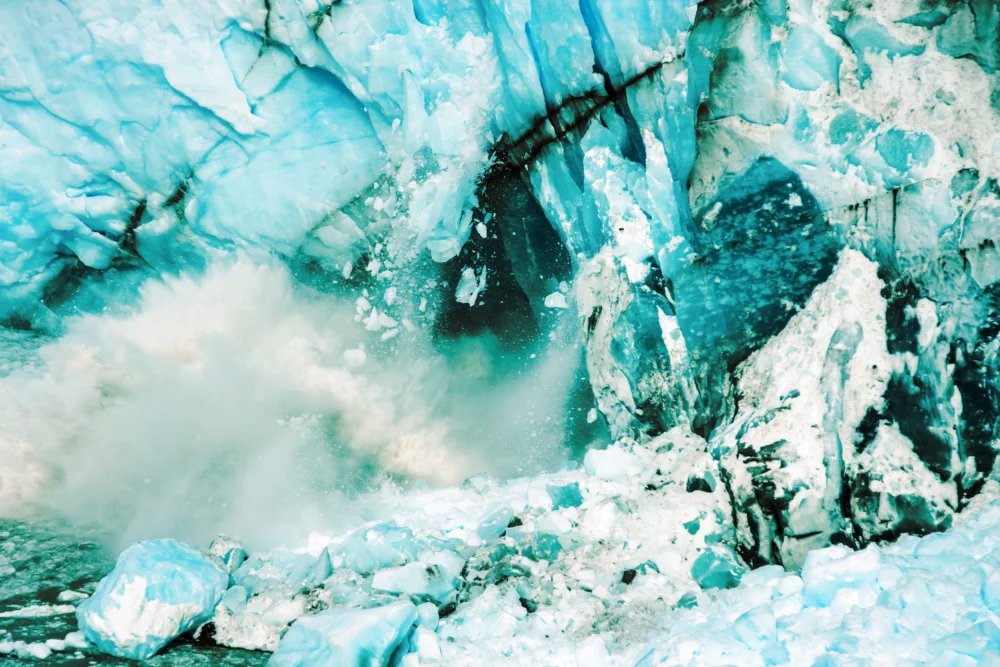
Doomsday Glacier Bombarded by Earthquakes: A Startling Revelation of Accelerated Instability in Antarctica’s Most Critical Ice Mass.
Hundreds of previously undetected earthquakes have been rattling Antarctica’s colossal Thwaites Glacier, ominously nicknamed the “Doomsday Glacier,” a revelation that underscores its perilous fragility and the escalating threat it poses to global sea levels. This alarming discovery, detailed in a groundbreaking new study published in the journal *Geophysical Research Letters*, paints a stark picture of a massive ice behemoth, roughly the size of Great Britain, experiencing unprecedented internal stresses and accelerated disintegration dynamics. The potential disintegration of Thwaites Glacier alone could unleash between two and ten feet of devastating flooding upon coastal communities across the globe, a catastrophic scenario that climate scientists now fear could unfold more rapidly than previously projected, further highlighting the stark inadequacy of current global warming mitigation efforts.
The study, spearheaded by Australian National University seismologist Thanh-Son Phạm, utilized an innovative algorithmic approach to sift through years of seismic data from the icy continent, uncovering a hidden history of geological unrest beneath one of Earth’s most vulnerable ice sheets. Phạm’s meticulous analysis revealed a staggering 362 previously unrecognized seismic events occurring between 2010 and 2023. A significant majority of these tremors, 245 to be precise, were traced directly to the Thwaites Glacier, located within the volatile West Antarctic region. These findings strongly suggest that the earthquakes are predominantly a consequence of vigorous iceberg calving – the process where large chunks of ice break off from the glacier’s front and tumble into the ocean – a phenomenon known to intensify with warming ocean waters.
Understanding the unique seismicity of glaciers is crucial for predicting their future behavior. While glacier earthquakes in warmer regions, such as those associated with Greenland’s rapidly retreating ice sheet, are often detected at magnitudes around 5 on the Richter scale and are clearly linked to large-scale iceberg calving events, the dynamics driving Antarctic earthquakes have historically been less understood. This knowledge gap is largely due to the sheer remoteness of the continent, the limited number of seismic monitoring stations, and the tendency for these quakes to register at lower magnitudes, making them harder to detect with conventional methods. Phạm’s algorithm represents a significant leap forward, designed specifically to identify subtle wave patterns indicative of glacial activity that would otherwise be lost in background noise or overlooked by standard seismic analysis. By enhancing the sensitivity and precision of detection, the algorithm has provided an unprecedented window into the internal mechanics of Thwaites Glacier.
The “Doomsday Glacier” moniker is not merely hyperbole; it reflects the immense scale of the potential environmental and societal catastrophe. Thwaites Glacier is one of the fastest-changing and largest glaciers on Earth, draining an area of approximately 192,000 square kilometers (74,000 square miles). Its rapid retreat has been attributed to the intrusion of warm ocean currents beneath its floating ice shelf, leading to accelerated basal melt – the melting of ice from below. This basal melt thins the ice, weakens its structural integrity, and destabilizes the grounding line, the point where the glacier transitions from resting on the seabed to floating. The earthquakes now detected provide direct, real-time evidence of the physical stresses and fracturing occurring within the ice mass as it responds to these warming conditions. Each tremor, however small, is a signal of the glacier’s increasing instability, a geological heartbeat indicating accelerated change.
Beyond the immediate threat of its own volume contributing to sea-level rise, Thwaites Glacier plays an even more critical role: it acts as a literal “icy plug” for the vast West Antarctic Ice Sheet (WAIS). This ice sheet holds enough frozen water to raise global sea levels by several meters. Scientists are particularly concerned about the marine ice sheet instability (MISI) hypothesis, which posits that once a marine-terminating glacier like Thwaites retreats past a certain point on a retrograde (downward-sloping) bed, the retreat becomes self-sustaining and irreversible. The Thwaites Glacier’s current configuration, resting on such a bed, makes it especially vulnerable to this runaway collapse. Should Thwaites fully collapse, it could destabilize the entire WAIS, triggering a much larger and even more catastrophic sea-level rise event that would redefine coastlines worldwide, displace millions, and wreak havoc on global economies and ecosystems.
The implications of Phạm’s findings extend far beyond the Antarctic ice sheet itself. The detection of these widespread seismic events underscores the urgent need for a dedicated and continuously maintained seismic network on the icy continent. Such a network would provide invaluable, high-resolution data to monitor glacial dynamics in real-time, allowing scientists to track changes that “may evolve abruptly in the coming decades or even years.” This enhanced monitoring capability is critical for improving predictive models of sea-level rise, which currently grapple with significant uncertainties regarding the rate and magnitude of ice sheet collapse. Better data means more accurate forecasts, giving policymakers and coastal communities precious time to prepare for the inevitable impacts.
The ongoing retreat of Thwaites Glacier and its neighbor, the Pine Island Glacier – another significant contributor to West Antarctic ice loss – are stark indicators of anthropogenic climate change. The oceans, absorbing the vast majority of excess heat trapped by greenhouse gases, are warming at an alarming rate, directly impacting these vulnerable marine-terminating glaciers. The “insufficient efforts” to stop global warming, as alluded to in the original assessment, refer to the global community’s collective failure to meet ambitious emission reduction targets set by international agreements like the Paris Agreement. Despite scientific consensus and dire warnings, greenhouse gas emissions continue to rise, fueling the very processes that are destabilizing critical ice masses like Thwaites.
The future outlook for Thwaites Glacier remains a subject of intense scientific scrutiny and global concern. International collaborations, such as the International Thwaites Glacier Collaboration (ITGC), are deploying advanced technologies – from autonomous underwater vehicles mapping the seafloor beneath the ice to specialized radars measuring ice thickness and bedrock topography – to gather comprehensive data. These efforts aim to reduce uncertainties in climate models and provide clearer projections for the future. However, the seismic revelations from Phạm’s study add a new layer of urgency, demonstrating that the glacier is not merely melting from below but actively fracturing and convulsing from within. This internal instability, driven by external warming, signifies a complex and accelerating deterioration that demands immediate and decisive global action on climate change. Without a drastic reduction in greenhouse gas emissions, the “Doomsday Glacier” will continue its inexorable march towards collapse, with profound and irreversible consequences for humanity and the planet.