Faris Adani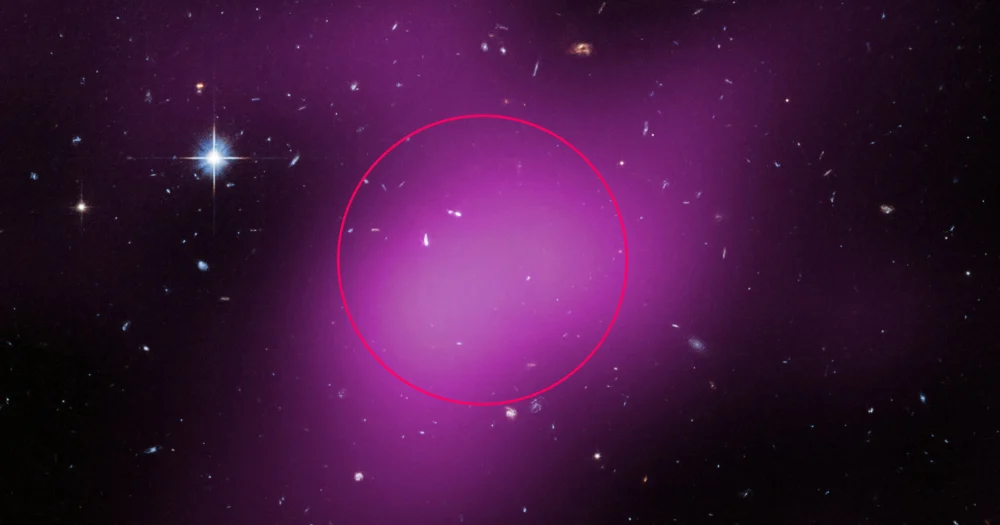
<h1>Scientists Weirded Out by Cosmic Bones in Distant Space</h1>
<div class=”intro-section”>
<p>In a groundbreaking discovery that could fundamentally alter our understanding of the cosmos, an international team of astronomers, leveraging the unparalleled capabilities of NASA’s Hubble Space Telescope, has identified an entirely new class of celestial object. Dubbed “Cloud-9,” this enigmatic entity is a starless, gas-rich, dark-matter cloud, existing as a ghostly relic from the early universe. This finding represents a monumental step in the elusive quest to comprehend dark matter, the mysterious substance that constitutes the vast majority of the universe’s mass yet remains stubbornly invisible.</p>
</div>
<div class=”dark-matter-background”>
<h2>The Universe’s Invisible Architect: Dark Matter</h2>
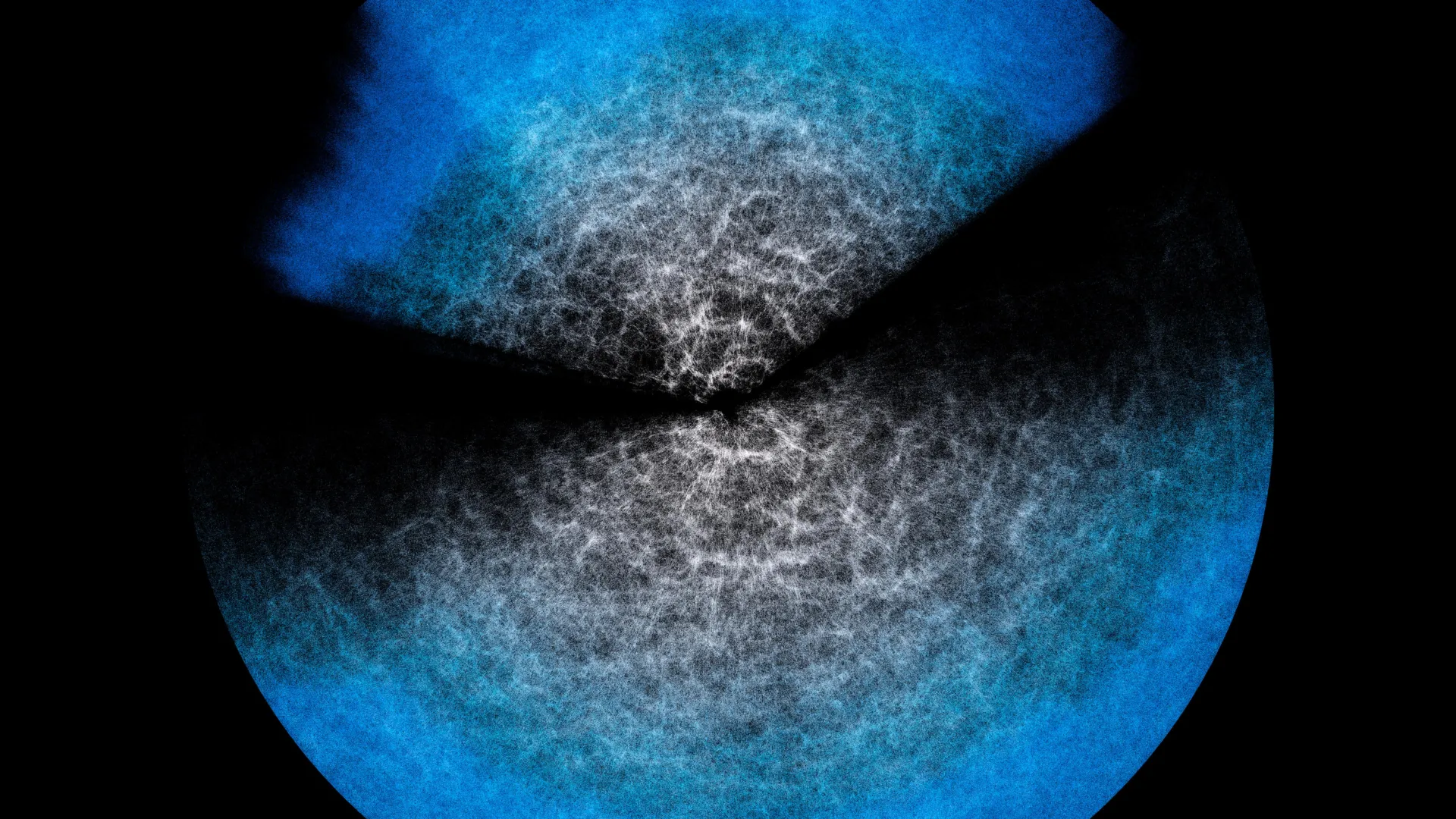
<p>For decades, cosmological theories have grappled with the profound enigma of dark matter. Current theories suggest that this elusive substance, which neither emits, absorbs, nor reflects light, acts as the universe’s invisible scaffolding, dominating the known cosmos and making up over 85 percent of all matter. Its pervasive gravitational influence is evident in the rotation curves of galaxies, the gravitational lensing of distant objects, and the large-scale structure of the universe. Without dark matter, galaxies would simply fly apart, and the cosmic web as we know it would not exist. Yet, despite its omnipresence, its direct detection remains one of the holy grails of modern physics and astronomy, leaving a significant void in our understanding of how celestial objects form and evolve.</p>
<p>The challenge in studying dark matter stems from its non-interactive nature. Unlike ordinary baryonic matter (protons, neutrons, electrons) that forms stars, planets, and everything we can see, dark matter interacts primarily through gravity. Scientists have proposed various candidates for dark matter particles, ranging from Weakly Interacting Massive Particles (WIMPs) to axions and sterile neutrinos, but definitive proof of any remains elusive. This makes indirect observations, such as the gravitational effects on visible matter, or the discovery of objects predominantly composed of dark matter, incredibly valuable.</p>
</div>
<div class=”the-discovery-cloud9″>
<h2>Unveiling Cloud-9: A Primordial Ghost</h2>
<p>The newly identified Cloud-9 offers precisely such a rare window into the dark universe. Located approximately 14 million light-years from Earth, this unique object stands out because of its stark simplicity: it is a massive cloud of primordial hydrogen gas, devoid of stars. This striking absence of stellar formation is what initially perplexed and then excited the research team. Traditional understanding dictates that sufficiently dense gas clouds, especially those with a significant gravitational pull, should eventually collapse under their own weight to ignite stars. Cloud-9 defies this expectation.</p>
<p>The European Space Agency (ESA) characterized Cloud-9 as a “starless, gas-rich, dark-matter cloud,” a description that encapsulates its peculiar nature. The object’s peculiar characteristic led <a href=”https://www.sciencealert.com/mysterious-cloud-9-may-be-the-dark-matter-bones-of-a-failed-galaxy” rel=”nofollow noreferrer” target=”_blank”><em>ScienceAlert</em> to memorably term it</a> the “dark-matter bones of a failed galaxy.” This evocative phrase highlights its role as a fossil leftover from the universe’s infancy, an unfulfilled cosmic promise.</p>
</div>
<div class=”failed-galaxy-concept”>
<h2>The Tale of a Failed Galaxy</h2>
<p>”This is a tale of a failed galaxy,” remarked Alejandro Benitez-Llambay, a physics assistant professor at Milano-Bicocca University and coauthor of the pivotal <a href=”https://iopscience.iop.org/article/10.3847/2041-8213/ae1584″ rel=”nofollow noreferrer” target=”_blank”>paper</a> published in <em>The Astrophysical Journal Letters</em>. His sentiment underscores a crucial principle in scientific discovery: often, more is learned from anomalies and failures than from successes. “In this case, seeing no stars is what proves the theory right. It tells us that we have found in the local Universe a primordial building block of a galaxy that hasn’t formed.”</p>
<p>The concept of a “failed galaxy” is profound. In the standard cosmological model, the seeds of galaxies are laid by overdensities of dark matter in the early universe. These gravitational wells attract baryonic matter (gas), which then cools, collapses, and forms stars. Over billions of years, these stellar nurseries evolve into the magnificent galaxies we observe today. Cloud-9, however, appears to be a dark matter halo that successfully gathered a significant amount of primordial hydrogen gas but somehow failed to cross the threshold for star formation. This could be due to a combination of factors, such as a lack of sufficient density of baryonic matter, external environmental influences preventing collapse, or perhaps an inherent property of its dark matter distribution that prevented efficient star birth.</p>
</div>
<div class=”telescopic-power”>
<h2>The Instrumental Roles of FAST and Hubble</h2>
<p>The discovery of Cloud-9 is a testament to the synergistic power of modern astronomical instruments. The initial detection of this unusual gas cloud occurred three years ago using the Five-hundred-meter Aperture Spherical Telescope (FAST) in Guizhou, China. As the world’s largest single-dish radio telescope, FAST is uniquely adept at detecting faint emissions from neutral hydrogen (HI) gas, which emits at a characteristic wavelength of 21 centimeters. This primordial hydrogen, largely untouched since the Big Bang, forms the raw material for stars and galaxies.</p>
<p>While FAST pinpointed the presence of a substantial hydrogen cloud, it couldn’t resolve whether stars were forming within it. That crucial next step required the unparalleled imaging capabilities of the Hubble Space Telescope. Orbiting above Earth’s distorting atmosphere, Hubble’s Advanced Camera for Surveys (ACS) can capture incredibly faint light over long exposure times, providing resolutions unmatched by ground-based telescopes. “Before we used Hubble, you could argue that this is a faint dwarf galaxy that we could not see with ground-based telescopes,” explained lead author Gagandeep Anand, a researcher at the Space Telescope Science Institute. “They just didn’t go deep enough in sensitivity to uncover stars. But with Hubble’s Advanced Camera for Surveys, we’re able to nail down that there’s nothing there.” This definitive lack of stars, confirmed by Hubble’s exquisite sensitivity, transformed Cloud-9 from a merely interesting gas cloud into a cosmological revelation.</p>
</div>
<div class=”cloud9-characteristics”>
<h2>Decoding Cloud-9’s Peculiar Characteristics</h2>
<p>Cloud-9 resides in the vicinity of the spiral galaxy Messier 94 (M94), an intermediate spiral galaxy located in the constellation Canes Venatici. Despite its proximity to a star-rich environment, Cloud-9 stands as a solitary, starless entity. Its physical dimensions and composition are particularly telling. The cloud’s core stretches approximately 4,900 light-years across, making it significantly smaller and more compact than many other hydrogen clouds in its galactic neighborhood. The total mass of its hydrogen gas is estimated to be around one million times the mass of our Sun.</p>
<p>However, the truly astonishing figure relates to its dark matter content. The researchers suspect that the vast majority of Cloud-9’s total mass is comprised of dark matter, weighing in at an estimated five billion times the mass of the Sun. This immense dark matter halo provides the gravitational glue that prevents the hydrogen gas from dispersing into intergalactic space. It’s this precise balance that makes Cloud-9 so rare: it’s massive enough to retain its gas but not massive enough, or perhaps not dense enough in baryonic matter, to trigger star formation. This “rare sweet spot” allows it to exist as a stable, starless dark matter-dominated object, a testament to the complex interplay of gravitational forces and matter distribution in the early universe.</p>
</div>
<div class=”implications-for-cosmology”>
<h2>A Window into the Dark Universe and Early Cosmology</h2>
<p>The discovery of Cloud-9 carries profound implications for our understanding of dark matter and the formation of galaxies. “This cloud is a window into the dark universe,” explained ESA astronomer Andrew Fox, a team member. “We know from theory that most of the mass in the Universe is expected to be dark matter, but it’s difficult to detect this dark material because it doesn’t emit light. Cloud-9 gives us a rare look at a dark-matter-dominated cloud.” By studying such an object, scientists can gain insights into the properties of dark matter itself, how it distributes within galactic halos, and its role in shaping cosmic structures.</p>
<p>Furthermore, Cloud-9 serves as a crucial piece of observational evidence supporting theories of hierarchical galaxy formation, where smaller dark matter halos merge to form larger ones. This object could represent a pristine, isolated example of one of the primordial building blocks that simply never integrated into a larger galaxy or failed to ignite its stellar engine. It challenges the assumption that all significant dark matter halos must inevitably lead to star formation, suggesting a more nuanced and varied pathway for cosmic evolution. This research reinforces the idea that focusing solely on visible stars provides a limited, often biased, picture of the universe; the vast, dark gulfs between them may hold the most profound keys to our cosmic origins.</p>
</div>
<div class=”the-name-and-future”>
<h2>The Naming and the Prospect of More “Abandoned Houses”</h2>
<p>Interestingly, the name “Cloud-9” has little to do with the common English idiom signifying extreme happiness. Instead, it was given sequentially by the researchers, being the ninth gas cloud spotted in the vicinity of Messier 94. This practical, systematic naming convention belies the extraordinary nature of the object it describes.</p>
<p>The researchers are optimistic that Cloud-9 is not an isolated anomaly. They suggest that many other objects like it – the remnants of failed galaxies, or primordial dark matter halos that never quite blossomed – may still be lurking in the cosmic expanse, waiting to be discovered. As coauthor and Space Telescope Science Institute astronomer Rachael Beaton eloquently put it, “Among our galactic neighbors, there might be a few abandoned houses out there.” The hunt for these cosmic relics will undoubtedly continue, guided by the insights gleaned from Cloud-9, potentially revealing a hidden population of dark, starless structures that are vital to completing our cosmic narrative.</p>
</div>
<div class=”conclusion-section”>
<p>The discovery of Cloud-9 is a landmark achievement, offering a tangible link to the early universe and a unique laboratory for studying dark matter’s elusive nature. It underscores the immense power of combining different observational techniques and the persistent curiosity of scientists in pushing the boundaries of what is known. As we continue to probe the depths of space with ever more sophisticated instruments, the “dark universe” slowly begins to reveal its secrets, one starless cloud at a time.</p>
</div>
<div class=”related-reading”>
<h2>Related Reading</h2>
<ul>
<li><a href=”https://futurism.com/space/scientists-detected-dark-matter-first-time”><em>Scientists Claim to Detect Dark Matter for the First Time Ever</em></a></li>
<li><a href=”https://www.esa.int/Science_Exploration/Space_Science/Cloud-9_a_new_celestial_object_found_by_Hubble” rel=”nofollow noreferrer” target=”_blank”>ESA: Cloud-9: A new celestial object found by Hubble</a></li>
<li><a href=”https://www.sciencealert.com/mysterious-cloud-9-may-be-the-dark-matter-bones-of-a-failed-galaxy” rel=”nofollow noreferrer” target=”_blank”>ScienceAlert: Mysterious ‘Cloud-9’ May Be The Dark Matter Bones of a Failed Galaxy</a></li>
<li><a href=”https://iopscience.iop.org/article/10.3847/2041-8213/ae1584″ rel=”nofollow noreferrer” target=”_blank”>The Astrophysical Journal Letters: A Primordial Dark Matter Halo with No Stars: The Case of Cloud-9</a></li>
</ul>
</div>
</div>