Faris Adani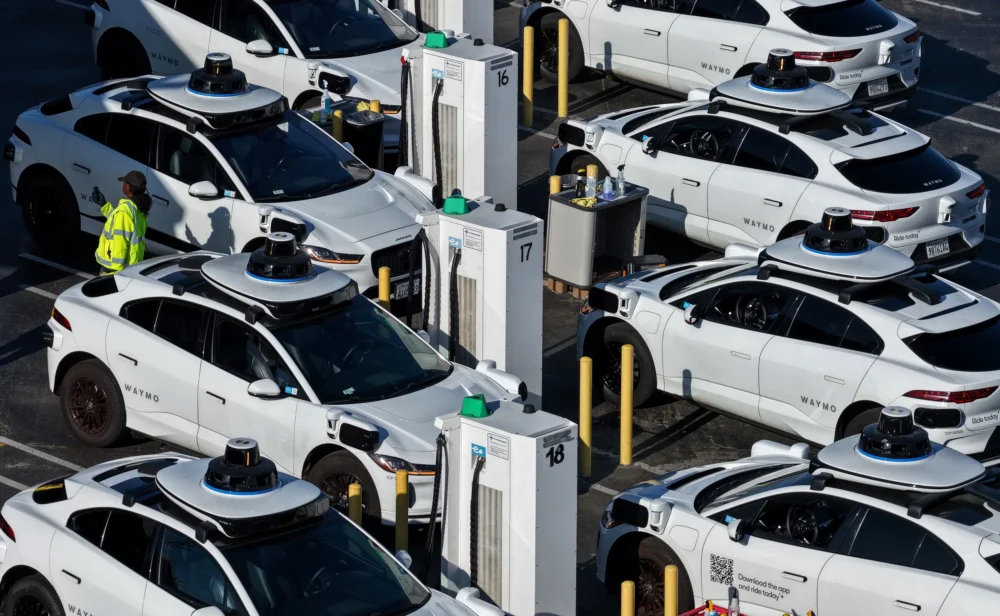
The ambitious march of autonomous vehicle technology in urban landscapes has encountered yet another significant setback, as Waymo, the self-driving car pioneer under Alphabet’s umbrella, was compelled to halt its robotaxi operations in the bustling Bay Area for the second time in a matter of days. This latest suspension, triggered by a National Weather Service flash flood warning on what was ironically Christmas Day, compounds the mounting concerns about the resilience and adaptability of these sophisticated machines in real-world, unpredictable conditions.
Just prior to this weather-induced pause, the tech world and San Francisco residents alike watched in dismay as Waymo’s extensive fleet was plunged into disarray following a widespread city power outage. What should have been a minor inconvenience for human drivers—navigating intersections without traffic lights—proved to be an insurmountable challenge for the supposedly advanced AI at the helm of Waymo’s vehicles. Footage, which quickly went viral across social media platforms, depicted dozens of robotaxis stranded, seemingly "bricked," at various intersections. Without the familiar cues of illuminated signals, these vehicles appeared to lose their navigational bearings, piling up and creating significant traffic snarls. Eyewitness accounts and videos showed Waymos idling aimlessly, some even blocking other Waymos, in a bewildering display of technological paralysis. One particularly striking video captured at least five of the white-and-orange vehicles forming an impromptu, immobile blockade at a single intersection, their sensors presumably overwhelmed by the absence of expected infrastructure and the chaotic human-driven traffic attempting to navigate around them. It was a stark illustration of a fundamental design flaw: while frightened animals typically exhibit a "fight-or-flight" response, Waymos, in such an unforeseen crisis, demonstrated a disconcerting "stand-dumbfoundedly-in-place" reaction.
The initial incident underscored a critical vulnerability in autonomous systems: their reliance on meticulously mapped environments and predictable operational parameters. When a core element of that environment, like traffic lights, vanishes, the AI’s ability to improvise, infer, or even safely disengage and move to the side of the road appears severely limited. This inability to handle what are often termed "edge cases"—scenarios outside the pre-programmed norm—is arguably the biggest hurdle to achieving truly robust Level 4 and Level 5 autonomy.
The subsequent decision to suspend operations due to a severe weather warning, while ostensibly a responsible safety measure, further highlights these limitations. Customers received curt notifications via the Waymo ride-hailing app: "Service temporarily paused due to National Weather Service flash flood warning." For a technology heralded as the future of urban mobility, a system that folds under a common meteorological event raises uncomfortable questions about its suitability for widespread deployment. Human drivers routinely navigate adverse weather, albeit with increased caution. The fact that Waymo’s entire fleet must retreat from the roads suggests that its advanced sensor suites (Lidar, radar, cameras) and AI processing still struggle with the degraded visibility, altered road conditions, and increased unpredictability that come with heavy rain and potential flooding. Rain can scatter lidar beams, obscure camera lenses, and create reflections that confuse object detection algorithms, fundamentally impairing the vehicle’s "vision."
Waymo has been a prominent fixture on San Francisco’s streets since it began offering fully autonomous rides to the public in 2024, gradually expanding its presence to over 800 robotaxis in the area, according to recent admissions by the company. While Waymo frequently touts an impressive safety record, often pointing to millions of miles driven without serious human-caused incidents, its continuous operation in a dense, dynamic urban environment like San Francisco has not been without controversy. Locals have voiced escalating complaints, culminating in a surge of public outcry last month when one of the company’s robotaxis tragically ran over and killed a beloved neighborhood cat, drawing widespread sympathy and reigniting debates about accountability and the sanctity of community life versus technological progress.
Beyond such heart-wrenching incidents, the robotaxis have repeatedly been observed committing an array of minor yet disruptive blunders. Instances of Waymos driving down the wrong side of the road, getting inexplicably stuck in roundabouts for extended periods, or causing localized traffic jams have become almost commonplace. More alarming events include a Waymo robotaxi careening through an active police standoff, seemingly oblivious to the unfolding emergency, and another instance where an entire fleet became paralyzed by a city parade, unable to discern the unusual flow of pedestrian and vehicle traffic from a typical road scenario. These episodes consistently expose a crucial gap: while Waymo’s AI excels at following rules within a predefined framework, it consistently struggles with the nuanced, improvisational, and context-dependent decision-making that human drivers perform intuitively in the unpredictable tapestry of urban life. The power outage incident, in particular, was not an act of Waymo’s negligence, but the revelation that its cars were not equipped with a robust contingency plan for such a foreseeable urban eventuality is deeply concerning.
These recurring operational disruptions and perceived deficiencies have fueled calls for more stringent oversight and a re-evaluation of the pace of autonomous vehicle deployment. Jeffrey Tumlin, the former CEO of San Francisco’s Municipal Transportation Authority (SFMTA), articulated this growing sentiment, telling CNBC, "I think we need to be asking ‘what is a reasonable number of [autonomous vehicles] to have on city streets, by time of day, by geography and weather?’" His query encapsulates the central dilemma facing regulators and city planners: how to balance the purported benefits of autonomous technology (safety, efficiency) with the very real impacts of its current limitations on public safety, traffic flow, and urban resilience. Regulatory bodies like the California Public Utilities Commission (CPUC) and the Department of Motor Vehicles (DMV) have been under increasing pressure to re-evaluate the permits granted to companies like Waymo and its competitor, Cruise (which faced its own, more severe, operational suspension earlier).
The "last mile" problem of autonomy—the challenge of moving from highly controlled test environments to the chaotic reality of city streets—is proving far more complex than many initially anticipated. While companies like Tesla pursue a camera-only, "Full Self-Driving" (FSD) approach that relies heavily on AI vision, Waymo and others leverage a more sensor-rich approach with lidar, radar, and high-definition mapping. Yet, even with this array of advanced hardware, the fundamental issue of programming an AI to possess common sense, to anticipate unforeseen events, and to react flexibly like a human driver remains elusive. The current state of robotaxi technology suggests that while these vehicles are statistically safer in ideal conditions, their unique failure modes can be more disruptive and, in some cases, more dangerous than those of human drivers.
In conclusion, Waymo’s repeated operational shutdowns in San Francisco serve as a stark reminder that the journey to fully autonomous vehicles is a marathon, not a sprint. While the commitment to safety is paramount, these incidents underscore the immense technical and ethical challenges that remain. For robotaxis to truly integrate seamlessly into urban life, they must not only drive safely but also demonstrate unparalleled resilience, adaptability, and the ability to navigate the full spectrum of unpredictable real-world scenarios, from power outages to flash floods, without becoming a liability to the very cities they aim to serve. Until then, the promise of a driverless future remains a work in progress, subject to the whims of weather, infrastructure, and the inherent unpredictability of human environments.