Faris Adani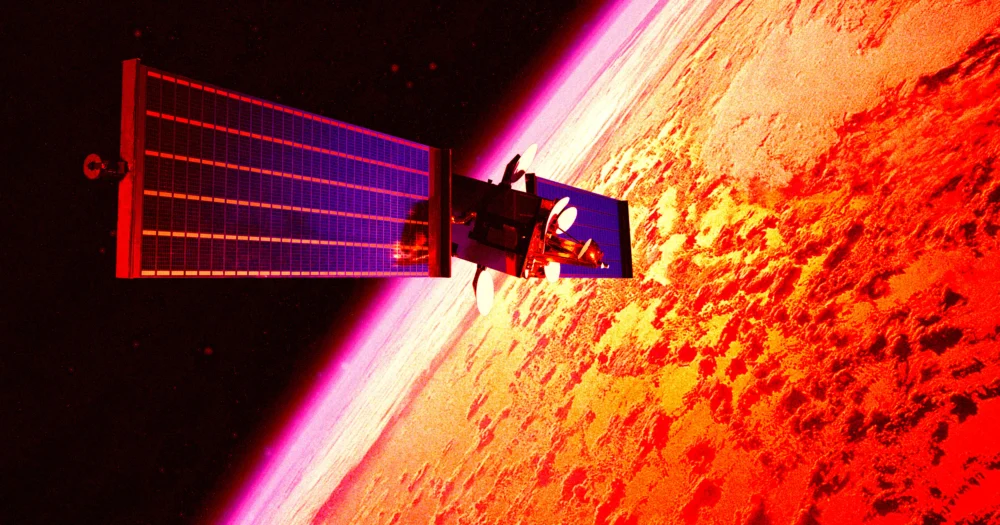
Data Centers in Space Are Even More Cursed Than Previously Believed
Sign up to see the future, today. Can’t-miss innovations from the bleeding edge of science and tech.
The vision of launching data centers into the vast expanse of space, leveraging unfettered solar energy and virtually limitless real estate, has been passionately championed by tech luminaries like Elon Musk. He and other prominent AI leaders have repeatedly posited this as the ultimate solution to the industry’s escalating demands for extremely costly and energy-intensive data centers on Earth. The allure of escaping terrestrial constraints—the need for massive land plots, the intense cooling requirements, and the reliance on often carbon-intensive energy grids—paints a compelling picture of a cleaner, more efficient future for artificial intelligence infrastructure.
This grand ambition took a tangible step late last month when SpaceX, now notably merged with xAI, filed a significant patent with the Federal Communications Commission for an orbital data center constellation. The proposal outlines an audacious plan to deploy up to one million satellites, designed to orbit Earth at altitudes ranging between 310 and 1,200 miles. These satellites would be strategically placed in a Sun-synchronous orbit, a trajectory meticulously chosen to maximize their exposure to solar energy, thereby theoretically providing a continuous and abundant power source for the computing operations. The scale of this proposed infrastructure is staggering, dwarfing existing satellite constellations and hinting at an unprecedented level of human activity in Earth’s orbit.
However, the patent application itself remained conspicuously sparse on specific details, suggesting that SpaceX’s exploration of this concept is still in its nascent stages. This lack of concrete specifics stands in stark contrast to Musk’s earlier, characteristically overambitious pronouncements. He had previously promised that space-based data centers could surpass their Earthbound counterparts as the most affordable way to power AI within a mere three years. Such timelines, while galvanizing for investors and enthusiasts, frequently face a harsh reckoning with engineering realities and economic hurdles.
Indeed, a growing chorus of experts remains profoundly skeptical, questioning not only the financial feasibility but also the fundamental technological limitations inherent in operating complex data centers in the unforgiving environment of space. The vacuum of space, the extreme temperature fluctuations, the constant bombardment of radiation, and the sheer logistical nightmare of maintenance all present challenges far beyond those encountered on Earth.
Among the most vocal and articulate critics is Rebekah Reed, a distinguished figure with a formidable background as a former NASA associate director and currently an associate director of the Program on Emerging Technology, Scientific Advancement, and Global Policy at Harvard University. In a compelling essay for the Financial Times, Reed meticulously laid out why the concept of orbital data centers might be even more fraught with peril and impracticality than initially perceived. Beyond the glaring questions surrounding astronomical costs and operational complexities, she highlighted considerable and often overlooked environmental concerns, transforming the utopian vision into something potentially “more cursed.”
Reed echoed the sentiments of other industry heavyweights, quoting OpenAI co-founder Sam Altman, who bluntly characterized the idea as “ridiculous.” “Treating orbit as a workaround for AI’s current energy-hungry training needs is, as OpenAI co-founder Sam Altman recently put it, ‘ridiculous,’” she wrote. “Orbital data centers are many years, perhaps decades, away.” This statement underscores a fundamental disconnect between the aspirational timelines of some proponents and the practical assessments of those deeply entrenched in the technological and economic realities of advanced computing.
While Google CEO Sundar Pichai has offered a slightly more optimistic outlook, predicting we’re only a decade away from orbital data centers, Altman’s stance remains firmly grounded in present-day limitations. During a recent conference, he argued that we’re simply “not there yet,” citing persistent issues like high failure rates for electronics in space and the prohibitive costs associated with deploying and maintaining such infrastructure. The divergence of opinions among these influential leaders highlights the complexity and speculative nature of the orbital data center concept.
A primary hurdle, as Reed meticulously detailed, is the staggering expense involved in simply launching the necessary mass into orbit. To render such an undertaking “economically viable,” she argued, launch costs would need to plummet dramatically—specifically, a “sevenfold reduction from current levels,” bringing the cost below $200 per kilogram. This figure represents an enormous leap from today’s commercial launch prices, which, while decreasing, are still significantly higher. SpaceX’s own Starship, for instance, aims for much lower costs, but even its most optimistic projections may not meet this incredibly demanding threshold soon. “That threshold isn’t expected until the mid-2030s,” she wrote, pushing the feasibility of widespread orbital data centers far into the future.
Beyond the initial launch, the logistical nightmare of maintenance presents another formidable challenge. On Earth, a malfunctioning chip or an obsolete component in a data center is a relatively simple fix: dispatch an IT technician to rectify the issue, swap out hardware, or perform routine upgrades. The infrastructure and supply chains are well-established. “In orbit,” Reed explained, “that task requires either sophisticated in-space servicing or acceptance of degrading performance and stranded capital that becomes orbital debris as components age and fail.” The prospect of sending specialized robots or human crews to service hundreds of thousands, let alone a million, individual satellites, each potentially housing multiple server racks, is an engineering and economic quandary of unprecedented scale. The alternative—allowing failed units to simply become space junk—would exacerbate an already critical problem of orbital debris, posing a threat to all space-faring nations and critical satellite infrastructure.
The environmental repercussions extend far beyond the problem of space debris. Falling satellites, particularly during controlled or uncontrolled re-entry, could inject a cocktail of harmful pollutants, including various metals and combustion byproducts, into the upper atmosphere. The long-term effects of such widespread atmospheric pollution, especially from a million re-entering satellites over decades, are something scientists are still racing to understand. Rocket launches themselves contribute to atmospheric changes, and scaling this activity exponentially for a constellation of this magnitude would amplify these concerns dramatically.
Reed further highlighted recent findings by researchers at Saarland University in Germany, whose work casts a dark shadow on the environmental claims of space-based solutions. Their study found that the carbon footprint of space data centers could, counterintuitively, exceed that of terrestrial data centers when a comprehensive lifecycle analysis is performed, factoring in manufacturing, launch, and eventual disposal. “Results show that, even under optimistic assumptions, in-orbit systems incur significantly higher carbon costs—up to an order of magnitude more than terrestrial equivalents—primarily due to embodied emissions from launch and re-entry,” they wrote in a yet-to-be-peer-reviewed paper last year. This finding directly challenges the notion that space offers an inherently greener alternative, revealing that the energy and resources expended to get hardware into orbit and manage its end-of-life cycle could negate any operational energy savings.
Finally, the sheer scale of an enormous orbital data center constellation, potentially comprising thousands upon thousands of satellites, raises profound concerns about orbital congestion. Earth’s orbit is already a finite resource, increasingly cluttered by operational satellites and a growing amount of space debris. Adding a million more objects, even if carefully managed, would drastically escalate the “risk of collisions and debris, threatening communications, weather and navigation services,” Reed concluded. The potential for a cascading chain reaction of collisions, known as the Kessler Syndrome, becomes a more tangible threat. Furthermore, the aesthetic and cultural impact cannot be ignored: “Scaling data centers to match terrestrial demand would accelerate congestion and degrade the night sky,” transforming our view of the cosmos into a lattice of artificial light, diminishing the natural wonder for stargazers and astronomers alike.
In summary, while the vision of orbital data centers is compelling in its ambition and potential for seemingly limitless resources, the present-day realities—from prohibitive launch costs and insurmountable maintenance challenges to significant environmental tolls and the threat of orbital degradation—render it a far more complex and problematic endeavor than its proponents often acknowledge. For the foreseeable future, the “cursed” aspects of this futuristic concept appear to outweigh its perceived benefits, demanding a more grounded and holistic assessment before humanity commits to transforming Earth’s orbit into an industrial park for artificial intelligence.
More on orbital data centers: Erratic Elon Musk Tells Employees to Build Massive Catapult on Moon