Faris Adani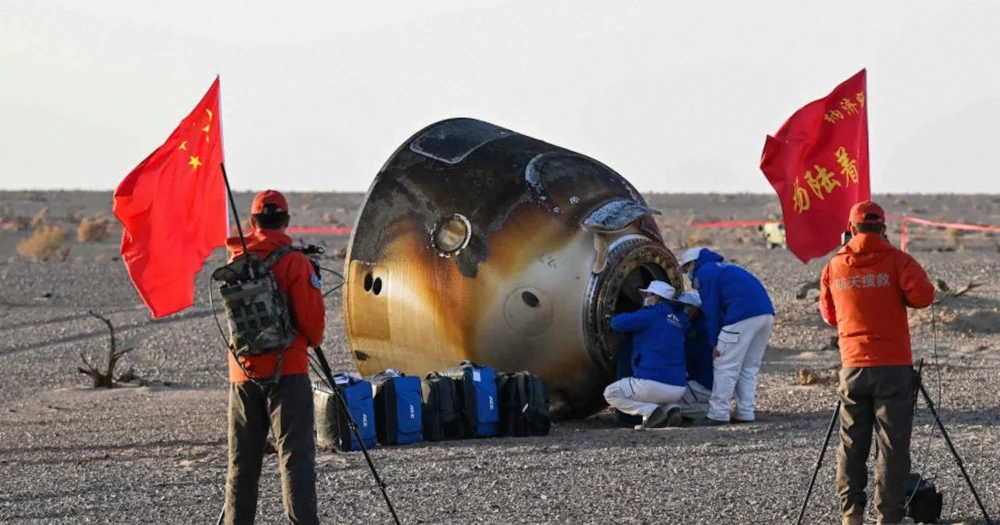
In what has emerged as a stark reminder of the escalating threat posed by space debris, new revelations indicate that the damage sustained by a Chinese Shenzhou return spacecraft in late 2025 was considerably more severe than initially disclosed. While initial reports from early November described "tiny cracks" in the viewport window of the Shenzhou spacecraft docked with China’s Tiangong space station, subsequent accounts from the astronauts involved paint a much graver picture, confirming that some of these cracks had actually "penetrated through" the window layers. This critical incident not only forced an unprecedented delay in the crew’s return but also underscored the perilous realities of operating in an increasingly crowded orbital environment.
The terrifying discovery was made by the Shenzhou-20 crew members, including Chen Dong, who recounted his initial disbelief during a recent interview with China Central Television (CCTV). "My first thought was whether a small leaf had somehow stuck to the outside of the window," Chen explained, highlighting the almost surreal nature of the finding. "But then I quickly realized that couldn’t happen because we were in space. How could there possibly be a fallen leaf there?" This initial confusion quickly gave way to alarm as the reality of the situation dawned. The crew utilized a specialized "pen-shaped microscope" connected to a tablet, a crucial piece of equipment for detailed in-situ inspections, to get a closer look at the anomalies. What they observed through the magnified lens was profoundly concerning. Chen recalled, "We could see very clearly the small cracks [with the microscope]. Several were relatively long, and one was shorter. We could also see that some of the cracks had penetrated through."
The phrase "penetrated through" elevates the incident from a cosmetic issue to a significant structural concern. Spacecraft windows, particularly those designed for crewed vehicles, are not single panes of glass. They are typically multi-layered structures, engineered to withstand the harsh vacuum of space, extreme temperature fluctuations, and the constant barrage of micro-meteoroids and orbital debris (MMOD). These windows usually consist of an outer sacrificial layer, designed to absorb impacts from smaller particles, followed by one or more pressure-bearing layers that maintain cabin integrity, and an inner scratch-resistant layer. For a crack to "penetrate through" suggests that the outer protective layer was not merely chipped but breached, with the damage extending into, or even through, one of the crucial pressure-bearing layers. While the cabin pressure remained stable, indicating the innermost layers held, the integrity of the window assembly was undeniably compromised, raising legitimate safety concerns for re-entry.
Despite the gravity of the situation, fellow crew member Wang Jie, an aerospace technician before becoming an astronaut, maintained a remarkable composure. "I wasn’t really nervous," he stated, explaining his confidence in the spacecraft’s design redundancy. "The outermost layer of the viewport is a protective layer, and inside it there are two pressure-bearing layers, and we are safe as long as the cabin pressure doesn’t change." This professional assessment, while reassuring, highlights the sophisticated engineering that goes into spacecraft, where multiple layers of defense are built in precisely for such unforeseen circumstances. However, even with these redundancies, any breach of a pressure-bearing layer is a critical event, as it could weaken the window’s structural resistance to the intense aerodynamic stresses and thermal loads experienced during atmospheric re-entry.
The alarming discovery triggered an immediate response from the China National Space Administration (CNSA). Deeming the compromised Shenzhou-20 spacecraft unsafe for crewed re-entry, the agency was forced to implement a convoluted "game of musical chairs" scenario. The affected crew’s return was delayed, necessitating the launch of an uncrewed replacement spacecraft to the Tiangong station. This newly arrived vessel would serve as the safe return vehicle for the stranded astronauts, while the damaged Shenzhou-20 would eventually be sent back to Earth empty. This logistical challenge not only demonstrated China’s operational flexibility and robust contingency planning but also underscored the severe implications of orbital debris impacts. The decision to send a dedicated rescue-return vehicle rather than risk the crew in the damaged craft speaks volumes about the perceived threat to astronaut safety.
To mitigate the risks associated with the damaged window during the uncrewed re-entry of Shenzhou-20, the CNSA deployed an innovative solution. Along with the emergency spacecraft, they launched a "porthole crack repair device." Astronauts onboard the Tiangong station installed this device inside the Shenzhou-20 capsule. While specific details of the device remain proprietary, it likely involved a form of internal patch, sealant, or reinforcement designed to shore up the compromised window. According to the CNSA statement, this intervention "effectively improv[ed] the spacecraft’s heat protection and sealing capabilities during reentry." This temporary fix was crucial, as the re-entry phase subjects a spacecraft to extreme temperatures and pressures, and any breach in the thermal protection system or pressure vessel could lead to catastrophic failure.
The Shenzhou-20 capsule, now repaired and empty, ultimately made its uncrewed landing in Mongolia on January 19, bringing the dramatic incident to a close. However, even this final stage was not without its challenges. Without a crew onboard, the standard procedures for separating the main parachute, which typically involve manual inputs, could not be executed. This raised concerns among ground teams that the capsule might be dragged across the ground after landing, potentially causing further damage to the craft or its valuable data recorders. Officials explained during the televised interviews that ground teams had to act swiftly and precisely to secure the capsule. Fortunately, post-reentry inspections revealed the capsule’s exterior to be "generally normal," a testament to the effectiveness of the repair device and the robustness of the spacecraft’s design, even under duress.
This incident serves as a potent and tangible illustration of how space junk continues to be a major and escalating problem for humanity’s presence in space. Orbital debris encompasses a vast array of objects, from spent rocket stages and defunct satellites to fragments from collisions and even paint flecks. Traveling at orbital velocities, which can exceed 27,000 kilometers per hour (17,000 mph) in Low Earth Orbit (LEO), even a tiny piece of debris can possess kinetic energy equivalent to a hand grenade, capable of inflicting catastrophic damage upon impact. The fact that a spacecraft window, designed to be highly resilient, could be compromised to the point of penetration by such an impact is a sobering reminder of this danger.
The problem of space debris is only set to worsen. The advent of "megaconstellations" of satellites, such as SpaceX’s Starlink, OneWeb, and Amazon’s Project Kuiper, is dramatically increasing the number of active satellites in orbit. Thousands upon thousands of new satellites are being launched, transforming Earth’s orbit into an increasingly crowded and precarious environment. While these constellations promise global internet connectivity, their sheer scale significantly raises the probability of collisions. Each launch, each satellite, and eventually each deorbiting event (or failure to deorbit) contributes to the debris field. The infamous "Kessler Syndrome," a theoretical scenario where the density of objects in LEO becomes so high that collisions generate more debris, leading to a cascade of further collisions, could render certain orbital altitudes unusable for generations. While we are not yet at a full Kessler Syndrome, incidents like the Shenzhou damage are clear indicators of the growing risk.
International efforts to mitigate space debris exist, including guidelines for deorbiting satellites within 25 years of their end-of-life, but these are often voluntary and lack strict enforcement. More proactive solutions, such as active debris removal technologies (e.g., robotic arms to capture and deorbit defunct satellites) and "design for demise" principles (where satellites are built to completely burn up upon re-entry), are under development but face significant technical, financial, and political hurdles. The Shenzhou incident underscores the urgent need for a more robust, internationally coordinated approach to space traffic management and debris mitigation.
For China’s ambitious space program, which includes the construction and operation of its own permanent Tiangong space station, this incident provides invaluable, albeit harrowing, operational experience. It forces a re-evaluation of spacecraft design, particularly MMOD shielding and window robustness, as well as emergency protocols and in-orbit repair capabilities. As China continues to expand its human spaceflight endeavors, including potential lunar missions, understanding and mitigating such risks becomes paramount.
In conclusion, the full extent of the damage to the Shenzhou-20 spacecraft’s viewport window – with cracks penetrating its critical layers – serves as a profound warning. It vividly illustrates the ever-present dangers of operating in Earth’s orbit, where even microscopic particles can become existential threats at orbital velocities. While the Chinese astronauts safely returned and the damaged capsule was successfully recovered, the incident is a stark reminder that the frontier of space is unforgiving. As humanity pushes further into the cosmos and populates LEO with ever-increasing numbers of satellites, the lessons learned from this close call must inform a global commitment to sustainable space practices, ensuring that our celestial highways do not become impassable minefields. Without concerted action, cracking more than a viewport window could become a common and tragic occurrence in the near future.