anjir abdul
Recent events at the US Federal Reserve signal a monumental shift towards the acceptance of digital assets at the highest levels of the country’s monetary system, marking a potential turning point for the cryptocurrency industry’s integration into traditional finance. This evolving stance is underscored by two significant developments: Kraken becoming the first crypto exchange to secure a master account at the Federal Reserve, and the potential appointment of a crypto-friendly figure as the next Fed chair. US President Donald Trump recently put forward a pro-Bitcoin candidate for the Senate’s consideration, fueling speculation about future leadership. While these developments represent an undeniable and significant shift in how the Fed could treat the crypto industry, they are not without their detractors, who raise concerns about risk and regulatory oversight.
The approval of Kraken’s master account is a landmark event, signifying a crucial step towards legitimizing digital asset firms within the established financial infrastructure. On Wednesday, Kraken announced that its Wyoming-chartered bank, Kraken Financial, had been awarded a Fed master account. This achievement made it “the first digital asset bank in US history to gain direct access to the Federal Reserve’s payment infrastructure.” This isn’t merely a symbolic victory; it’s a profound operational and reputational leap. As Kraken co-CEO Arjun Sethi articulated, “With a Federal Reserve master account, we can operate not as a peripheral participant in the US banking system, but as a directly connected financial institution.” This means Kraken Financial can now bypass intermediary banks, directly accessing the Fed’s payment rails for settlement, clearing, and other essential banking services.
The importance of a Fed master account for the crypto industry cannot be overstated. It represents access to the most coveted form of money for financial institutions: dollars held directly within the Federal Reserve system. These dollars are widely perceived as risk-free, a stark contrast to commercial bank deposits which carry counterparty risk, even if FDIC-insured. Aaron Brogan of Brogan Law, a firm specializing in digital assets, highlighted this, stating that Fed dollars “are the intrinsic architecture of the United States monetary system, which can always just make more of them.” He further elaborated, “Since United States dollars remain the preeminent global currency, the best form of USD is the best there is. Other instruments like cash, dollars in FDIC-insured bank accounts and T-Bills are pretty good, but Fed dollars are the best.” For an exchange like Kraken, this direct access dramatically improves the reliability and efficiency for moving fiat deposits in and out of digital-asset markets, reducing costs, improving settlement times, and mitigating risks associated with relying on third-party commercial banks, many of whom have historically been hesitant to serve the crypto sector.
Historically, gaining direct access to the Fed’s payment systems has been a formidable challenge, particularly for non-traditional financial institutions. The Federal Reserve System, composed of 12 regional banks, operates with a degree of autonomy while also adhering to overarching policy decisions. The framework for master accounts was largely established by the Monetary Control Act of 1980, which aimed to grant all depository institutions access to Federal Reserve accounts. Julie Andersen Hill, the dean of the University of Wyoming’s College of Law, wrote that Congress “intended that all depository institutions would be able to use the Federal Reserve’s payment systems. The legislative history of the Monetary Control Act is littered with references to ‘open access’ to ‘all depository institutions.’”
However, over time, the Fed developed preferences and tiered access, making it increasingly difficult for new or unconventional entities to gain entry. Brogan’s analysis outlines three tiers: Tier 1 for federally insured banks, Tier 2 for state-chartered banks or credit unions, and Tier 3 for novel institutions. The crypto industry, often operating with state-chartered banks or specialized charters like Wyoming’s Special Purpose Depository Institutions (SPDIs), frequently found itself in Tier 2 or 3, subject to heightened scrutiny and often denied access. This created a significant hurdle for crypto firms, forcing them to rely on a limited number of "crypto-friendly" commercial banks, which themselves faced regulatory pressures and often charged higher fees. The Fed, while wanting to maintain stability, also recognizes the importance of broad access to its payment systems. Thomas Kingsley, director of financial services policy at the American Action Forum, notes that “During periods of stress, access to central bank settlement accounts can materially affect a firm’s ability to meet redemption demands. In that sense, master account access can reduce run risk relative to structures reliant on commercial bank deposits.” However, the Fed also grapples with the inherent risks of expanding access, particularly to nonbank entities. As Kingsley points out, “If a large nonbank with a master account were to experience operational failure or disorderly unwinding, the disruption would occur closer to core financial infrastructure.”
This delicate balancing act led to the proposal of "skinny accounts." In October 2025 (as per the article’s date, though likely a typo for 2021 or 2022, given real-world events), Fed Governor Christopher J. Waller proposed a new type of account designed to provide access to Fed payment rails while controlling for certain risks through restrictions. These restrictions typically include limits on the types of assets held, the services offered (e.g., no lending or retail deposits), and heightened oversight. This is precisely what Kraken Financial received: a “limited purpose” master account, often referred to as a “skinny account.” While limited in scope compared to a full master account granted to traditional banks, it is still a monumental victory for the institutionalization of crypto. Pro-crypto Senator Cynthia Lummis aptly called it a “watershed milestone in the history of digital assets,” recognizing its profound implications for the industry’s legitimacy and operational capabilities. It signals the Fed’s willingness to engage with, rather than outright reject, innovative financial models, even if cautiously.

Unsurprisingly, not everyone is celebrating this development. Traditional banking groups have pushed back vociferously. Rebeca Romero Rainey, CEO of the Independent Community Bankers of America (ICBA), expressed deep concerns, writing, “Granting nonbank entities and crypto institutions access to master accounts poses risks to the banking system.” She emphasized the “significant risks to expanding direct Fed account access to institutions that operate outside the traditional banking regulatory framework,” citing potential for regulatory arbitrage, consumer protection issues, and challenges in combating illicit finance, given that crypto firms are perceived to operate with less stringent oversight than traditional banks. Similarly, Paige Pidano Paridon, co-head of regulatory affairs at the Banking Policy Institute (BPI), stated that the BPI was “deeply concerned” that the Fed approved the “limited purpose” master account – which she also identified as a “skinny” account – before the Federal Reserve Board had finalized its policy framework for such accounts. She criticized the decision for ignoring public comment sought by the Fed on skinny accounts and for its lack of transparency “into the process for approval or the risk mitigants that have been imposed to address the very significant risks it raises.” These criticisms highlight the ongoing tension between innovation and regulatory caution, and the established industry’s reluctance to embrace new entrants perceived as operating under different rules.
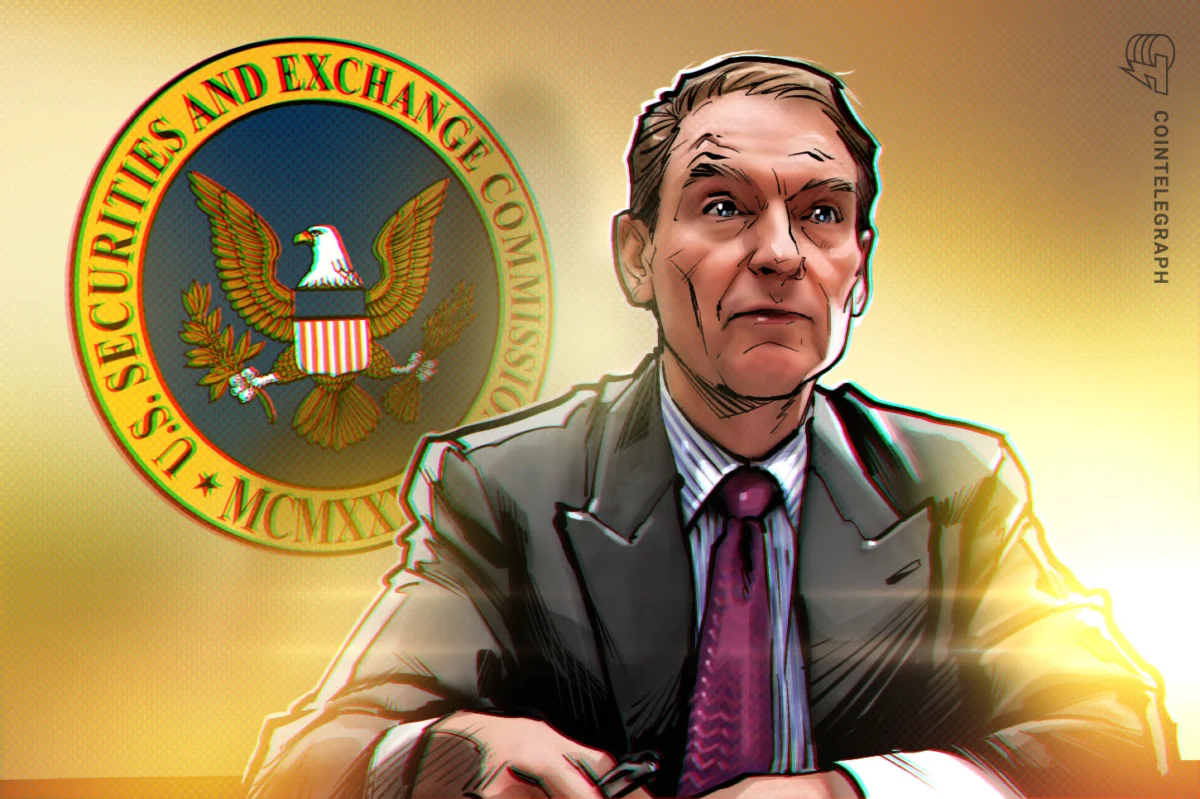
Beyond Kraken’s operational breakthrough, the US central bank could soon be led by a pro-crypto economist, further cementing the industry’s burgeoning acceptance. On Wednesday, Trump reportedly sent the nomination of Kevin Warsh, a Shepard Family Distinguished Visiting Fellow in Economics at the Hoover Institution of Stanford University, to the Senate. The White House is seeking to make Warsh chair for four years and a governor on the Fed board for 14 years. Warsh, who previously served as a Fed governor under former US Presidents George W. Bush and Barack Obama from 2006 to 2011, has made several notable pro-crypto remarks in the recent past. In a May 2025 (again, likely a typo for an earlier year) interview, he stated, “Bitcoin does not make me nervous.” He recounted how billionaire investor Marc Andreessen “showed me the white paper […] I wish I had understood as clearly as he did how transformative Bitcoin and this new technology would be. Bitcoin doesn’t trouble me. I think of it as an important asset that can help inform policymakers when they’re doing things right and wrong.”
Warsh’s perspective suggests a more open-minded approach to digital assets than some of his predecessors or current Fed officials. His background as a former Fed governor brings institutional credibility, while his academic work at the Hoover Institution often aligns with free-market principles, which could translate into less regulatory heavy-handedness and a greater willingness to let market forces drive innovation in the digital asset space. A Fed under Warsh might pursue clearer regulatory guidelines for stablecoins, potentially fostering a more conducive environment for private sector digital currencies rather than pushing for a central bank digital currency (CBDC) if he believes it stifles innovation or poses privacy risks. His acknowledgment of Bitcoin as an "important asset" suggests he would view it not just as a speculative vehicle but as a fundamental technological shift with policy implications.
However, Warsh’s nomination may not be smooth sailing. Democratic lawmakers and central banking policy experts alike have expressed concerns about the Trump administration’s continued efforts to exert control over the Fed, potentially undermining its independence. Trump has consistently pushed for interest rate cuts, often clashing with the current Fed chair, Jerome Powell, who has maintained the central bank’s autonomy in monetary policy decisions. The political tension escalated dramatically in January, when Trump’s Department of Justice reportedly served the Federal Reserve with grand jury subpoenas and threatened Powell with a criminal indictment over alleged misuse of funds to build an office building. Powell publicly claimed that the real argument was over the Fed’s unwillingness to follow orders from the White House. This backdrop suggests that any nominee put forward by Trump, especially one with a potentially differing monetary policy philosophy, would face intense scrutiny regarding their independence and adherence to established central bank principles. The Senate confirmation process would likely be a battleground, with Democrats questioning Warsh’s alignment with Trump’s political agenda and his views on Fed independence, potentially overshadowing his stance on crypto.
In conclusion, the recent decision to grant Kraken a "skinny" master account, coupled with the potential nomination of a crypto-friendly economist like Kevin Warsh to lead the Federal Reserve, signals a pivotal turnaround in the US central bank’s approach to digital assets. While the path to full integration remains complex and fraught with regulatory debates and political challenges, these developments mark a significant move away from outright skepticism or resistance. The crypto industry is gradually gaining legitimate footholds within the traditional financial system, benefiting from improved operational efficiency and enhanced credibility. While detractors raise valid concerns about systemic risk and regulatory oversight, the Fed appears to be cautiously navigating the landscape, seeking to balance innovation with financial stability. The coming years will undoubtedly reveal whether this initial acceptance blossoms into a comprehensive and supportive framework for digital assets, solidifying their place in the future of finance.