Imroatul Nasiyah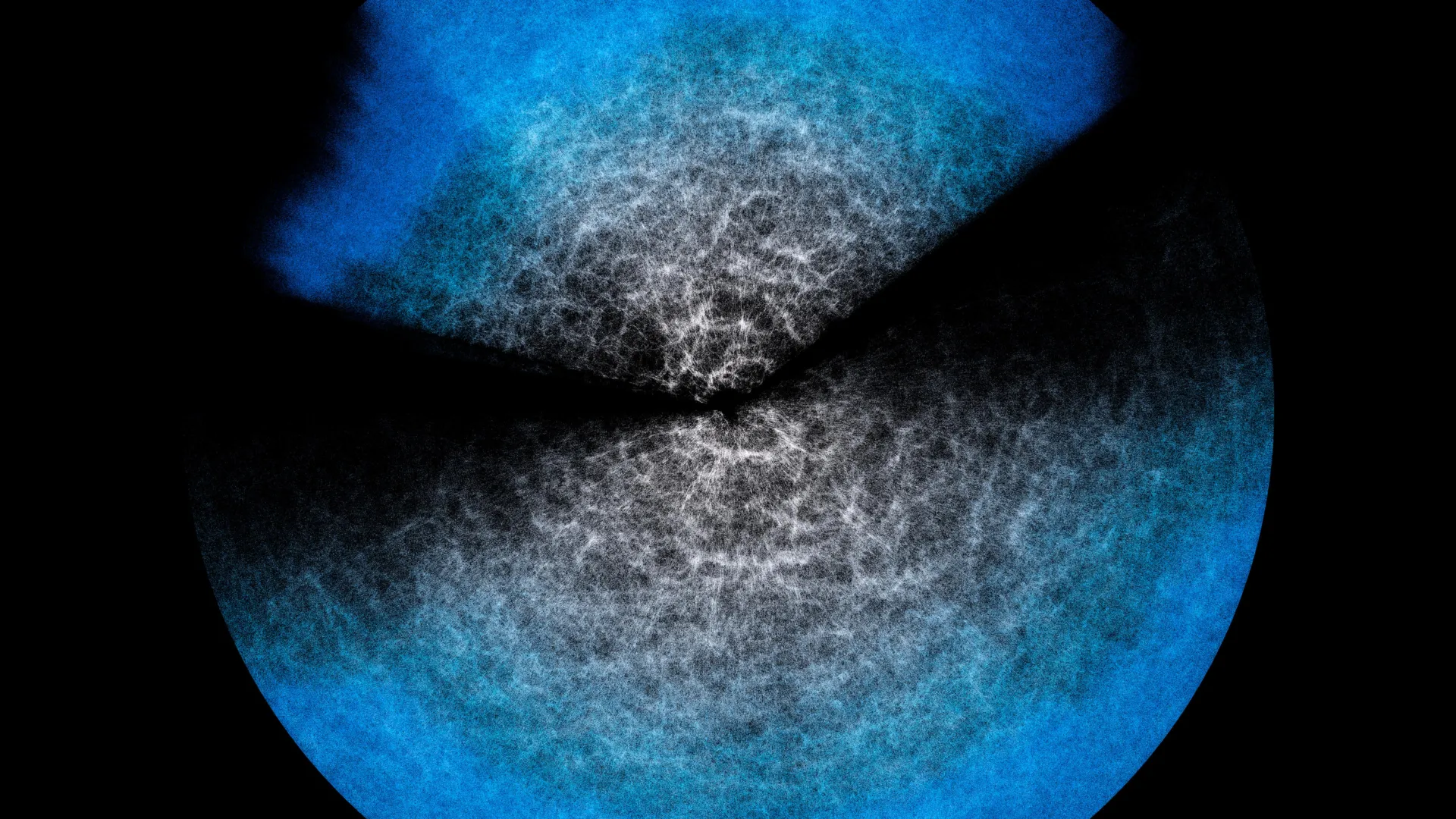
The inherent difficulty in visualizing and comprehending such an expansive and complex structure is undeniable. Scientists tackle this challenge by meticulously integrating the fundamental laws of physics that govern the universe with the wealth of data meticulously collected by sophisticated astronomical instruments. This empirical evidence forms the bedrock upon which theoretical models are constructed. One such powerful theoretical framework is the Effective Field Theory of Large-Scale Structure, or EFTofLSS. These models, when infused with observational data, are capable of statistically describing the intricate patterns of the cosmic web. This statistical approach allows researchers to precisely estimate the key parameters that dictate the universe’s large-scale organization, offering a profound glimpse into its underlying mechanisms.
However, the computational demands of sophisticated models like EFTofLSS are substantial, often requiring extensive processing time and considerable computing power. As the astronomical datasets at our disposal continue to grow at an exponential rate, driven by increasingly powerful telescopes and ambitious sky surveys, the need for more efficient analysis methods becomes paramount. The goal is to streamline the data analysis process without compromising the scientific accuracy and precision of the results. This critical need has given rise to the development of "emulators." These ingenious computational tools are designed to "imitate" the behavior of complex theoretical models, effectively mimicking their outputs but at a dramatically accelerated pace.
The question that naturally arises with the introduction of such computational shortcuts is the potential for a loss of accuracy. Could these emulators, by expediting the analysis, introduce inaccuracies that compromise the scientific rigor of the findings? An international collaborative effort, bringing together researchers from institutions such as the Italian National Institute for Astrophysics (INAF), the University of Parma in Italy, and the University of Waterloo in Canada, has recently addressed this very concern. Their groundbreaking study, published in the prestigious Journal of Cosmology and Astroparticle Physics (JCAP), meticulously tested an emulator they designed, named Effort.jl. The results of this rigorous evaluation are highly encouraging. The study demonstrates that Effort.jl delivers a level of correctness that is essentially indistinguishable from the original model it emulates. In some instances, it even reveals finer details that might have been overlooked or truncated in the original model’s computationally intensive analysis. Crucially, Effort.jl achieves these remarkable results while operating with astonishing speed, executing in mere minutes on a standard laptop—a stark contrast to the supercomputers previously required for such simulations.
To further elucidate the concept, consider an analogy presented by Marco Bonici, a researcher at the University of Waterloo and the lead author of the study. Bonici likens the endeavor to studying the contents of a glass of water. "Imagine wanting to study the contents of a glass of water at the level of its microscopic components, the individual atoms, or even smaller: in theory you can," he explains. "But if we wanted to describe in detail what happens when the water moves, the explosive growth of the required calculations makes it practically impossible." This highlights the inherent computational barrier when delving into the minutiae of complex systems. However, Bonici continues, "you can encode certain properties at the microscopic level and see their effect at the macroscopic level, namely the movement of the fluid in the glass." This is precisely the essence of effective field theory. "This is what an effective field theory does, that is, a model like EFTofLSS, where the water in my example is the Universe on very large scales and the microscopic components are small-scale physical processes." In essence, EFTofLSS, like the effective field theory approach, focuses on the emergent properties and behaviors of the universe on large scales, without needing to explicitly model every single fundamental interaction.
The theoretical model, such as EFTofLSS, serves as a statistical interpreter of the cosmic structure, providing a framework to understand the observational data. Astronomical observations are fed into the code, which then generates a "prediction" of what the universe should look like based on the model’s parameters. However, as previously mentioned, this process is computationally demanding and time-consuming. Given the current volume of astronomical data—and the anticipated deluge from surveys that have recently commenced or are on the horizon, such as the Dark Energy Spectroscopic Instrument (DESI), which has already released its initial datasets, and the European Space Agency’s Euclid mission—it is simply not practical to perform these exhaustive calculations for every analysis. The sheer scale of data necessitates a more agile approach.
"This is why we now turn to emulators like ours, which can drastically cut time and resources," Bonici emphasizes. The core of an emulator like Effort.jl lies in its ability to mimic the output of the theoretical model. This mimicry is achieved through a sophisticated neural network. This neural network is trained to establish a direct association between the input parameters of the model and the pre-computed predictions generated by the model itself. Once trained on a comprehensive set of the model’s outputs, the neural network gains the remarkable ability to generalize, meaning it can accurately predict the model’s response for novel combinations of parameters that it has not explicitly encountered during its training phase. It is important to understand that the emulator does not possess an intrinsic "understanding" of the underlying physics. Instead, it has learned to expertly anticipate the theoretical model’s responses, effectively acting as a highly accurate predictive tool.
The true innovation and originality of Effort.jl lie in its further optimization of the training phase. It achieves this by incorporating existing knowledge about how the model’s predictions change when its parameters are subtly altered. Instead of forcing the neural network to "re-learn" these fundamental relationships from scratch, Effort.jl leverages this pre-existing information from the outset. Furthermore, Effort.jl strategically employs the concept of "gradients." Gradients essentially quantify "how much and in which direction" the model’s predictions are expected to change if a specific parameter is infinitesimally tweaked. This additional piece of information significantly aids the emulator in learning from a far smaller dataset, drastically reducing computational requirements and enabling its operation on less powerful computing hardware, such as standard laptops.
For any computational tool that offers a "shortcut," rigorous validation is absolutely essential. If an emulator does not inherently grasp the physics, how can we be certain that its accelerated predictions are indeed accurate and reliable, mirroring the results that the original, more computationally intensive model would produce? The newly published study directly addresses this critical question. It provides compelling evidence that Effort.jl’s accuracy, when tested on both simulated datasets and real observational data, exhibits a remarkably close agreement with the outputs of the original EFTofLSS model. Bonici further elaborates on the emulator’s capabilities: "And in some cases, where with the model you have to trim part of the analysis to speed things up, with Effort.jl we were able to include those missing pieces as well." This indicates that Effort.jl can not only match the accuracy of the original model but can also potentially extend the scope of analysis by incorporating elements that might have been excluded due to computational constraints in the original model.
Consequently, Effort.jl emerges as an invaluable and powerful ally for the scientific community, particularly as we stand on the cusp of analyzing the forthcoming data releases from pivotal astronomical experiments like DESI and Euclid. These upcoming surveys are poised to significantly deepen our understanding of the universe’s large-scale structure, and tools like Effort.jl will be instrumental in unlocking these profound insights efficiently and effectively.
The groundbreaking study, titled "Effort.jl: a fast and differentiable emulator for the Effective Field Theory of the Large Scale Structure of the Universe," authored by Marco Bonici, Guido D’Amico, Julien Bel, and Carmelita Carbone, is now accessible to the scientific community through the esteemed Journal of Cosmology and Astroparticle Physics (JCAP). This publication marks a significant milestone in the ongoing quest to unravel the mysteries of our universe.