Imroatul Nasiyah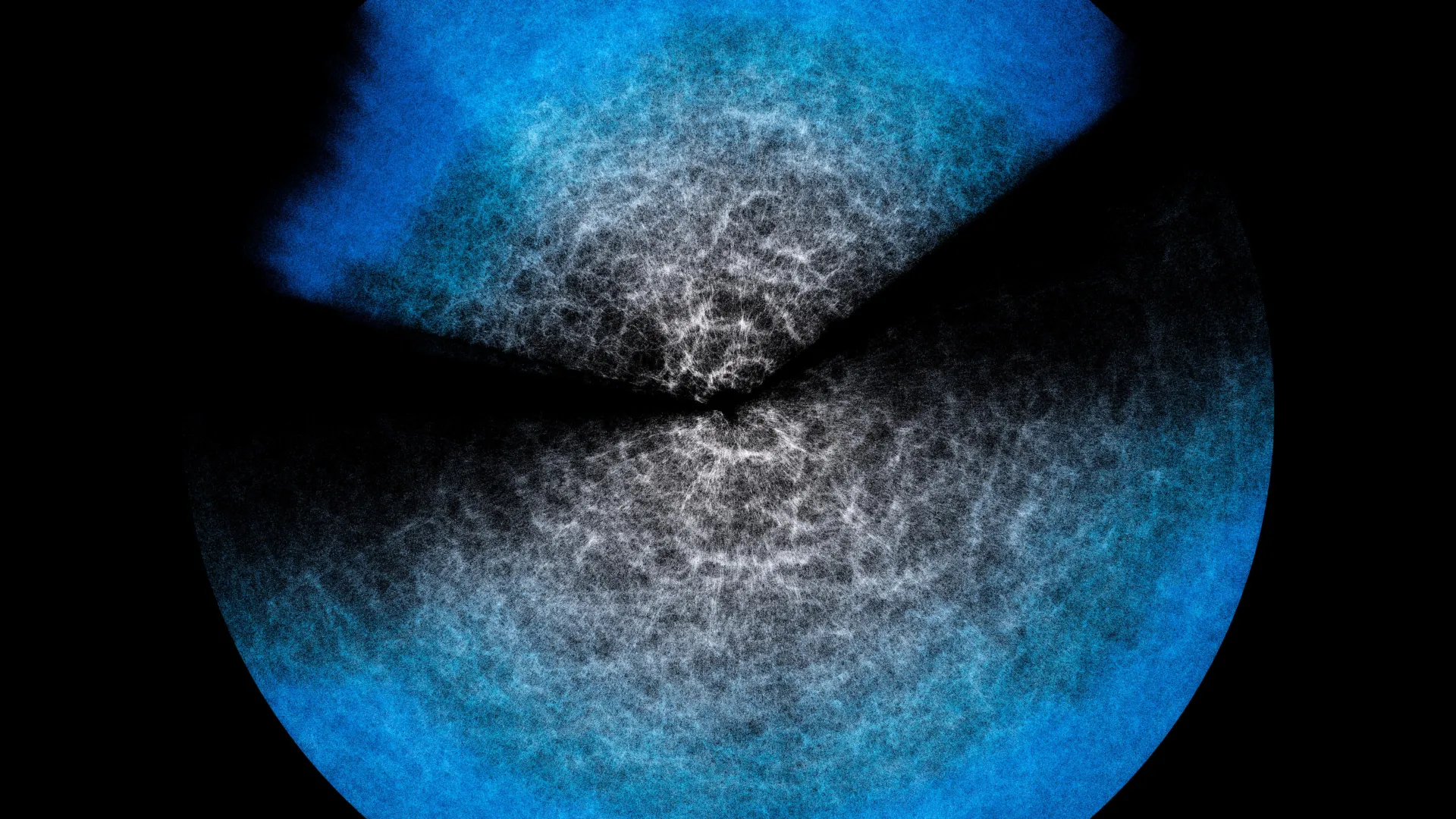
The universe, a canvas of unimaginable scale, unfolds as a grand cosmic tapestry. Galaxies, though colossal in their own right, are but minuscule specks within this boundless expanse. These celestial islands, numbering in the billions, coalesce into intricate clusters, which in turn aggregate into even vaster superclusters. These, in a breathtaking display of cosmic architecture, are interconnected by a sprawling network of filaments, interspersed with immense, seemingly empty voids. This is the "cosmic web," an immense three-dimensional skeleton that defines the large-scale structure of our universe. For the human mind, grappling with such immensity can indeed induce a sense of vertigo, prompting the question of how we can possibly comprehend or even visualize such a vast and complex entity.
The endeavor to understand this cosmic architecture is a testament to human ingenuity and scientific rigor. Astronomers and cosmologists employ a multi-pronged approach, meticulously combining fundamental physical laws that govern the universe with the torrent of data streamed from sophisticated astronomical instruments. This observational data serves as the raw material for building and refining theoretical models. One such powerful framework is the Effective Field Theory of Large-Scale Structure, or EFTofLSS. These models, when "fed" with empirical observations, statistically describe the intricate patterns and statistical properties of the cosmic web. This statistical description allows scientists to estimate the key parameters that govern the formation and evolution of this grand cosmic structure.
However, the very power and comprehensiveness of models like EFTofLSS come with a significant computational cost. They demand substantial processing time and considerable computing resources. As the astronomical datasets at our disposal continue to grow exponentially, driven by increasingly powerful telescopes and ambitious surveys, the need for more efficient analysis methods becomes paramount. Scientists are constantly seeking ways to "lighten the analytical load" without compromising the precision and accuracy of their findings. This is where the concept of "emulators" emerges as a crucial innovation. Emulators are designed to "imitate" the behavior of complex theoretical models, offering a dramatically accelerated pathway to obtaining results.
The inherent question that arises with the introduction of such "shortcuts" is the potential risk of losing accuracy. To address this concern, an international team of researchers, with affiliations including the National Institute for Astrophysics (INAF) in Italy, the University of Parma in Italy, and the University of Waterloo in Canada, has undertaken a rigorous study. Their findings, published in the prestigious Journal of Cosmology and Astroparticle Physics (JCAP), focus on the validation of an emulator they developed, named Effort.jl. The study compellingly demonstrates that Effort.jl delivers results with essentially the same level of correctness as the intricate model it emulates. In some instances, it even reveals finer details that might be computationally challenging to extract with the original model. The most remarkable aspect of this breakthrough is its speed: Effort.jl can perform these complex analyses in mere minutes on a standard laptop, a stark contrast to the hours or days previously required on powerful supercomputers.
To better grasp the essence of effective field theories and the role of emulators, consider an analogy provided by Marco Bonici, a researcher at the University of Waterloo and the lead author of the study. "Imagine wanting to study the contents of a glass of water at the level of its microscopic components, the individual atoms, or even smaller," Bonici explains. "In theory, you can. But if we wanted to describe in detail what happens when the water moves, the explosive growth of the required calculations makes it practically impossible." He elaborates, "However, you can encode certain properties at the microscopic level and see their effect at the macroscopic level, namely the movement of the fluid in the glass. This is what an effective field theory does, that is, a model like EFTofLSS, where the water in my example is the Universe on very large scales and the microscopic components are small-scale physical processes." In this analogy, EFTofLSS captures the fundamental physics of the universe on large scales by leveraging the understanding of smaller-scale processes without needing to simulate every single particle.
The theoretical model, such as EFTofLSS, serves as a statistical interpreter of the universe’s structure, enabling scientists to connect observed data with underlying physical principles. Astronomical observations are fed into the computational code, which then generates predictions about the distribution and properties of cosmic structures. However, as previously mentioned, this process is computationally intensive and time-consuming. Given the sheer volume of data already collected by current astronomical surveys – and the even larger datasets anticipated from upcoming projects like the Dark Energy Spectroscopic Instrument (DESI), which has already begun releasing its initial findings, and the European Space Agency’s Euclid mission – performing these exhaustive computations for every analysis is simply not practical.
"This is why we now turn to emulators like ours, which can drastically cut time and resources," Bonici emphasizes. An emulator, at its core, is designed to mimic the output of a more complex model. Its computational engine often involves a neural network, a sophisticated type of artificial intelligence. This neural network is trained to recognize and associate specific input parameters – such as the density of matter or the rate of cosmic expansion – with the corresponding predictions already computed by the theoretical model. Once trained on a sufficiently diverse set of outputs from the original model, the neural network gains the ability to generalize. It can then accurately predict the model’s response for combinations of parameters it has not explicitly encountered during its training phase.
It’s crucial to understand that the emulator itself does not "understand" the underlying physics in the same way a theoretical physicist does. Instead, it has learned to very accurately anticipate the responses of the theoretical model. The true innovation of Effort.jl lies in its further optimization of this learning process. It significantly reduces the time and computational power required for training by incorporating existing scientific knowledge directly into its algorithm. Instead of forcing the neural network to "re-learn" fundamental relationships, Effort.jl leverages pre-existing understanding of how predictions change when parameters are subtly altered. This is achieved through the use of "gradients," which quantify "how much and in which direction" predictions change if a parameter is tweaked by a tiny amount. This gradient information acts as a powerful guide for the neural network, allowing it to learn from far fewer examples, thereby reducing computational demands and enabling its operation on smaller, more accessible machines like laptops.
The development of such a powerful tool necessitates extensive validation. If an emulator, by its nature, doesn’t "understand" the physics, how can we be confident that its computationally efficient shortcut leads to correct answers – that is, the same answers the full-fledged model would provide? The newly published study directly addresses this critical question. The researchers demonstrate that Effort.jl’s accuracy, when tested against both simulated cosmological data and real observational data, exhibits a close agreement with the results obtained from the EFTofLSS model. "And in some cases," Bonici reveals, "where with the model you have to trim part of the analysis to speed things up, with Effort.jl we were able to include those missing pieces as well." This suggests that Effort.jl not only matches but in certain scenarios can even surpass the completeness of analyses performed with the original model, by avoiding the need for computationally driven simplifications.
Consequently, Effort.jl emerges as an invaluable ally for cosmologists and astrophysicists. Its speed and accuracy make it ideally suited for analyzing the massive and rapidly growing datasets expected from upcoming experiments like DESI and Euclid. These ambitious surveys promise to revolutionize our understanding of the universe on large scales, probing the nature of dark energy, dark matter, and the very fabric of cosmic evolution. With tools like Effort.jl, scientists can now delve deeper and faster into the mysteries of the cosmos, unlocking new insights into our universe’s grand design.
The groundbreaking study detailing this advancement, titled "Effort.jl: a fast and differentiable emulator for the Effective Field Theory of the Large Scale Structure of the Universe," was authored by Marco Bonici, Guido D’Amico, Julien Bel, and Carmelita Carbone. It is readily accessible to the scientific community in the esteemed Journal of Cosmology and Astroparticle Physics (JCAP).