Imroatul Nasiyah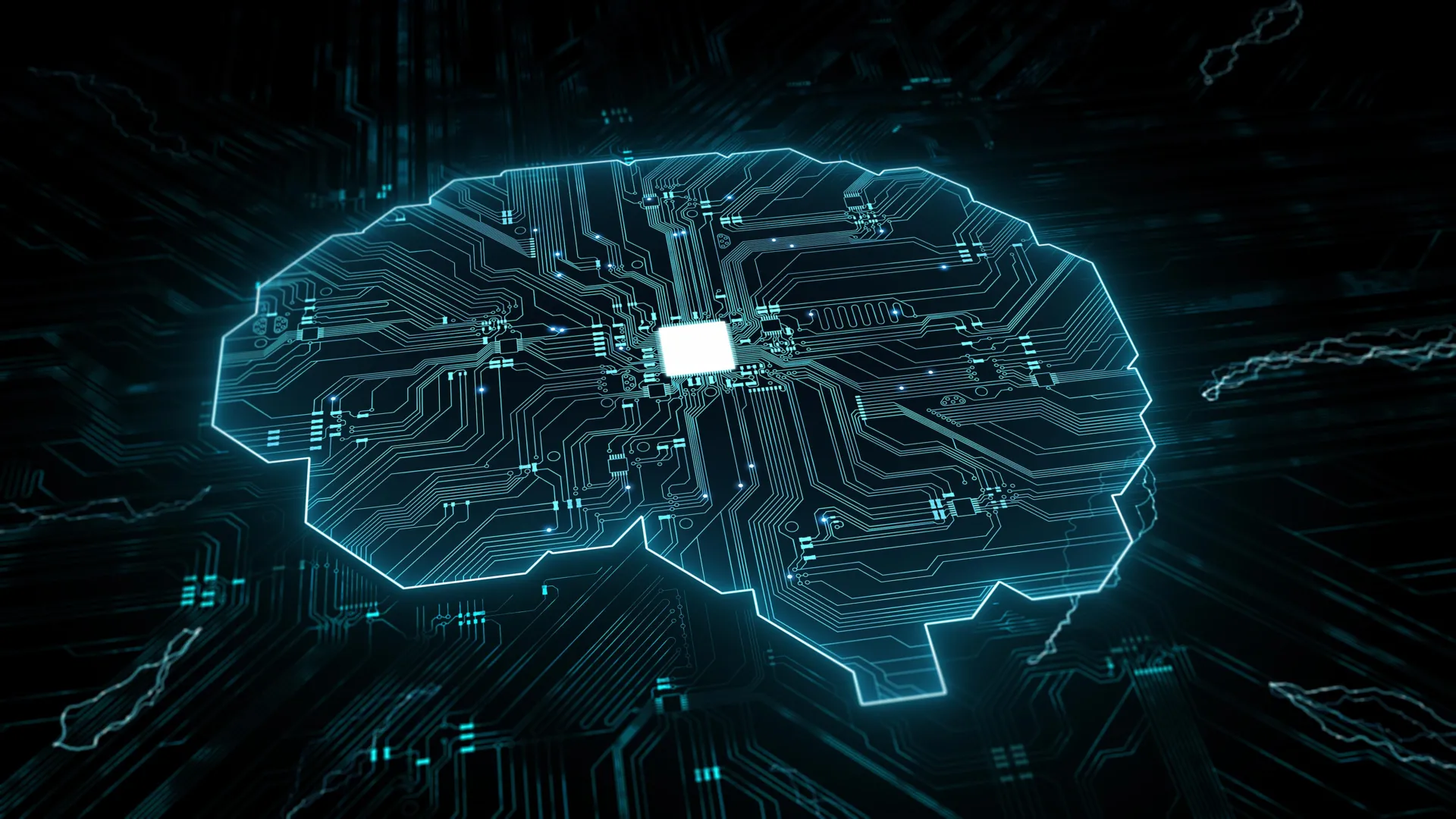
At its core, the microwave brain is a fully integrated neural network on a silicon microchip, meticulously designed to recognize patterns and learn from data by processing information in the frequency domain. This unique architecture allows it to perform a wide array of tasks in real-time, including the decoding of complex radio signals, the precise tracking of radar targets, and the efficient processing of digital data streams, all while consuming an astonishingly low power budget of less than 200 milliwatts. This dramatic reduction in power consumption is a key factor in its potential for widespread adoption, especially in battery-powered devices and remote sensing applications where energy efficiency is paramount.
The innovative design, spearheaded by doctoral students Bal Govind and Maxwell Anderson under the guidance of Professors Alyssa Apsel and Peter McMahon, deviates significantly from conventional circuit design principles. Instead of attempting to replicate the established structures of digital neural networks, Govind’s approach embraced a more unconventional strategy, creating what he describes as a "controlled mush of frequency behaviors." This allows the chip to instantaneously distort signals across a broad spectrum of frequencies in a programmable manner, making it exceptionally versatile and adaptable to a multitude of computing tasks. This inherent flexibility bypasses numerous intricate signal processing steps that are typically required by digital computers, leading to substantial gains in both speed and efficiency.
The chip’s ability to operate within the microwave regime, handling data streams in the tens of gigahertz, is a critical differentiator. This is significantly faster than the operational speeds of most conventional digital chips, which are often limited by clock cycles and the overhead associated with digital conversions. The neural network architecture, built using interconnected modes within tunable waveguides, enables it to recognize complex patterns and learn from incoming data with remarkable speed and precision. This analog, nonlinear approach to computation within the microwave frequency domain is what unlocks its extraordinary performance.
Professor Alyssa Apsel highlighted the radical departure from established norms, stating, "Bal threw away a lot of conventional circuit design to achieve this." This willingness to explore uncharted territory in circuit design has resulted in a processor that is not merely an incremental improvement but a fundamental reimagining of computational hardware. The "controlled mush of frequency behaviors" allows for high-performance computation by directly manipulating the microwave signals rather than converting them into digital representations.
The microwave brain’s computational prowess extends to both low-level logic functions and more complex tasks. It has demonstrated the ability to identify specific bit sequences and accurately count binary values within high-speed data streams. Crucially, in classification tasks involving various wireless signal types, the chip achieved an accuracy of 88% or higher, a performance level that rivals that of traditional digital neural networks. However, it achieves this with a fraction of the power and physical footprint, offering a compelling advantage for applications where size and energy constraints are critical.
Bal Govind elaborated on the advantages of their probabilistic approach, noting that in traditional digital systems, increasing task complexity necessitates more circuitry, higher power consumption, and more sophisticated error correction mechanisms to maintain accuracy. "But with our probabilistic approach," he explained, "we’re able to maintain high accuracy on both simple and complex computations, without that added overhead." This inherent robustness and efficiency in handling complexity are key attributes of the microwave brain.
The chip’s remarkable sensitivity to input signals also makes it an ideal candidate for hardware security applications. Its ability to detect subtle anomalies in wireless communications across multiple microwave frequency bands offers a powerful new tool for safeguarding communication channels and identifying potential threats. This sensitivity can be leveraged to build more secure and resilient communication systems, a critical need in today’s increasingly interconnected world.
Looking towards future applications, Professor Apsel expressed optimism about the potential for further power reduction, envisioning deployment in edge computing scenarios. "You could deploy it on a smartwatch or a cellphone and build native models on your smart device instead of having to depend on a cloud server for everything," she suggested. This vision of on-device intelligence, powered by ultra-low-power, high-performance processors, could transform personal electronics, enabling more sophisticated functionalities without the constant reliance on cloud connectivity. This would not only enhance privacy and reduce latency but also open up new possibilities for mobile applications and smart devices.
While the microwave brain is still in its experimental stages, the research team is highly optimistic about its scalability and potential for integration into existing technological ecosystems. They are actively pursuing avenues to further enhance its accuracy and explore seamless integration with both current microwave and digital processing platforms. This ongoing development work is crucial for translating this laboratory breakthrough into tangible, real-world applications.
The foundational research for this project was supported by the Defense Advanced Research Projects Agency (DARPA) and the Cornell NanoScale Science and Technology Facility, with additional funding from the National Science Foundation. This collaborative and well-supported research environment has been instrumental in fostering the innovative thinking and rigorous experimentation that led to the creation of the microwave brain. The project exemplifies the power of interdisciplinary collaboration and sustained investment in fundamental scientific research to drive technological advancement. The successful development of this microwave brain on a chip represents a significant leap forward, promising to unlock new frontiers in computing and wireless technology for years to come.