Faris Adani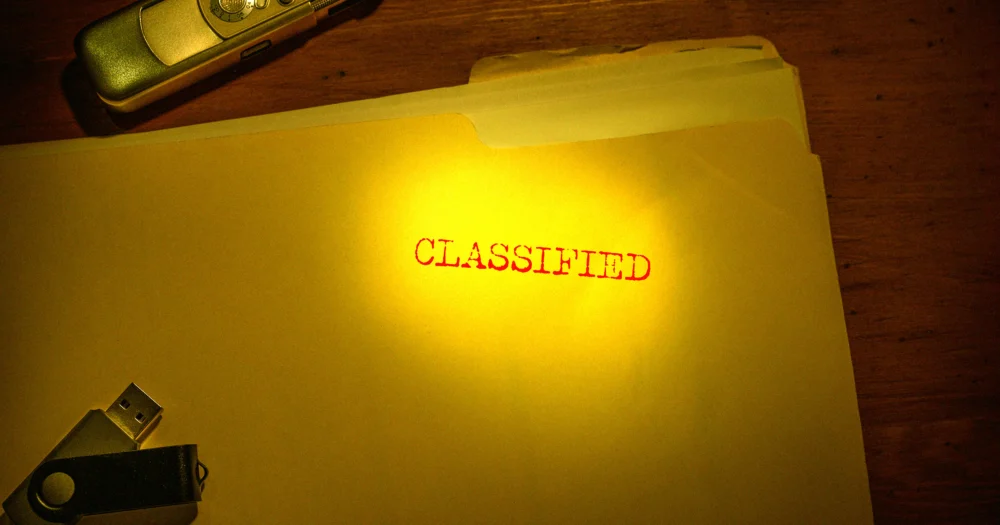
The Central Intelligence Agency (CIA) has issued a "neither confirm nor deny" response to a Freedom of Information Act (FOIA) inquiry regarding the mysterious interstellar object 3I/ATLAS, a move that has fueled further speculation from Harvard astronomer Avi Loeb, who maintains the object could be an extraterrestrial technological artifact. This non-committal stance by a prominent intelligence agency injects a new layer of intrigue into an already contentious scientific debate, raising questions about potential national security implications of interstellar visitors, even as the broader scientific community largely classifies 3I/ATLAS as a natural comet.
Since its initial detection hurtling through our solar system, 3I/ATLAS has captivated the attention of astronomers, none more vocally than Professor Avi Loeb, the former chair of Harvard University’s astronomy department. Loeb has consistently argued for the possibility that 3I/ATLAS is not merely a cosmic rock but rather a piece of advanced technology dispatched by an intelligent extraterrestrial civilization. His hypothesis is meticulously built upon what he describes as a series of anomalous characteristics exhibited by the object, which he believes defy conventional explanations for natural celestial bodies. Among these are its unusually large suspected size, its rotation axis positioned almost perfectly perpendicular to the Sun, and a remarkably "fine-tuned" trajectory that brought it exceptionally close to Mars and Jupiter. While most of his peers and institutions like NASA contend that 3I/ATLAS is a natural comet originating from another star system, Loeb remains steadfast in his conviction, often expressing frustration with what he perceives as an unwillingness by the scientific establishment to consider alternative, even if unconventional, explanations.
Loeb’s criticisms have not been limited to the broader scientific consensus; he has also openly challenged NASA’s handling of 3I/ATLAS. He previously accused the space agency of "arrogance" for its swift declaration of the object as a natural comet, suggesting they were ignoring the very anomalies he had documented. Furthermore, Loeb voiced concerns about NASA’s alleged withholding of observations from its Mars Reconnaissance Orbiter (MRO) during 3I/ATLAS’s closest approach to the Red Planet in October. While these MRO images were eventually released in late November, Loeb’s initial frustration underscored his perception of a lack of transparency or a premature dismissal of the object’s potential significance. These instances highlight Loeb’s broader campaign to encourage more open-minded scientific inquiry into potential technosignatures from space, a mission he also pursues through his Galileo Project, which aims to search for evidence of extraterrestrial technology.
The latest development that has particularly piqued Loeb’s interest involves a Freedom of Information Act (FOIA) request submitted by renowned ufologist John Greenewald Jr. Greenewald, the founder of The Black Vault, a vast online archive of millions of declassified government documents obtained through FOIA requests, sought "any assessments, reports, or communications maintained by the Central Intelligence Agency referencing 3I/ATLAS." His work has been instrumental in bringing to light numerous government files, including declassified Pentagon videos of what are now officially termed Unidentified Anomalous Phenomena (UAPs). The CIA’s formal response to Greenewald’s inquiry was unambiguous in its ambiguity: the agency stated it would "neither confirm nor deny the existence or nonexistence of records" related to 3I/ATLAS. This particular type of response, often referred to as a "Glomar Response" (named after the Hughes Glomar Explorer incident where the CIA refused to confirm or deny its secret mission to recover a sunken Soviet submarine), is a standard tactic employed by intelligence agencies. It typically signifies that merely acknowledging the existence or non-existence of such records could, in itself, reveal classified information, intelligence capabilities, or investigative methodologies, even if the requested information itself is not classified.
For Avi Loeb, this "Glomar Response" from the CIA is far from a neutral outcome. He found the agency’s notable level of secrecy "surprising," especially given NASA’s seemingly definitive conclusion that "3I/ATLAS is definitely a comet of natural origin." Loeb posed a rhetorical question in his blog post: "If this conclusion was clear all along to everyone within government and academia — as NASA officials presented the case, then why would the CIA treat the possible existence of records dealing with a natural comet as sensitive enough to be classified?" This question forms the crux of his argument: if 3I/ATLAS is unequivocally natural, why would the CIA, whose mandate is national security, be involved to the extent that it cannot even acknowledge whether it has any information?
Loeb’s interpretation delves into potential national security ramifications. He suggested that the government might have undertaken investigations into whether 3I/ATLAS could pose a threat, perhaps considering the remote possibility of a "black swan event." In this context, a "black swan event" refers to an extremely rare, unpredictable, and high-impact occurrence that defies normal expectations. For Loeb, such an event could involve the discovery of an alien probe posing a significant, even existential, threat to humanity. He has previously hypothesized that 3I/ATLAS could be "akin to a Trojan Horse, where a technological object masquerades as a natural comet." This perspective aligns with broader discussions within the scientific community and intelligence circles about the implications of detecting extraterrestrial intelligence – particularly if that intelligence appears to be technologically advanced and capable of interstellar travel. The societal impact of such a revelation, ranging from widespread panic to profound philosophical shifts, could be immense. Therefore, Loeb speculates that any discussions or assessments within government agencies regarding such a possibility might be intentionally "hidden from public view in order to prevent panic from taking hold for no good reason," especially given that such a "black swan event is still regarded as highly unlikely."
However, it is crucial to consider the nuances of the CIA’s response. A "neither confirm nor deny" statement does not confirm the existence of records any more than it denies them. The agency explicitly did not rule out the "nonexistence of records." This means the CIA might genuinely have no files on 3I/ATLAS, but confirming that fact could still be deemed sensitive if, for example, the inquiry itself touched upon categories of objects or phenomena that would typically warrant intelligence review, and acknowledging a lack of records in this specific instance could reveal the scope or limitations of their monitoring capabilities. The Glomar response serves to protect the process and scope of intelligence gathering, not just the content of specific files.
Furthermore, the scientific community’s understanding of 3I/ATLAS continues to evolve as more data becomes available. While initial observations of interstellar objects like Oumuamua (the first confirmed interstellar visitor, also a subject of Loeb’s alien technology hypothesis) presented ambiguities, subsequent analyses and new data points for objects like 3I/ATLAS have increasingly supported the natural comet hypothesis. Spectroscopic analysis, observations of cometary activity (like outgassing), and comparisons to known comets often provide strong evidence for their natural origins. These accumulating data points continue to challenge Loeb’s more far-fetched theory that 3I/ATLAS is a piece of technology. If the object does indeed turn out to be a non-threatening lump of ice and dust, as most scientists believe, then what would the CIA possibly have to hide? The lack of tangible, extraordinary evidence for an artificial origin makes the notion of classified intelligence records seem less plausible to many.
Despite the growing consensus, Avi Loeb remains undeterred and maintains his call for continued, rigorous investigation. He advocates for taking a closer look at 3I/ATLAS, particularly once it makes its closest approach to Jupiter in March. For Loeb, the scientific imperative is to exhaust all possibilities and not to prematurely dismiss hypotheses, no matter how unconventional, if there are anomalous data points. "Unless we check, we might never know if this swan is white or black," he concluded in his blog post, emphasizing the importance of direct observation and empirical evidence to definitively ascertain the true nature of this enigmatic interstellar visitor. The ongoing debate around 3I/ATLAS, now further complicated by the CIA’s veiled response, underscores the profound questions that arise when the boundaries of known science intersect with the vast unknowns of space and the secretive world of intelligence.