Faris Adani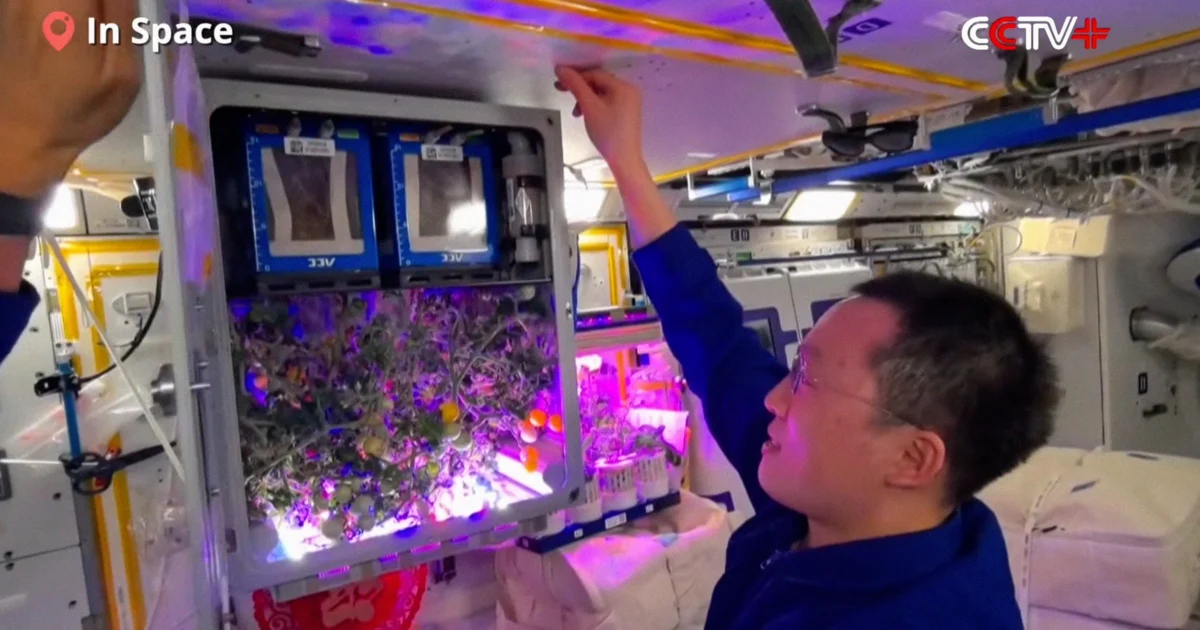
**China’s Tiangong Space Station Astronauts Achieve Landmark Harvest of “Space Tomatoes”**
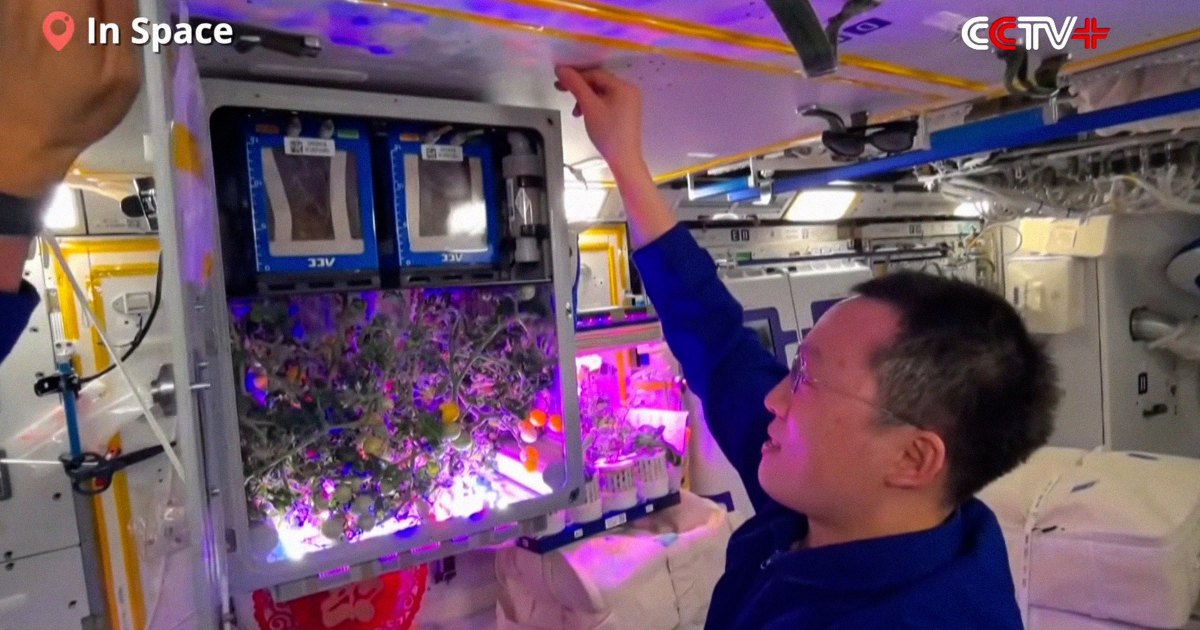
In a significant stride for long-duration space exploration and extraterrestrial sustenance, astronauts aboard China’s Tiangong space station have successfully harvested a “bumper crop” of “space tomatoes,” marking a pivotal moment in the nation’s efforts to cultivate food in microgravity. This achievement, widely reported by state-run news networks like *Global Times* and captured in compelling footage from CCTV, demonstrates the efficacy of advanced aeroponic cultivation systems in providing fresh produce for space travelers, paving the way for more ambitious deep-space missions.
The Tiangong (meaning “Heavenly Palace”) space station, while intentionally designed to be more compact than the sprawling International Space Station, stands as a testament to China’s rapidly advancing space capabilities. Its T-shaped configuration comprises three primary modules: the central Tianhe core module, and the Wentian and Mengtian laboratory modules. Launched incrementally since 2021, Tiangong provides a robust orbital outpost for groundbreaking scientific research, capable of housing up to six taikonauts at peak capacity. Beyond its current laboratory functions, the station is poised to be joined in 2027 by the Xuntian space telescope, a Hubble-class observatory that will co-orbit with Tiangong, allowing for potential docking and maintenance, further cementing China’s independent presence in low-Earth orbit.
Central to the recent agricultural success is Tiangong’s innovative aeroponic cultivation system. Unlike traditional soil-based farming or even hydroponics, which submerges plant roots in nutrient-rich water, aeroponics nourishes plants by misting their exposed roots with a fine spray of nutrient solution. This method drastically reduces water consumption – a critical factor in the resource-scarce environment of space – while also enhancing oxygenation to the roots, promoting faster growth and higher yields. The system aboard Tiangong is designed with transparent windows, allowing taikonauts to monitor root development and nutrient absorption, complemented by a specially designed full-spectrum LED panel that simulates Earth’s sunlight, providing the precise wavelengths needed for photosynthesis.
The recent harvest saw astronauts carefully plucking small, vibrant yellow and red cherry tomatoes from lush vines, a visual spectacle that underscores the potential for a fresh, varied diet beyond packaged space rations. This fresh produce is not merely a dietary supplement; it represents a crucial step towards developing bioregenerative life support systems (BLSS) – closed-loop ecosystems that can sustain human life indefinitely in space by recycling waste and producing food, water, and oxygen. Reducing reliance on costly and infrequent resupply missions from Earth is paramount for any long-duration human spaceflight, particularly for missions to Mars or the establishment of lunar bases.
Beyond the logistical and nutritional advantages, the psychological benefits of gardening in space are increasingly recognized. The act of nurturing life, observing growth cycles, and interacting with familiar, living organisms can significantly boost astronaut morale and combat the isolation and monotony inherent in extended space missions. The vibrant colors, fresh aromas, and even the simple routine of tending to plants provide a sensory connection to Earth, contributing to the overall well-being and mental health of the crew. NASA, in a 2023 update, highlighted these “psychological upsides,” noting that gardening can increase quality of life and provide a sense of purpose.
The successful cultivation of tomatoes follows previous accomplishments on Tiangong, where astronauts have already yielded “space-grown lettuce” and planted green onions. The Chinese space agency has ambitious plans to expand this orbital agricultural repertoire, with future experiments slated to include wheat, carrots, and various medicinal plants. These selections are strategic: wheat is a staple grain offering significant caloric value, carrots provide essential vitamins, and medicinal plants could potentially offer on-demand remedies, further reducing reliance on Earth-based medical supplies during emergencies. Investigating how these diverse plant species adapt and thrive in microgravity will provide invaluable data for designing even more sophisticated space farms.
China’s achievements mirror and build upon similar efforts by international partners. NASA astronauts on the International Space Station (ISS) have been pioneers in space agriculture for many years, utilizing systems like Veggie and the Advanced Plant Habitat (APH) to grow a variety of crops, including lettuce, radishes, peppers, and their own versions of “space tomatoes.” These experiments have focused on understanding how genetic elements of plants adapt to spaceflight, optimizing growth conditions, and assessing nutritional content.
A humorous, yet telling, anecdote from the ISS perfectly illustrates the human element of space gardening. In late 2023, a “rogue tomato” was dramatically recovered by NASA astronaut Jasmin Moghbeli, nearly a year after it went missing during a hydroponic and aeroponic experiment. The lost tomato had become a running joke, with astronaut Frank Rubio, who had returned to Earth, initially “blamed” for its disappearance. Moghbeli’s announcement, “Our good friend Frank Rubio, who headed home [already], has been blamed for quite a while for eating the tomato, but we can exonerate him. We found the tomato,” brought closure to a year-long mystery and highlighted the small, personal dramas that unfold in the confined environment of a space station. While desiccated, its recovery was celebrated as a testament to diligent housekeeping and a playful moment of shared humanity in space.
The scientific and practical implications of these space farming initiatives extend far beyond the confines of orbital laboratories. The insights gained into resource-efficient plant growth, nutrient delivery, and environmental control in extreme conditions could have profound applications on Earth. These include developing more sustainable urban farming techniques, improving agricultural yields in arid or resource-poor regions, and advancing vertical farming technologies. The very systems designed to feed astronauts in space could help feed growing populations on Earth facing climate change and food security challenges.
As China continues to solidify its position as a major space power, the Tiangong space station serves as a crucial platform for pushing the boundaries of human habitation and self-sufficiency beyond Earth. The successful harvest of “space tomatoes” is more than just a culinary achievement; it is a fundamental step towards making human expansion into the solar system a sustainable and viable reality. With each new crop nurtured and harvested, astronauts are not just growing food; they are growing the future of humanity in space.