Faris Adani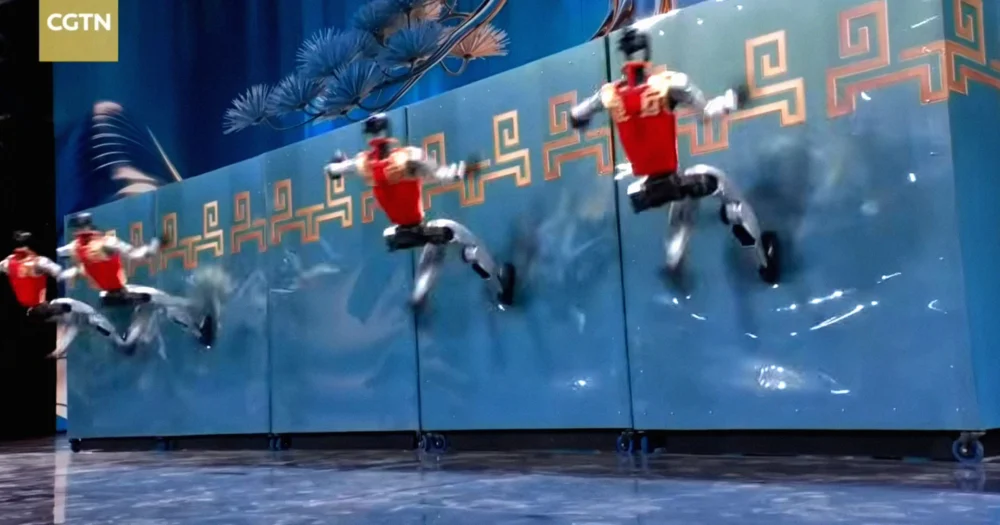
The dazzling spectacle of China’s annual Spring Festival Gala, a televised event watched by billions globally, once again served as a potent showcase for the nation’s technological advancements, captivating audiences with a breathtaking display of robotic agility that redefined the capabilities of humanoid machines. This year, the state-run China Media Group presented an astonishing synchronized martial arts routine featuring a small army of Unitree G1 robots, culminating in a gravity-defying wall flip that underscored a massive leap in robotic locomotion and control. Unlike previous years, where robotic appearances were often characterized by awkward, shuffling movements, this performance projected an image of sophisticated coordination and dynamic physical prowess, signaling a significant milestone in the global race for advanced humanoid robotics.
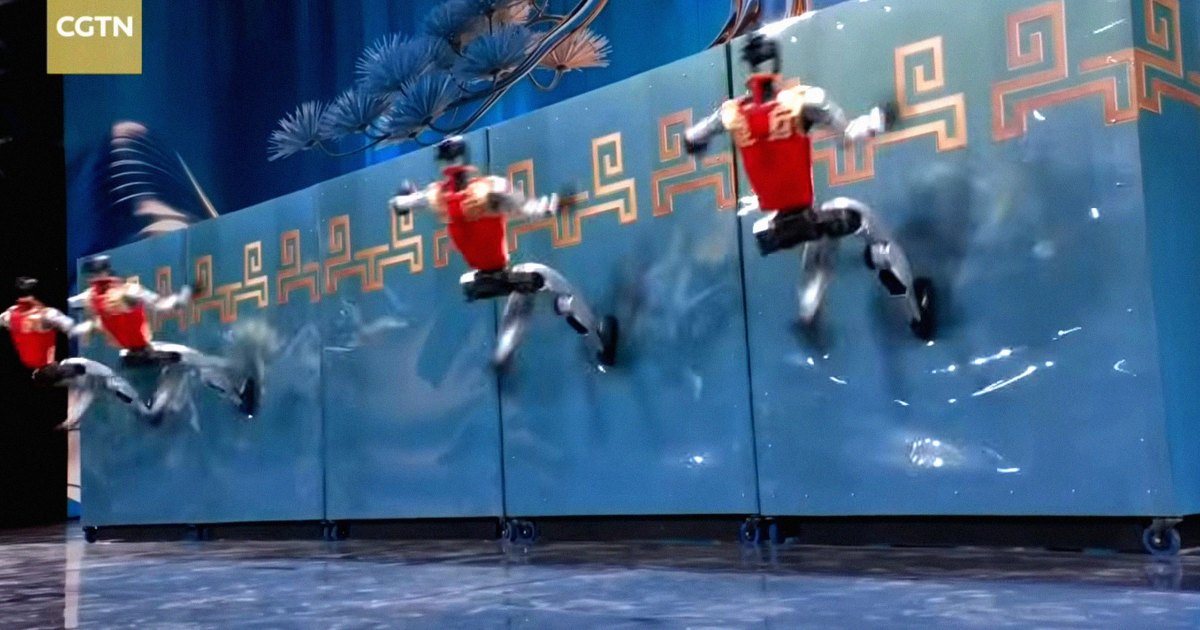
The segment, which quickly went viral across social media platforms, placed the Unitree G1 robots in direct interaction with young human performers. Armed with nunchucks and spears, the robots engaged in a meticulously choreographed martial arts sequence, demonstrating not only precise movement but also a surprising level of dexterity. The visual impact was profound, with the metallic figures executing complex stances, parries, and strikes in perfect unison. However, the true showstopper, which can be observed at the 3:16 mark of the embedded video, was the robots’ ability to perform a wall flip. This maneuver, requiring immense power, balance, and real-time computation, saw several robots literally running up a temporary wall on stage, pushing off its surface, and landing gracefully back on their feet. It was a moment that blurred the lines between science fiction and reality, evoking comparisons to acrobatic human parkour practitioners rather than conventional machines.
This extraordinary feat by the Unitree G1 robots is a testament to the rapid progress within China’s robotics industry, a sector that has been propelled by ambitious national strategies and substantial investment. The Unitree G1, a bipedal humanoid, represents the cutting edge of agile robotics, integrating advanced motor control systems, sophisticated balance algorithms, and robust hardware design. Achieving a wall flip demands a complex interplay of factors: powerful actuators capable of rapid acceleration and deceleration, precise force sensing to gauge contact with the wall, and real-time trajectory planning to execute the push-off and subsequent landing. The ability to dynamically adjust balance mid-air and upon impact highlights the maturity of their control systems, allowing for movements that were once thought exclusive to biological organisms.
The context of this performance within the Spring Festival Gala is crucial. The Gala is not merely an entertainment show; it’s a platform for the Chinese government to project national pride and demonstrate its achievements across various domains, including science and technology. The inclusion of such advanced robotics serves as a powerful symbol of China’s burgeoning technological might and its commitment to becoming a global leader in artificial intelligence and automation. This surge in interest and investment has been so significant that even Chinese regulators have voiced warnings about an impending "bubble," fearing that an influx of new robotics companies might lead to overcrowding and unsustainable growth. However, the visible progress showcased at events like the Gala often overshadows these concerns, reinforcing the narrative of relentless innovation.
Poe Zhao, a Beijing-based tech analyst, articulated this sentiment to Reuters, stating, "Humanoids bundle a lot of China’s strengths into one narrative: AI capability, hardware supply chain, and manufacturing ambition." He further noted that humanoids are "the most ‘legible’ form factor for the public and officials," meaning their human-like appearance makes technological progress more relatable and impressive to a broad audience. This public relations aspect is undeniably effective, drawing a stark contrast to performances from even a year prior, where less sophisticated humanoid robots were seen awkwardly shuffling across the stage, waving red handkerchiefs in a far less convincing display of capability. The transformation within a mere twelve months is staggering, signaling an exponential acceleration in development.
The dramatic progress displayed by Chinese robotics companies like Unitree also intensifies the global competition, particularly with Western counterparts like Elon Musk’s Tesla, which is developing its own Optimus robot. Musk, ever candid, has publicly acknowledged the formidable challenge posed by China in this domain. During an earnings call earlier this year, he told investors, "By far, the biggest competition for humanoid robots will be from China." He elaborated, "China is good at manufacturing, and also in AI, judging from open models. To the best of my knowledge, we don’t see significant competition outside of China. People outside of China underestimate China, but China’s an ass-kicker next-level." While Musk’s statements reflect a recognition of China’s capabilities, they also underscore the differing stages of development. Tesla’s Optimus robots, while making progress, still "heavily rely" on human remote operators for many complex tasks, and recent demonstrations have shown instances of them falling, highlighting the persistent challenges in achieving fully autonomous, agile movement in unstructured environments.
However, the impressive theatrics of the Spring Festival Gala performance, while undeniably spectacular, also raise a critical question: how will this martial arts expertise translate into genuinely useful, real-world applications? Arming robots with nunchucks and spears for a choreographed show is a far cry from deploying them in practical settings such as manufacturing, logistics, healthcare, or domestic labor. The fundamental challenge lies in the distinction between a highly controlled, predictable stage environment and the messy, unpredictable reality of daily life.
Performing a wall flip on a custom-built stage with precise lighting and pre-programmed movements is a monumental engineering achievement. Yet, reliably navigating a cluttered living room, identifying and grasping varied objects, or performing delicate tasks like folding laundry or loading a dishwasher presents a different, often more complex, set of problems. These tasks require advanced perception, nuanced manipulation, adaptability to unforeseen circumstances, and the ability to generalize learning across diverse scenarios—capabilities that even the most advanced humanoid robots are only just beginning to acquire. The Reddit user who commented, "Cool. Can I please get one that just cleans my house and does the laundry?" perfectly encapsulates the public’s desire for practical utility over mere spectacle.
Robotics companies, both in China and elsewhere, are grappling with this gap between demonstration and deployment. While robots like Figure AI’s creations are starting to show promising progress in tasks like loading and unloading dishwashers, these are still carefully controlled demonstrations in structured environments. The real breakthrough will come when humanoid robots can operate autonomously and reliably in dynamic, unscripted human environments, adapting to variability and uncertainty with the same ease as a human. This involves perfecting everything from tactile sensing and fine motor control to advanced AI for decision-making and problem-solving.
Despite these challenges, the advancements showcased at the Spring Festival Gala are not merely for entertainment. They represent a significant stepping stone. The core technologies developed to enable a robot to perform a wall flip—such as robust balance, dynamic locomotion, and high-fidelity control—are foundational for future applications. Imagine robots capable of navigating treacherous terrain in disaster zones, assisting in construction on uneven surfaces, or performing maintenance in hard-to-reach industrial settings. The agility demonstrated on stage could eventually translate into unprecedented capabilities in fields requiring complex physical interaction with the environment.
In conclusion, the Unitree G1 robots’ wall-flipping, martial arts display at the 2026 Spring Festival Gala was more than just a captivating performance; it was a potent symbol of China’s rapid ascent in the field of humanoid robotics. It underscored the nation’s technological prowess, strategic investments, and ambition to lead the global AI and robotics revolution. While the journey from stage theatrics to widespread practical utility remains long and fraught with engineering complexities, the sheer agility and sophistication showcased by these robots offer a compelling glimpse into a future where machines can move and interact with the physical world in ways previously confined to the realm of imagination. The challenge now lies in bridging the gap between awe-inspiring demonstrations and the mundane yet essential tasks of everyday life, transforming these agile performers into indispensable aids.