Faris Adani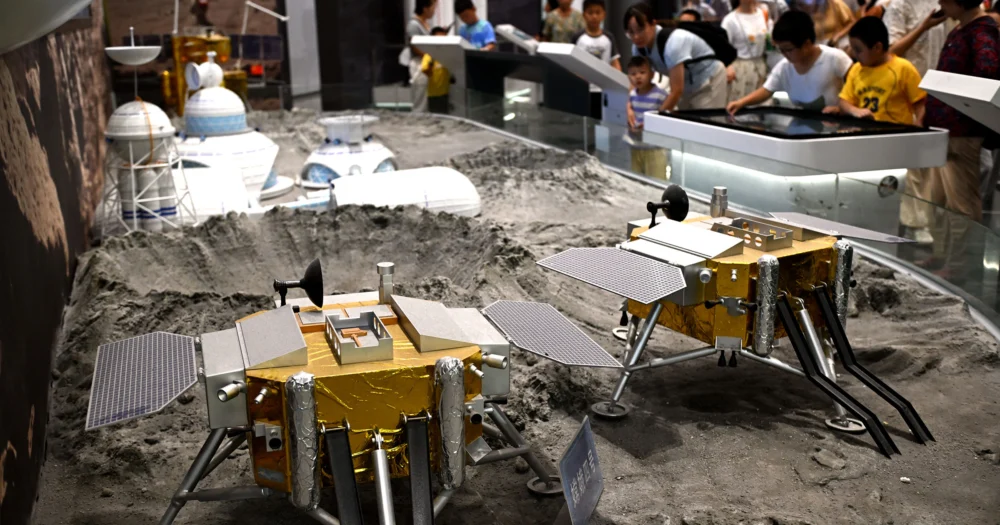
In a significant shift that has reverberated through the global space community, NASA officials recently announced major changes to its ambitious Artemis program, pushing the first crewed lunar landing attempt from Artemis III to Artemis IV and deferring the plan to land astronauts on the Earth’s natural satellite from its previously targeted 2027 timeline to some point in 2028. This reshuffling has once again stoked deep-seated fears and fueled a heated debate among lawmakers in the United States: could China realistically beat the United States back to the Moon, marking a symbolic and scientific victory in what is increasingly being termed the new space race? As the West grapples with its adjusted timelines, China’s own crewed lunar mission continues to come into sharp focus, revealing a systematic and accelerating program poised for significant breakthroughs.
The Chinese space program, under the aegis of the China National Space Administration (CNSA), has been relentlessly advancing its capabilities. Reports from sources like Space.com highlight that the country has already been conducting extensive simulations of crucial lunar operations, including intricate lunar landings and launches. Beyond simulations, China is actively performing rigorous spacecraft abort and rocket tests, demonstrating a comprehensive approach to mitigating the inherent risks of human spaceflight. These preparatory steps are not isolated efforts but are part of a meticulously planned long-term strategy that builds upon the successes of its uncrewed Chang’e missions, which have already achieved multiple lunar landings, sample returns, and even a historic landing on the Moon’s far side. The Chang’e program has provided invaluable data and technological demonstrations, laying a robust foundation for human exploration.
Adding another layer of concrete detail to China’s lunar ambitions, a new study published in the prestigious journal Nature Astronomy this Monday by an international team of researchers has identified a scientifically compelling and technically suitable landing area for the prospective crewed mission: a vast volcanic region situated on the Moon’s near side. More specifically, the researchers meticulously outlined "four prospective landing sites" within the "traversable areas" of the Sinus Aestuum basin. This ancient and relatively flat impact crater, bordered by far more irregular highlands and distinctive features known as "rilles" (which are essentially volcanic trenches), presents a unique geological tapestry. The study also highlighted the neighboring Rimae Bode, a bowl-shaped crater exhibiting similar intriguing features.
These proposed landing sites, located hundreds of miles north of the Moon’s south pole – a region that NASA has predominantly eyed for its future Artemis landings due to the potential for water ice – are particularly intriguing and scientifically valuable. According to the paper, these areas "provide a range of diverse geological samples, including volcanic debris, mare basalts, Copernicus crater ejecta and high-[thorium] materials." Such a diverse collection of lunar materials, spanning different geological epochs and processes, promises to be a treasure trove for scientists. The researchers emphasize that "such a collection may provide insights into the geological evolution of the region and enhance our understanding of the lunar mantle composition and volcanic processes." Analyzing these samples could unlock fundamental secrets about the Moon’s internal structure, its magmatic history, and the forces that shaped its surface over billions of years.
The scientific allure of this region is not a recent discovery; it has, in fact, been lauded as an excellent place to land astronauts for over half a century. Jim Head, a distinguished professor at Brown University who played a pivotal role in helping NASA select landing sites for its iconic Apollo missions and has collaborated with Chinese scientists (though he was not directly part of this specific study), eloquently articulated the region’s enduring appeal. He told Scientific American, "Rimae Bode would be on my ‘lunar human exploration landing site short list.’" Head’s endorsement carries significant weight, drawing a direct line from the foundational era of lunar exploration to the present. He added, "More than 50 years after Apollo, the importance of the multiple compelling scientific objectives at Rimae Bode remain!" This continuity underscores that while technological capabilities have advanced dramatically, certain fundamental scientific questions about the Moon persist, and regions like Rimae Bode hold critical clues.
Coauthor Jun Huang, a planetary geologist at the China University of Geosciences, vividly likened the Rimae Bode to a "geological ‘all-you-can-eat buffet’ that the south pole can’t provide" in his comments to SciAm. This analogy powerfully captures the sheer variety and richness of geological features and materials available for study. Huang further elaborated on the profound scientific implications: by studying the intriguing glass beads found in the volcanic ash of Rimae Bode, scientists could "finally understand what the Moon is actually made of, deep inside, and piece together the complete story of how its volcanic activity evolved over time, transforming the moon from a fiery, active world into the quiet neighbor we see today." These glass beads, formed during explosive volcanic eruptions, encapsulate pristine samples of the Moon’s deep interior, offering a direct window into its primordial composition and subsequent thermal evolution. Understanding this transition from a volcanically active body to its current quiescent state is crucial for comprehending the broader evolution of rocky planets and moons in our solar system.
Despite the immense scientific promise, safely landing a human crew in any lunar region, including Sinus Aestuum and Rimae Bode, remains an extraordinarily perilous endeavor. China is not underestimating these challenges. As part of its preparatory sequence, China is hoping to launch an uncrewed lander to the Moon’s south pole later this year, a mission that will likely scout the region for future robotic and human activities, potentially for resource utilization. This mission will serve as a crucial precursor, testing technologies and gathering data in a different, but equally challenging, lunar environment. A follow-up mission, currently scheduled for 2029, will further explore the area in preparation for the establishment of China’s ambitious International Lunar Research Station (ILRS). The ILRS is envisioned as a permanent or long-term base on the Moon, a partnership primarily with Russia, but also involving several other countries, notably excluding the United States and its allies who are part of the Artemis Accords. This dual approach – exploring both geologically rich near-side regions and resource-rich polar areas – highlights China’s comprehensive strategy for lunar presence.
China’s first crewed landing attempt is still slated for before the end of the decade, a target that, while ambitious, appears increasingly plausible given their consistent progress. Meeting this deadline will undoubtedly demand extraordinary dedication, technological innovation, and flawless execution from its Moon program. However, the systematic nature of their endeavors suggests they are building towards this goal with methodical precision.
The current landscape of lunar exploration, with NASA’s recent delays and China’s accelerating pace, suggests that both countries are, perhaps inadvertently, adopting a sequential approach strikingly reminiscent of the Apollo program. As Jim Head noted to SciAm, this involves "small steps that could culminate in boots on the lunar ground for the first time in over 50 years." For the US, this means further tests of the Space Launch System (SLS) rocket and Orion capsule, and the development of the Human Landing System (HLS) by commercial partners like SpaceX. For China, it involves a careful progression from uncrewed missions to orbital human flight tests, followed by a human landing.
The geopolitical dimension of this renewed lunar pursuit cannot be overstated. The "space race" terminology, initially coined during the Cold War rivalry between the US and the Soviet Union, has resurfaced with China’s ascent as a major space power. The Artemis Accords, led by the US, represent an international framework for lunar exploration based on principles of transparency, peaceful cooperation, and resource extraction guidelines. In contrast, the ILRS, spearheaded by China and Russia, offers an alternative vision, potentially leading to divergent operational standards and legal precedents for lunar activities. The strategic implications of lunar presence extend beyond scientific prestige; they encompass potential resource exploitation, national security considerations, and the establishment of long-term human outposts. The perception of falling behind, as reflected in the US Senate debates, underscores the symbolic and strategic importance of being a leader in space exploration.
While NASA’s approach relies heavily on leveraging commercial partners like SpaceX for its Starship lunar lander and Blue Origin for other elements, China’s program is largely state-led and vertically integrated, granting it a high degree of control and potentially faster decision-making processes. The different target regions—NASA’s focus on the south pole for water ice, essential for sustained human presence and fuel production, versus China’s proposed geologically diverse near-side sites—highlight distinct scientific and strategic priorities. However, both nations share the overarching goal of establishing a sustained human presence on the Moon.
In conclusion, the meticulous planning, systematic technological advancements, and scientifically compelling target sites proposed in the recent Nature Astronomy study collectively paint a vivid picture: China’s crewed lunar mission is not merely a distant aspiration but a rapidly materializing reality. With NASA’s timelines extended, the possibility of China being the next nation to plant boots on the lunar surface, and potentially the first to establish a long-term presence, has significantly increased. The scientific stakes are immense, promising unprecedented insights into our Moon’s history and evolution. The geopolitical stakes are equally profound, setting the stage for a new era of competition and cooperation in space. As the world watches, humanity is on the cusp of a truly transformative decade in lunar exploration, where multiple nations will strive to establish a sustained presence on Earth’s closest celestial neighbor, regardless of who achieves the next monumental first or where their flags are planted.
More on Moon landings: After Nixing Its Artemis 3 Moon Landing, NASA Is Starting to Seriously Lose the Moon Race to China