isnaini azizah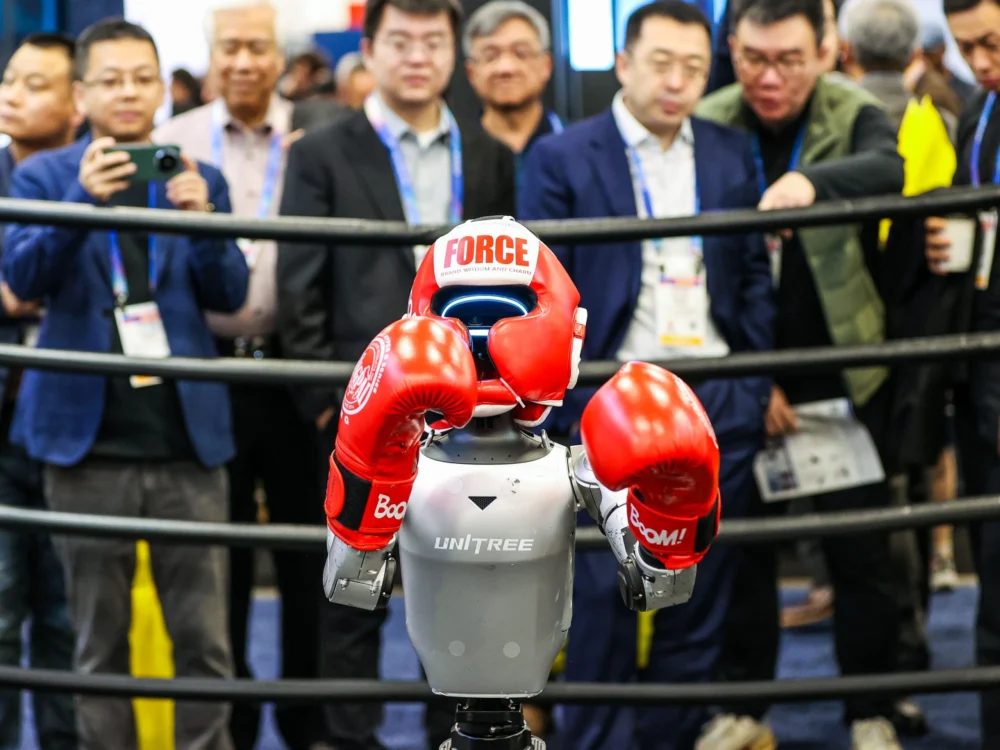
The author, a China tech writer based in the U.S., made a last-minute decision to attend CES, a pivotal annual event where global tech giants unveil their latest innovations. This year’s CES, held in January, drew an impressive crowd of over 148,000 attendees and featured more than 4,100 exhibitors, transforming the Las Vegas Convention Center and surrounding hotels into a sprawling testament to technological advancement. While China has always maintained a presence at CES, its participation this year was particularly striking. Chinese exhibitors constituted nearly a quarter of all companies present, demonstrating a dominant force, especially in burgeoning fields like AI hardware and robotics. The convention floor buzzed with Chinese industry professionals and venture capitalists, with seasoned CES attendees noting this as the first post-pandemic show where China’s presence was undeniably significant. Lingering visa issues that affected some Chinese attendees in the previous year seemed to have largely subsided, with AI emerging as the primary catalyst and justification for this robust return.
AI, as anticipated, was the dominant narrative of CES 2026, its omnipresence palpable on every exhibitor’s booth. However, this pervasive AI branding often blurred the lines between genuine innovation and a sometimes-confusing marketing ploy. The phrase "We added AI" became a ubiquitous tagline, appended to a wide spectrum of products, ranging from the intuitively sensible – PCs, smartphones, televisions, and security systems – to the seemingly absurd, such as slippers, hair dryers, and bed frames.
The practical applications of consumer AI gadgets at CES still felt nascent and exhibited a considerable disparity in quality. The most prevalent categories centered on educational devices and emotional support toys, mirroring a trend that has seen significant traction within China, as previously explored by the author. Memorable examples included Luka AI’s robotic panda, designed to monitor infants, and Fuzozo, a compact, keychain-sized AI robot that functions as a digital pet with a pre-programmed personality, responsive to user interaction. The underlying hope of the companies behind these products was that consumers would overlook potential privacy concerns.
Ian Goh, an investor at 01.VC, highlighted China’s significant manufacturing advantage as a key differentiator in the AI consumer electronics landscape, suggesting that many Western companies find it challenging to compete effectively in the hardware domain. Beyond AI, Chinese companies are also making substantial inroads in household electronics, showcasing increasingly sophisticated products. The array of advanced home robots, 360-degree cameras, security systems, drones, automated lawn mowers, and pool heat pumps on display underscored this trend. Astonishingly, two Chinese brands have reportedly captured a dominant share of the U.S. market for home cleaning robots, even outselling established players like Dyson and Shark. Furthermore, a significant portion of the suburban yard technology available in the West originates from Shenzhen, a stark contrast to the limited prevalence of such yard-centric lifestyles in China. The sleek design of these products often masks their Chinese origins, dismantling the outdated stereotype of "cheap and repetitive" manufacturing. The author confessed to leaving CES with a renewed desire for a major home appliance upgrade.
On a more experiential level, humanoid robots commanded considerable attention, with Chinese companies delivering particularly captivating demonstrations. These robots showcased impressive agility, performing a variety of dances, from Michael Jackson and K-pop routines to traditional lion dances, with some even executing backflips. Hangzhou-based Unitree created a spectacle by setting up a boxing ring where attendees could "challenge" its robots. While these combatants were roughly half the size of an adult and often succumbed to a "robot knockout," the true demonstration lay in their stability and balance. The robots exhibited remarkable resilience, recovering their upright posture even after being shoved and stumbling across the ring. Beyond dynamic movements, the robots also impressed with their dexterity, performing intricate tasks such as folding paper pinwheels, doing laundry, playing the piano, and even crafting latte art.

Despite these impressive displays, many of these robots, even the most advanced, operated as "one-trick ponies," optimized for specific, pre-programmed tasks on the show floor. The author’s attempt to have a robot fold a T-shirt after being presented with the garment in a slightly altered orientation quickly led to its confusion, illustrating the limitations of current AI in handling unexpected variations.
Nevertheless, the hype surrounding humanoid robots as a crucial next frontier is undeniable, given their potential to bridge the gap between AI and the physical world. As Large Language Models (LLMs) mature, vision-language models are seen as the logical progression. However, a significant hurdle remains: the scarcity of physical-world data for AI training compared to the vast abundance of text data. Humanoid robots, therefore, serve a dual purpose as both applications and mobile data-collection platforms. China’s strategic positioning, bolstered by its robust supply chains, manufacturing depth, and synergies with adjacent industries such as electric vehicles, batteries, motors, and sensors, places it in a unique advantageous position. The country is already cultivating a burgeoning humanoid robot training industry, as recently reported by Rest of World.
A prevailing sentiment among Chinese companies is the conviction that the ability to manufacture at scale directly translates into innovation, a belief that the author finds to be largely accurate. The confidence displayed in China’s nascent humanoid robot industry, and the broader tech sector, stems less from a singular breakthrough and more from a competitive advantage rooted in the capacity for rapid iteration compared to Western counterparts.
The ambition of Chinese companies extends beyond mere gadget manufacturing; they are actively engaged in developing every stratum of the technology stack. This encompasses not only end products but also frameworks, tooling, Internet of Things (IoT) enablement, and spatial data solutions. The principles of open-source culture appear deeply ingrained, with engineers from Hangzhou reporting weekly AI hackathons in their city, which is rapidly emerging as China’s "little Silicon Valley."
Indeed, the most significant innovations at CES 2026 were not confined to devices but resided in the cloud: platforms, ecosystems, enterprise deployments, and "hybrid AI" (cloud and on-device) applications. Lenovo’s keynote presentations generated considerable buzz, focusing not just on PCs but also on its cross-device AI agent system, Qira, and a strategic partnership with Nvidia aimed at AI cloud providers. Nvidia’s CEO, Jensen Huang, unveiled Vera Rubin, a new data-center platform designed to drastically reduce the costs associated with training and running AI. Similarly, AMD’s CEO, Lisa Su, introduced Helios, another data-center system engineered to handle massive AI workloads. These advancements underscore the escalating demand for AI computing power within data centers and the critical race to develop cloud services that are both cost-effective and powerful enough to meet these burgeoning needs.
Conversations with China-focused attendees at CES revealed an overarching mood of cautious optimism. At a social gathering, venture capitalists and founders from China mingled seamlessly with expatriates from the Bay Area, all united by a common pursuit: building new ventures. The era of solely catering to the Chinese domestic market appears to be fading, replaced by a new paradigm: "Build in China, sell to the world, and treat the U.S. market as the proving ground." This shift signifies a global outlook and a confident stride onto the international stage, driven by innovation, manufacturing prowess, and a relentless drive to iterate and dominate.