anjir abdul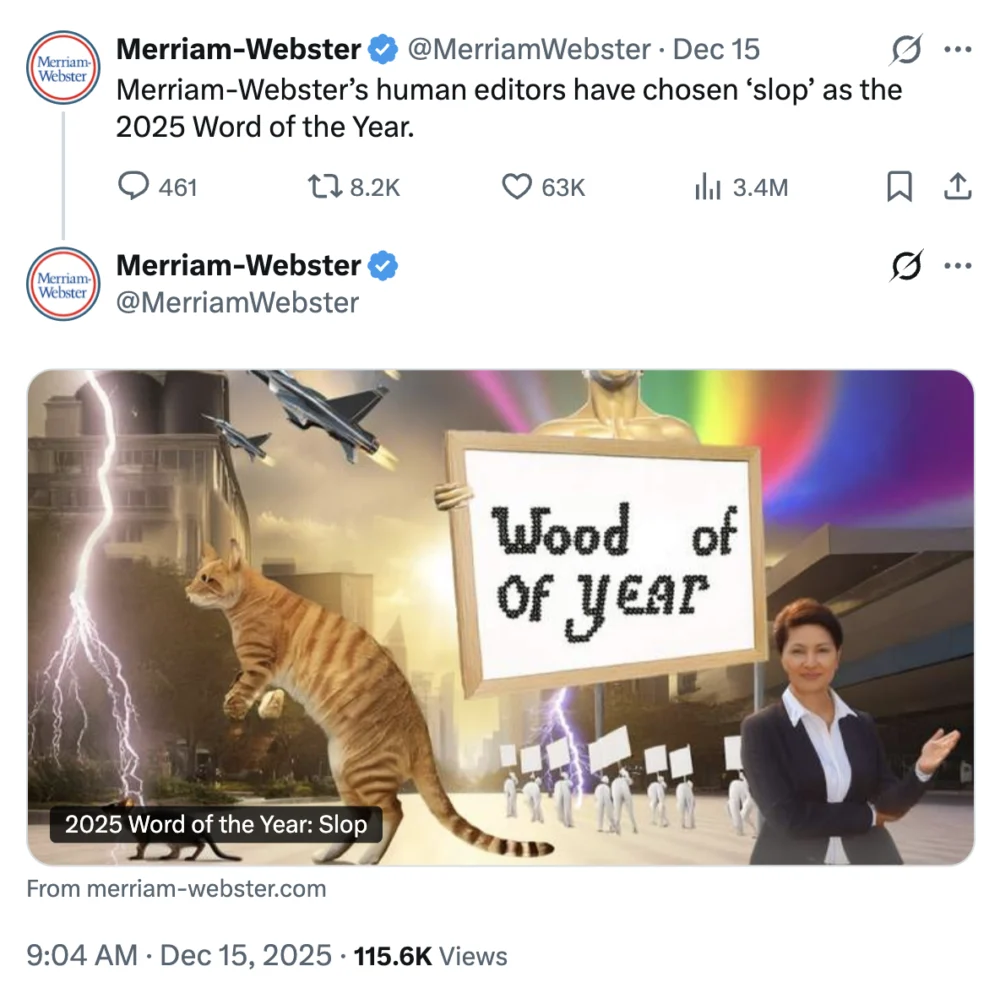
The pervasive question "Real or AI?" has become a constant companion in our digital lives, pushing us into a disorienting reality where the lines between authentically human-created content and sophisticated artificial intelligence-generated media are not merely blurred, but rapidly dissolving. This escalating ambiguity forces a critical re-evaluation: Do we still possess the means, or even the necessity, to distinguish between the two, or are we destined to accept a new, synthesized normal?
Artificial intelligence, with its unprecedented creative capabilities, has undeniably unlocked a universe of possibilities, revolutionizing industries from art to engineering. Yet, this transformative power casts a long shadow, introducing profound challenges that fundamentally reshape our perception of online content. From photorealistic AI-generated images, eerily authentic music compositions, and convincing videos flooding social media feeds, to the malicious proliferation of deepfakes and advanced bots perpetrating elaborate scams, AI’s omnipresent touch now extends to virtually every corner of the internet, making it increasingly difficult to discern the genuine from the artificial.
The sheer volume of AI-generated content has reached a critical mass, fundamentally altering the digital landscape. According to a groundbreaking study by Graphite, the amount of AI-made content dramatically surpassed human-created content in late 2024, a seismic shift largely attributed to the public launch of OpenAI’s ChatGPT in 2022. Further underscoring this trend, another comprehensive study by Ahrefs suggests an astounding figure: more than 74.2% of pages in its sample contained AI-generated content as of April 2025. As AI-generated content becomes progressively more sophisticated, often achieving a level of quality that is virtually indistinguishable from human-made work, humanity faces a pressing existential question as we step into 2026: How much can users truly identify what’s real in an increasingly synthetic digital world?
AI Content Fatigue Kicks In: Demand for Human-Made Content Is Rising
After an initial period of widespread excitement and wonder around AI’s seemingly "magic" capabilities, a noticeable shift is occurring across online communities. Users are increasingly experiencing what experts term "AI content fatigue"—a collective exhaustion stemming from the unrelenting pace of AI innovation and the subsequent deluge of often homogenous content. This fatigue isn’t just anecdotal; it’s a measurable sentiment. According to a Pew Research Center survey conducted in spring 2025, a median of 34% of adults globally expressed more concern than excitement about the increased use of AI, while a significant 42% reported being equally concerned and excited, indicating a widespread ambivalence toward AI’s burgeoning influence.

Adrian Ott, chief AI officer at EY Switzerland, articulates this sentiment vividly: “AI content fatigue has been cited in multiple studies as the novelty of AI-generated content is slowly wearing off, and in its current form, often feels predictable and available in abundance.” Ott draws a compelling parallel to the evolution of the food industry: “In some sense, AI content can be compared to processed food. When it first became possible, it flooded the market. But over time, people started going back to local, quality food where they know the origin.”
This analogy highlights a fundamental human preference for authenticity and provenance. Ott elaborated, suggesting a similar trajectory for digital content: “It might go in a similar direction with content. You can make the case that humans like to know who is behind the thoughts that they read, and a painting is not only judged by its quality but by the story behind the artist.” This burgeoning demand for authenticity could lead to the emergence of "human-crafted" labels as crucial trust signals in the online content sphere, mirroring the "organic" certifications that have become commonplace in the food industry. These labels would not merely signify human authorship but would serve as a beacon for originality, depth, and the unique spark of human creativity that AI, for all its prowess, often struggles to replicate.
Managing AI Content: Certifying Real Content Among Working Approaches
While many might confidently assert their ability to spot AI-generated text or images, the reality of detecting AI-created content is far more intricate and challenging. A September Pew Research study found that while a significant 76% of Americans believe it’s important to be able to identify AI content, a concerning minority, only 47%, are confident in their ability to accurately do so. This gap between perceived importance and actual capability underscores a critical vulnerability in our digital literacy.
The implications of this detection dilemma are profound. As EY’s Ott highlighted, the issue isn’t just about falling for fakes: “While some people fall for fake photos, videos or news, others might refuse to believe anything at all or conveniently dismiss real footage as ‘AI-generated’ when it doesn’t fit their narrative.” This phenomenon, often termed the "liar’s dividend," allows malicious actors to cast doubt on legitimate evidence, further eroding public trust and enabling the spread of misinformation.

Globally, regulators are beginning to lean towards mandatory labeling of AI content. However, Ott remains skeptical about the long-term effectiveness of such measures, noting that “there will always be ways around that.” He advocates for a more proactive, inverse approach: instead of endlessly chasing and trying to detect fakes after they’ve been created, the focus should shift to certifying real content at the moment of its capture. This "proof of origin" methodology would allow authenticity to be traced back to an actual event or creator, embedding trust from the very inception of the content.
Blockchain’s Role in Figuring Out the “Proof of Origin”
The urgency for a robust "proof of origin" system is echoed by innovators in the field. Jason Crawforth, founder and CEO at Swear, a startup specializing in video authentication software, asserts, “With synthetic media becoming harder to distinguish from real footage, relying on authentication after the fact is no longer effective.” He emphasizes that “protection will come from systems that embed trust into content from the start,” a philosophy central to Swear’s mission to ensure the trustworthiness of digital media from its creation using cutting-edge blockchain technology.
Swear’s groundbreaking authentication software employs a sophisticated blockchain-based fingerprinting approach. This method involves linking each piece of content—be it an image, video, or audio file—to an immutable blockchain ledger. This linkage establishes a verifiable "digital DNA" or "proof of origin" for the content, a cryptographic signature that cannot be altered or tampered with without immediate detection. Crawforth explains the power of this system: “Any modification, no matter how discreet, becomes identifiable by comparing the content to its blockchain-verified original in the Swear platform.”
The core innovation lies in blockchain’s inherent properties: decentralization, immutability, and transparency. Unlike centralized databases that can be compromised or altered by a single entity, a blockchain ledger is distributed across a network of computers, making it virtually impossible to falsify records. Each "fingerprint" is a cryptographic hash of the content, time-stamped and added to a chain of blocks, creating an unalterable historical record. This allows for an auditable trail that verifies the content’s integrity from its source.

This paradigm shift from reactive detection to proactive authentication is what makes solutions like Swear’s so compelling. Crawforth elaborates on its transformative impact: “Without built-in authenticity, all media, past and present, faces the risk of doubt […] Swear doesn’t ask, ‘Is this fake?’, it proves ‘This is real.’ That shift is what makes our solution both proactive and future-proof in the fight toward protecting the truth.” This revolutionary approach has garnered significant recognition, with Swear’s video-authentication software being named Time magazine’s Best Invention of 2025 in the Crypto and Blockchain category, a testament to its potential to redefine digital trust.
Currently, Swear’s technology is being deployed by digital creators and enterprise partners, primarily targeting visual and audio media captured by various devices, including bodycams and drones. While social media integration remains a long-term aspiration, Crawforth highlights their immediate strategic focus: “While social media integration is a long-term vision, our current focus is on the security and surveillance industry, where video integrity is mission-critical.” This application underscores the vital importance of verifiable authenticity in high-stakes environments, laying the groundwork for broader adoption.
2026 Outlook: Responsibility of Platforms and Inflection Points
As we firmly enter 2026, the digital landscape is defined by an intensifying concern among online users regarding the escalating volume of AI-generated content and their dwindling ability to confidently distinguish between synthetic and human-created media. This growing unease presents a critical juncture for online platforms and regulators alike.
While AI experts consistently emphasize the paramount importance of clearly labeling "real" content versus AI-created media, the speed with which online platforms will acknowledge and prioritize the need to foster trusted, human-made content remains an open, and somewhat troubling, question. The current economic models of many platforms often incentivize engagement and content volume, which AI can deliver cheaply and at scale, potentially creating a disincentive for rigorous authentication.

Adrian Ott underscores the fundamental responsibility: “Ultimately, it’s the responsibility of platform providers to give users tools to filter out AI content and surface high-quality material. If they don’t, people will leave.” He further laments the current power imbalance: “Right now, there’s not much individuals can do on their own to remove AI-generated content from their feeds—that control largely rests with the platforms.” The potential exodus of users seeking more authentic experiences could be the market force that finally compels platforms to act.
As the demand for tools that identify human-made media grows, it becomes increasingly important to recognize that the core issue is often not the AI content itself, but rather the underlying intentions behind its creation. Deepfakes and various forms of misinformation are not entirely new phenomena in human history, but AI has dramatically amplified their scale, sophistication, and speed of dissemination, making them exponentially more dangerous.
In 2025, with only a handful of startups like Swear actively focused on identifying authentic content, the issue had not yet escalated to a point where platforms, governments, or the general user base were taking urgent, coordinated action. Jason Crawforth of Swear believes humanity has yet to reach the critical inflection point where manipulated media causes visible, undeniable, and catastrophic harm: “Whether in legal cases, investigations, corporate governance, journalism, or public safety. Waiting for that moment would be a mistake; the groundwork for authenticity should be laid now.”
The cultural impact of this content deluge is already being felt. Dictionary publisher Merriam-Webster aptly named "slop" as its 2025 word of the year, a term that encapsulates the widespread concern over the low-quality, often unoriginal, and overwhelming volume of AI-generated content that has begun to define much of the internet. This linguistic marker serves as a stark warning: without robust mechanisms for proving authenticity, the digital world risks drowning in a sea of indistinguishable "slop," eroding trust, undermining truth, and ultimately diminishing the value of genuine human expression. The challenge for 2026 and beyond is not merely to detect the fake, but to proactively champion and certify the real, ensuring that the digital realm remains a space where truth can genuinely thrive.