anjir abdul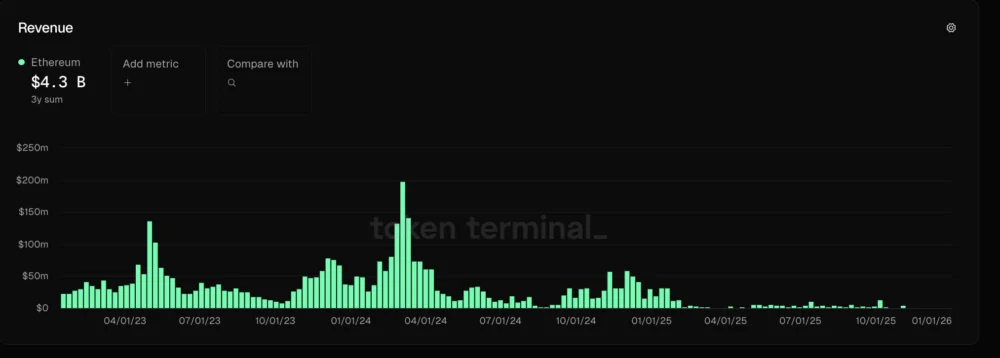
Linux, a testament to collaborative innovation, has profoundly impacted the technological landscape by providing a robust, flexible, and free operating system that underpins billions of devices worldwide, from servers and supercomputers to smartphones and embedded systems. Its success stems from its open-source nature, allowing developers globally to inspect, modify, and distribute its code, fostering an ecosystem of custom-tailored distributions (like Ubuntu, Fedora, and Debian) designed for diverse needs. This adaptability and community-driven evolution have allowed Linux to thrive without compromising its core tenets of decentralization and open access, providing immense value to individuals, enterprises, and even state governments.
Buterin posits that Ethereum mirrors this fundamental success. Like Linux, Ethereum is inherently open-source, with its entire codebase publicly auditable and modifiable. Where Linux achieves custom-tailored implementations through developers building bespoke modifications of its software and myriad distributions, Ethereum accomplishes this through its burgeoning ecosystem of layer-2 (L2) scaling networks. These L2 solutions, such as Optimistic Rollups and ZK-Rollups, function as specialized extensions built atop the main Ethereum blockchain (Layer-1), each offering distinct advantages in terms of speed, cost, and functionality for specific applications. This modular architecture allows Ethereum to maintain its core security and decentralization on L1 while offloading transaction execution to L2s, thereby enhancing scalability and user experience across a vast array of use cases.
Buterin’s vision for Ethereum’s Layer-1 is unequivocally clear: it must function as the "financial, and ultimately identity, social, and governance home for individuals and organizations who want a higher level of autonomy." This declaration emphasizes Ethereum L1’s critical role as a trust layer, a universal settlement layer where the highest guarantees of security and censorship resistance are upheld. It is here that digital assets are ultimately secured, identities are managed in a self-sovereign manner, and decentralized autonomous organizations (DAOs) can operate with uncompromised integrity. The objective is to grant users unfettered access to the full power of the network, liberating them from dependence on intermediaries that often introduce single points of failure, censorship risks, or extractive practices.

The long-term goals of the Ethereum Foundation align perfectly with this "operating system for the Internet" metaphor. Ethereum aims to facilitate distributed computation, enabling applications to run across a global network of computers rather than centralized servers. It seeks to redefine how value is transferred and risk is managed, moving beyond traditional financial systems to a more transparent, programmable, and permissionless framework. Crucially, it strives to establish a mechanism for reaching consensus on a global scale, providing a shared source of truth for digital interactions and transactions. This grand ambition extends beyond mere financial transactions, encompassing everything from digital identity and verifiable credentials to decentralized social networks and new forms of governance, all built on a foundation of cryptographic security and economic incentives.
At the time of writing, the Ethereum ecosystem boasts an impressive 127 layer-2 networks, as cataloged by L2Beat. This diverse array includes solutions tailored for various purposes, from high-throughput gaming platforms to cost-efficient DeFi protocols and enterprise blockchain applications. Each L2 represents a unique "flavor" of Ethereum, offering developers and users specialized environments that cater to their specific needs without sacrificing the underlying security and decentralization provided by the Ethereum L1. This rich optionality is a cornerstone of the modular scaling strategy, allowing for continuous experimentation and innovation.
However, the rapid proliferation of L2s has not been without its critics. Some argue that the sheer number of layer-2 networks creates a fragmented landscape, potentially competing with Ethereum L1 and, in some cases, "cannibalizing the base layer’s revenue." This concern gained particular traction following the Dencun upgrade in March 2024, which significantly reduced transaction fees on L2s by making data availability more efficient. While a boon for L2 users, this led to a noticeable plummet in Ethereum L1’s transaction fee revenue, which traditionally secures the network by incentivizing validators. Critics worry that sustained low L1 revenue could impact the economic security model of Ethereum, though proponents argue that L2s ultimately bring more users and activity to the broader ecosystem, eventually flowing back to L1 in other ways.
Despite these concerns, proponents of Ethereum’s scaling approach firmly believe that the diverse L2 ecosystem is a net positive, offering users unparalleled optionality and a superior user experience. Anurag Arjun, co-founder of Polygon, a prominent Ethereum L2, articulated the "under-appreciated beauty" of this rollup-centric roadmap architecture. He highlighted how it empowers multiple teams to "experiment with different execution environments and different block times." This freedom to innovate allows for specialized L2s that can optimize for specific trade-offs—be it transaction finality, data privacy, or computational intensity—thereby fostering a vibrant and competitive market for decentralized applications. This modularity ensures that Ethereum can adapt and scale to meet the demands of a global user base across an ever-expanding range of applications, much like how Linux can be tailored for embedded systems, high-performance computing, or desktop use.

Nevertheless, Arjun also raised a crucial challenge: the potential for "greater ecosystem fragmentation" if a torrent of high-throughput chains emerges "without true blockchain interoperability." This fragmentation could trap user liquidity within isolated pools, leading to a "worse experience" as users struggle to move assets and data seamlessly between different L2s and L1. Addressing this concern is paramount for the long-term success of Ethereum’s modular vision. Efforts are underway to develop robust interoperability solutions, including standardized bridging protocols, shared sequencing layers, and intent-based architectures, all aimed at creating a cohesive, interconnected "Internet of Value" rather than a collection of isolated digital islands.
The "Open Internet of Value" envisioned by Buterin and the Ethereum community represents a paradigm shift beyond traditional finance. It encompasses the ability to transfer not just money, but also digital assets like NFTs, data, and even voting rights, in a permissionless and trustless manner. This ecosystem supports the growth of Decentralized Finance (DeFi), offering alternatives to conventional banking and financial services; fosters self-sovereign identity, giving individuals control over their digital presence; and enables decentralized governance models through DAOs. Ultimately, this vision speaks to a future where individuals and organizations can interact, transact, and innovate with a higher degree of autonomy and security, free from the constraints and gatekeepers of the legacy internet. Just as Linux empowered developers and users with freedom and flexibility, Ethereum aims to do the same for the digital economy, fostering an open, inclusive, and truly decentralized future.