Imroatul Nasiyah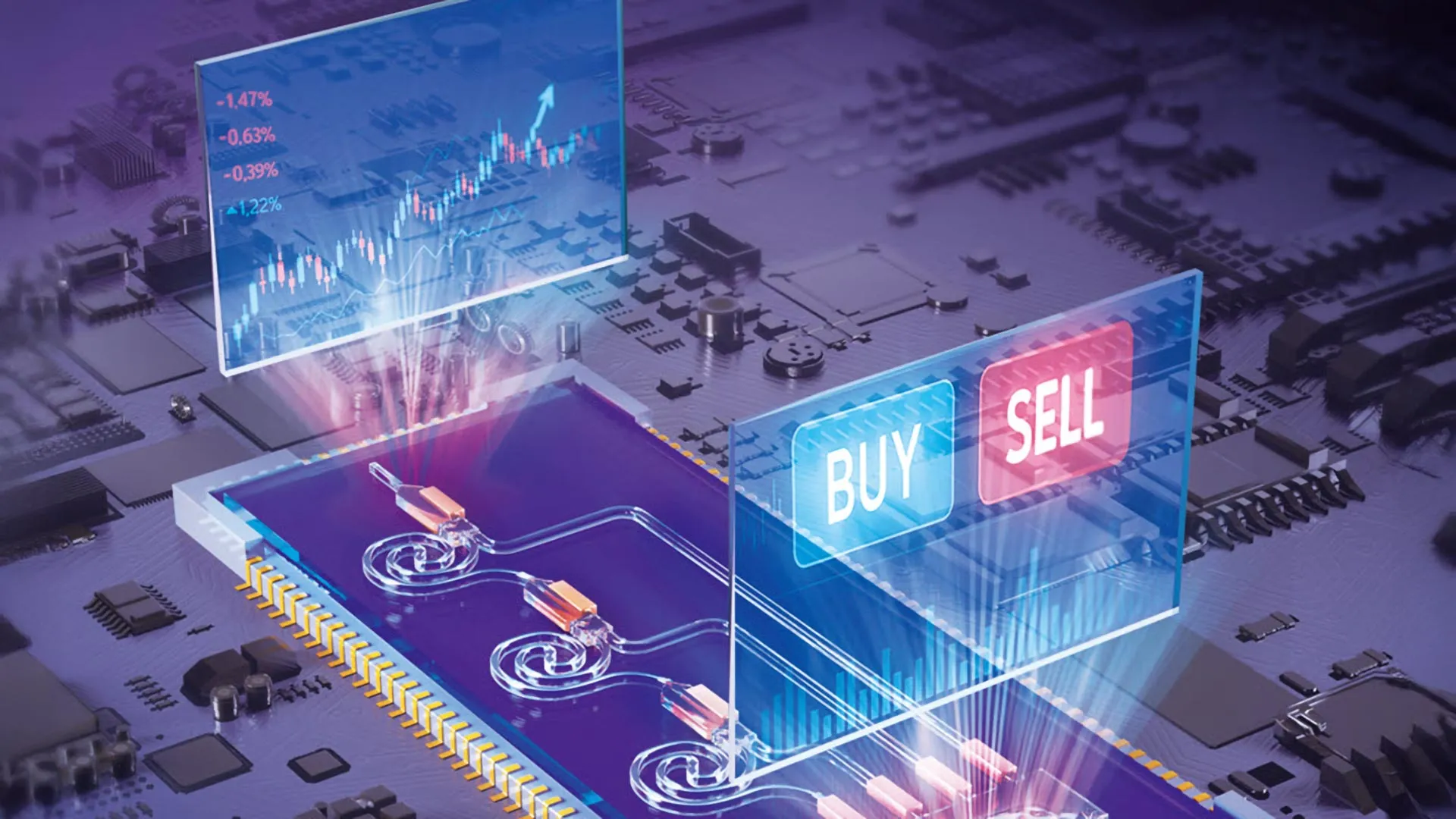
Turning to Light for Faster Computing: A Paradigm Shift
In the face of these electronic limitations, researchers are increasingly turning their gaze to a more fundamental and potent force: light. Optical computing, a revolutionary approach that harnesses the unique properties of light rather than electricity to perform complex calculations, offers a compelling pathway to dramatically boost both the speed and efficiency of computation. Among the most promising avenues within optical computing is the utilization of optical diffraction operators. These are essentially thin, plate-like structures engineered with intricate patterns that perform specific mathematical operations as light propagates through them. The inherent parallelism of light allows these systems to process many signals simultaneously, a feat that is incredibly energy-intensive for electronic counterparts. Furthermore, optical diffraction operators can achieve these complex computations with remarkably low energy consumption. However, a persistent and significant challenge has been the difficulty in maintaining the stable, coherent light required for these precise optical computations at speeds exceeding 10 gigahertz (GHz). Fluctuations in the light’s phase or intensity can easily disrupt the delicate calculations, rendering the system unreliable at high frequencies.
To surmount this formidable hurdle, a dedicated team of researchers, spearheaded by Professor Hongwei Chen at Tsinghua University in China, has engineered a groundbreaking device. This innovative system, christened the Optical Feature Extraction Engine, or OFE2, represents a significant leap forward in optical computing. Their pioneering work, meticulously detailed in a recent publication in the esteemed journal Advanced Photonics Nexus, unveils a novel methodology for executing high-speed optical feature extraction. This breakthrough is not confined to theoretical exploration; it is demonstrably suitable for a diverse array of real-world applications, promising to unlock new capabilities across multiple industries.
How OFE2 Prepares and Processes Data: Precision Engineering at the Nanoscale
A cornerstone of the OFE2‘s remarkable performance lies in its exceptionally innovative data preparation module. One of the most persistent and challenging problems in the field of optical computing has been the reliable supply of fast, parallel optical signals to the core optical processing components without introducing detrimental phase instability. Traditional fiber-based systems, which are often employed to split and delay light signals, are notoriously prone to introducing unwanted phase fluctuations. These subtle but critical variations can easily corrupt the integrity of the optical computations. The Tsinghua team, through their ingenious design, has effectively circumvented this limitation. They have developed a fully integrated on-chip system that incorporates precisely adjustable power splitters and meticulously controlled delay lines. This integrated approach ensures that the light signals are handled with exceptional precision from their inception.
This sophisticated setup masterfully converts serial data – data processed one piece at a time – into multiple synchronized optical channels. This parallelization is crucial for achieving high throughput. Furthermore, the inclusion of an integrated phase array within the OFE2 system adds another layer of flexibility and power. This phase array acts as a dynamic controller, allowing the device to be easily reconfigured on the fly for different computational tasks. This adaptability is a critical advantage, enabling OFE2 to be a versatile tool rather than a specialized, single-purpose device.
Once the data has been meticulously prepared and synchronized, the optical signals are directed through the core of the OFE2: the diffraction operator. This is where the magic of feature extraction truly unfolds. The process is analogous to a highly efficient matrix-vector multiplication, a fundamental operation in many computational algorithms. In the OFE2, light waves interact with the precisely engineered patterns of the diffraction operator. This interaction results in the formation of focused "bright spots" at specific output points on a detector array. The brilliance of this approach lies in the ability to manipulate these bright spots. By delicately fine-tuning the phase of the input light signals, the researchers can precisely direct these focused spots toward chosen output ports. This sophisticated control mechanism allows OFE2 to effectively "capture" and isolate subtle variations and patterns within the input data over time, thereby performing high-level feature extraction with unprecedented speed and accuracy.
Record-Breaking Optical Performance: A New Benchmark in Speed and Efficiency
The performance metrics achieved by the OFE2 are nothing short of astonishing, setting a new benchmark for optical computing. The device operates at an impressive frequency of 12.5 GHz, a significant increase over the 10 GHz threshold that has long been a barrier. This elevated operating speed translates into a remarkably short time for completing a single matrix-vector multiplication: a mere 250.5 picoseconds. This represents the fastest known result for this specific type of optical computation, showcasing the immense potential of the OFE2 architecture. Professor Chen expressed his team’s strong conviction: "We firmly believe this work provides a significant benchmark for advancing integrated optical diffraction computing to exceed a 10 GHz rate in real-world applications." This statement underscores the transformative impact of their research.
The research team rigorously tested the OFE2 across a spectrum of demanding domains to validate its capabilities. In the realm of image processing, the device demonstrated exceptional proficiency. It successfully extracted intricate edge features from visual data, generating paired "relief and engraving" maps. These maps, by highlighting subtle details and contours, significantly improved the accuracy of image classification tasks. For instance, in the critical field of medical imaging, OFE2 enhanced the identification of organs in CT scans, leading to more precise diagnoses. A key finding in these image processing experiments was that systems incorporating OFE2 required substantially fewer electronic parameters compared to conventional AI models. This observation strongly suggests that optical preprocessing, as facilitated by OFE2, can lead to the development of hybrid AI networks that are both faster and more resource-efficient.
The application of OFE2 extended beyond image analysis to the fast-paced world of digital trading. Here, the device was employed to process live market data in real time, generating profitable buy and sell actions. After undergoing training with optimized trading strategies, OFE2 was capable of converting incoming price signals directly into trading decisions, consistently achieving profitable outcomes. The critical advantage in this domain is the inherent speed of optical computation. Because these calculations occur at the speed of light, traders equipped with OFE2-powered systems could react to fleeting market opportunities with virtually no perceptible delay, a crucial factor in high-frequency trading environments where milliseconds can mean the difference between profit and loss.
Lighting the Way Toward the Future of AI: A New Era of Intelligent Systems
Collectively, the achievements demonstrated by the OFE2 signal a profound and transformative shift in the landscape of computing. By strategically migrating the most computationally intensive and power-hungry aspects of AI processing from traditional, energy-demanding electronic chips to the lightning-fast and remarkably efficient photonic systems, technologies like OFE2 are poised to usher in a new era. This era will be characterized by AI systems that operate in real time, respond instantaneously to complex stimuli, and do so with significantly reduced energy footprints. Professor Chen elaborated on this vision: "The advancements presented in our study push integrated diffraction operators to a higher rate, providing support for compute-intensive services in areas such as image recognition, assisted healthcare, and digital finance. We look forward to collaborating with partners who have data-intensive computational needs." This forward-looking statement not only highlights the immediate impact of their research but also extends an open invitation for collaboration, underscoring the broad applicability and future potential of this revolutionary optical computing technology. The implications are far-reaching, promising to accelerate innovation across a multitude of sectors and redefine the boundaries of what is possible with artificial intelligence.