Imroatul Nasiyah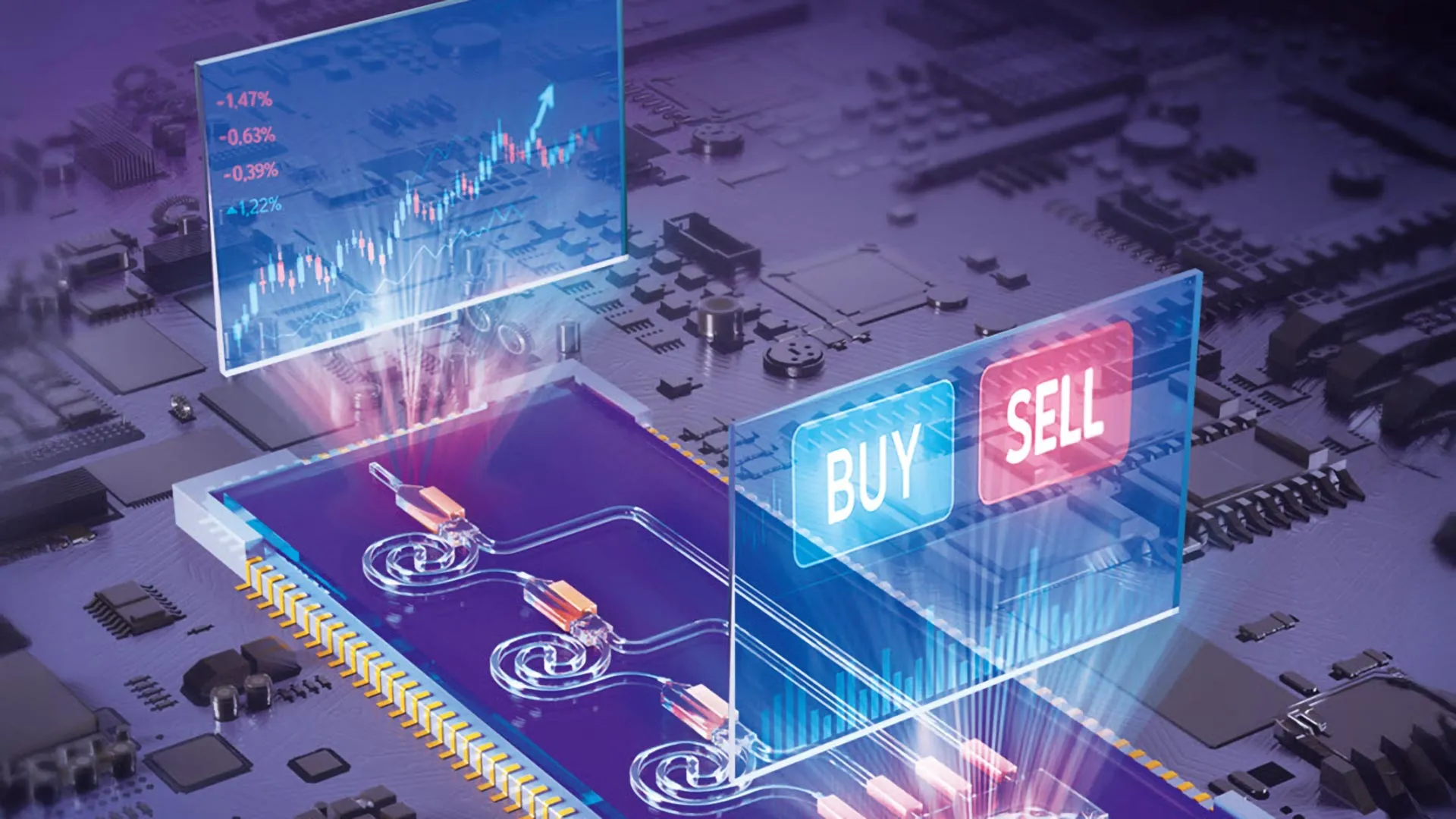
Turning to Light for Faster Computing: A Paradigm Shift in Processing
In the face of these electronic limitations, researchers are actively exploring novel avenues, with light emerging as a particularly promising solution. Optical computing, a revolutionary approach that leverages the inherent speed and parallelism of light instead of electricity to perform complex calculations, offers a transformative pathway to dramatically boost both computational speed and energy efficiency. Among the most compelling strategies within optical computing are optical diffraction operators. These sophisticated, thin, plate-like structures are ingeniously designed to execute mathematical operations as light propagates through them. The inherent advantage of these systems lies in their ability to process a multitude of signals concurrently, all while consuming significantly less energy compared to their electronic counterparts. Despite this immense potential, a persistent and formidable challenge has been the maintenance of stable, coherent light – a prerequisite for accurate and reliable optical computations – at speeds exceeding 10 gigahertz (GHz). Achieving this level of stability at such high frequencies has proven exceptionally difficult, representing a significant bottleneck in the advancement of practical optical computing.
To surmount this critical hurdle, a pioneering team, spearheaded by the esteemed Professor Hongwei Chen at Tsinghua University in China, has engineered a groundbreaking device. This innovative system, christened the Optical Feature Extraction Engine, or OFE2, represents a significant leap forward. Their meticulously documented research, recently published in the prestigious journal Advanced Photonics Nexus, details a novel methodology for executing high-speed optical feature extraction. This advancement is not confined to theoretical exploration; it is demonstrably suitable for a diverse array of real-world applications, promising to redefine the capabilities of AI systems across multiple sectors. The development of OFE2 signifies a pivotal moment in the quest for faster, more efficient AI computation, moving beyond theoretical possibilities to tangible, high-performance solutions.
How OFE2 Prepares and Processes Data: An Integrated Approach to Optical Precision
A cornerstone of the OFE2‘s remarkable performance is its innovatively designed data preparation module. A persistent and notoriously difficult problem in the field of optical computing has been the challenge of supplying fast, parallel optical signals to the core optical processing components without compromising their phase stability. Traditional fiber-based systems, often employed for signal splitting and delay, are prone to introducing unwanted phase fluctuations. These subtle but critical variations can corrupt the delicate phase relationships necessary for accurate optical computations, leading to erroneous results. The Tsinghua team has ingeniously circumvented this pervasive issue by developing a fully integrated, on-chip system. This sophisticated architecture incorporates precisely engineered adjustable power splitters and remarkably accurate delay lines. This integrated design ensures that the delicate phase relationships of the light signals are meticulously preserved throughout the preparation stage.
The system’s ingenious design allows for the efficient conversion of serial data – data that is processed one bit after another – into multiple synchronized optical channels. This parallelization is fundamental to achieving high throughput. Furthermore, the integration of a phase array within OFE2 provides an unprecedented level of configurability. This allows the entire system to be easily and rapidly reconfigured to accommodate different computational tasks and to adapt to varying data characteristics, enhancing its versatility and applicability across a wide spectrum of AI problems.
Once the optical signals have been meticulously prepared and synchronized, they are directed to pass through a sophisticated diffraction operator. This operator is the heart of the feature extraction process. The underlying principle of its operation is elegantly analogous to a matrix-vector multiplication, a fundamental operation in linear algebra that is widely used in AI algorithms. In this optical context, light waves interact in a precisely controlled manner, culminating in the formation of focused "bright spots" at specific output points. The intensity and location of these bright spots are directly determined by the characteristics of the input light signals. Crucially, by precisely fine-tuning the phase of the input light – a feat made possible by the integrated phase array – these bright spots can be dynamically directed towards chosen output ports. This exquisite control enables OFE2 to effectively capture and isolate subtle variations and intricate patterns within the input data over time, a critical capability for sophisticated feature extraction.
Record-Breaking Optical Performance: Demonstrating Real-World Impact
The performance metrics achieved by OFE2 are nothing short of extraordinary, establishing new benchmarks in the field of optical computing. The processor operates at an impressive clock speed of 12.5 GHz, a significant leap beyond the 10 GHz threshold that has historically posed a formidable challenge. This remarkable speed translates into an astonishing processing capability: OFE2 can execute a single matrix-vector multiplication – a fundamental computational step in many AI tasks – in a mere 250.5 picoseconds. This represents the fastest known result for this specific type of optical computation, underscoring the profound impact of the Tsinghua team’s innovations. Professor Chen expressed his confidence in the research, stating, "We firmly believe this work provides a significant benchmark for advancing integrated optical diffraction computing to exceed a 10 GHz rate in real-world applications."
The research team rigorously tested the OFE2 across a diverse range of application domains to validate its real-world utility and performance. In the realm of image processing, the device demonstrated exceptional capability by successfully extracting edge features from complex visual data. This process generated paired "relief and engraving" maps, which significantly enhanced image classification accuracy. For instance, in medical imaging, this optical preprocessing led to improved accuracy in identifying critical anatomical structures within CT scans. A key finding was that systems utilizing OFE2 for optical preprocessing required substantially fewer electronic parameters compared to conventional AI models. This clearly illustrates that optical preprocessing can effectively streamline hybrid AI networks, making them both faster and more computationally efficient.
The application of OFE2 extended to the demanding domain of digital trading, where its speed and precision proved invaluable. The processor was tasked with analyzing live market data in real time, generating profitable buy and sell actions. Following training with optimized trading strategies, OFE2 was able to directly convert incoming price signals into trading decisions. This near-instantaneous processing of market fluctuations allowed for rapid execution of trades, resulting in consistent and demonstrable returns. The critical advantage here lies in the fact that these complex calculations occur at the speed of light, enabling traders to capitalize on fleeting market opportunities with virtually no perceptible delay, a crucial edge in high-frequency trading environments.
Lighting the Way Toward the Future of AI: A New Era of Intelligent Computation
Collectively, these groundbreaking achievements herald a profound and transformative shift in the landscape of computing. By migrating the most computationally intensive and power-hungry aspects of AI processing from energy-guzzling electronic chips to the extraordinarily fast and energy-efficient realm of photonic systems, technologies like OFE2 are poised to usher in a new era of AI. This era will be characterized by real-time decision-making, significantly reduced energy consumption, and unprecedented levels of computational power. Professor Chen eloquently summarized the broader implications of their work: "The advancements presented in our study push integrated diffraction operators to a higher rate, providing support for compute-intensive services in areas such as image recognition, assisted healthcare, and digital finance. We look forward to collaborating with partners who have data-intensive computational needs." This invitation for collaboration underscores the team’s vision for OFE2 as a foundational technology for future AI development, paving the way for a more intelligent and efficient future. The development of OFE2 represents not just an incremental improvement, but a fundamental reimagining of how AI systems can be built and deployed, unlocking new possibilities across science, industry, and finance.