Imroatul Nasiyah
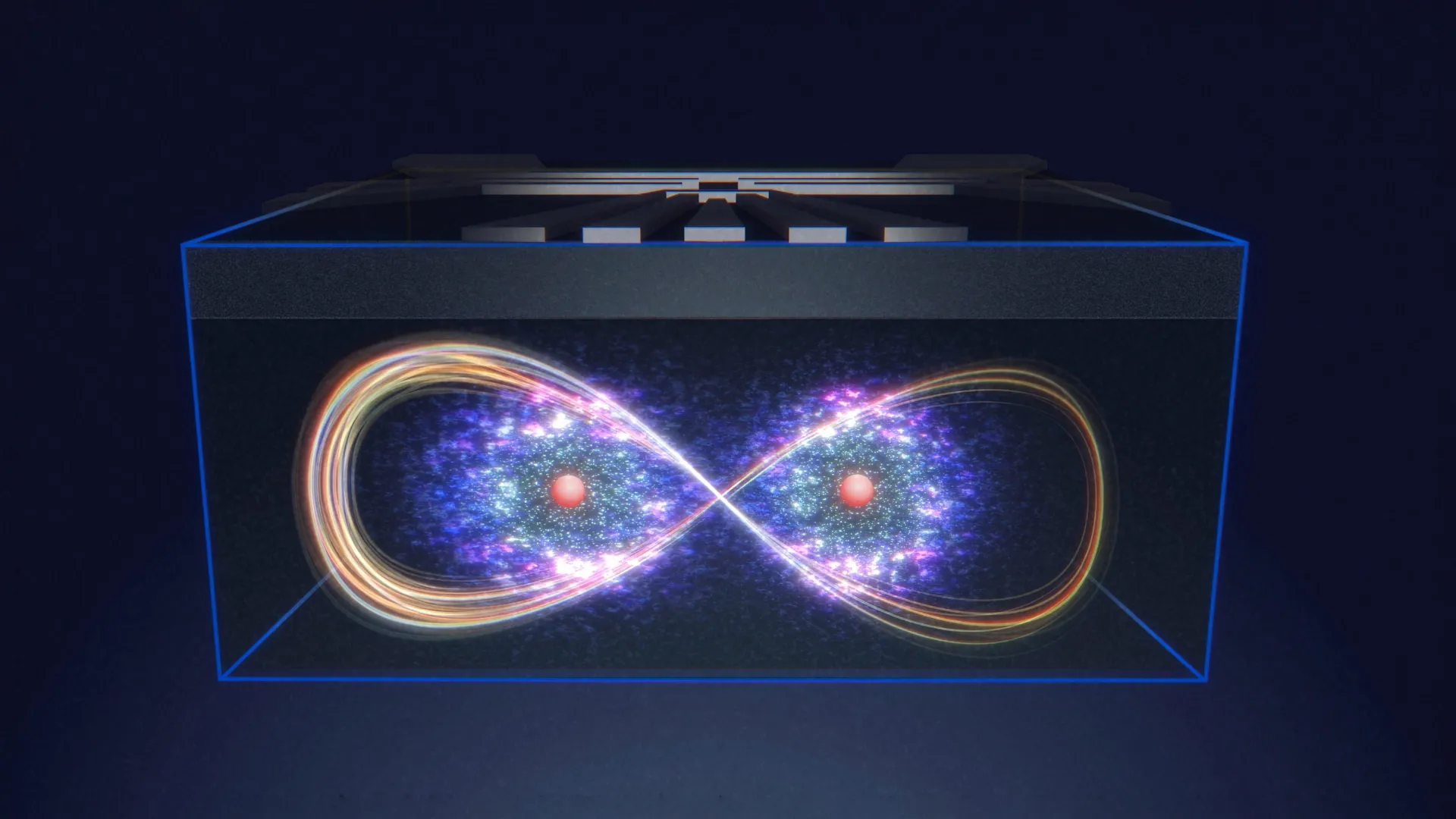
At the heart of this revolutionary finding lies the fundamental difference between how traditional electronics and this new proposed system operate. Conventional computing relies on the movement of charged electrons through circuits. While effective, this process is inherently inefficient, as electrons encounter resistance and dissipate a significant portion of their energy as heat. This heat generation not only limits processing speeds but also necessitates robust cooling systems, adding to both cost and energy expenditure. In stark contrast, the University of Delaware team’s research focuses on magnons, which transmit information not through the flow of charge, but through the synchronized "spin" of electrons. These spins, acting in concert, create wave-like patterns that propagate through solid materials. The researchers’ theoretical models, a testament to their deep understanding of quantum materials, reveal a remarkable phenomenon: when these magnetic waves traverse antiferromagnetic materials, they possess the ability to induce electric polarization. This induced polarization, in essence, translates into a measurable voltage, effectively bridging the gap between the magnetic and electrical realms.
The potential for ultrafast and energy-efficient computing stems from the remarkable properties of these magnons in antiferromagnetic materials. Antiferromagnetic magnons exhibit an astonishing speed, capable of oscillating at terahertz frequencies. To put this into perspective, this speed is approximately a thousand times faster than the magnetic waves typically observed in conventional magnetic materials. This extraordinary velocity opens up a compelling pathway towards the development of computing systems that can process information at speeds previously confined to theoretical discussions. Furthermore, the energy efficiency of magnon-based information transfer is a critical advantage. By leveraging spin dynamics rather than charge flow, the energy losses associated with heat dissipation are significantly minimized, leading to devices that consume a fraction of the power required by their silicon-based counterparts. This has far-reaching implications not only for high-performance computing but also for mobile devices, the Internet of Things, and any application where energy conservation is paramount.
The research team, affiliated with the University of Delaware’s Center for Hybrid, Active and Responsive Materials (CHARM), a distinguished National Science Foundation-funded Materials Research Science and Engineering Center, is actively pursuing experimental verification of their theoretical predictions. Their current efforts are focused on meticulously testing these novel concepts in laboratory settings. Beyond mere confirmation, they are also exploring the intricate interactions between magnons and light. This avenue of research holds the promise of even more sophisticated and efficient methods for controlling magnonic signals, potentially leading to optical-electromagnetic hybrid computing architectures. The ability to manipulate these magnetic waves with light could unlock new paradigms in data manipulation and processing, further accelerating the journey towards ultrafast, low-power computing.
This pioneering work is intricately woven into CHARM’s broader, ambitious mission: the development of hybrid quantum materials designed to power cutting-edge technologies. CHARM’s research philosophy centers on the synergistic integration of diverse material types – encompassing magnetic, electronic, and quantum systems. By understanding and manipulating the complex interplay between these different domains, researchers at CHARM aim to engineer "smart materials." These intelligent materials will possess the unique capability to dynamically respond to their surrounding environments, paving the way for transformative breakthroughs across a spectrum of critical fields, including computing, energy generation and storage, and advanced communication systems. The discovery of magnon-induced electric signals is a significant stride towards realizing this vision, demonstrating a tangible path towards creating materials that can inherently perform complex functions by harnessing fundamental physical phenomena.
The collaborative nature of this research is highlighted by the list of co-authors, underscoring the interdisciplinary expertise brought to bear on this complex problem. The study’s principal contributors include Federico Garcia-Gaitan, Yafei Ren, M. Benjamin Jungfleisch, John Q. Xiao, Branislav K. Nikolic, Joshua Zide, and Garnett W. Bryant from NIST/University of Maryland. This breadth of scientific talent, spanning theoretical physics, materials science, and experimental engineering, is a testament to the multifaceted challenges inherent in pushing the boundaries of condensed matter physics and its applications. The financial support provided by the National Science Foundation under award DMR-2011824 was instrumental in enabling this groundbreaking research, underscoring the critical role of foundational scientific funding in driving technological innovation.
The implications of this discovery extend far beyond theoretical advancements. The practical realization of magnon-based computing could lead to a paradigm shift in how we interact with technology. Imagine smartphones that last for weeks on a single charge, supercomputers that occupy a fraction of the space and consume a minuscule amount of energy, and artificial intelligence systems capable of processing vast datasets in real-time without the current thermal constraints. The development of terahertz-frequency magnons also opens up possibilities for novel sensing technologies, high-frequency communication systems, and advanced magnetic imaging techniques. The ability to generate and control electric signals from magnetic waves could revolutionize data storage, potentially leading to denser and more energy-efficient memory solutions. Furthermore, the synergy between magnons and light, as explored by the research team, hints at the development of opto-magnetic devices, which could bridge the gap between optical and electronic computing, offering unprecedented processing power and flexibility.
The journey from theoretical discovery to practical application is often a long and arduous one, but the University of Delaware engineers have laid a crucial foundation. Their work represents a significant leap forward in our understanding of fundamental physical phenomena and their potential to revolutionize technology. As they move forward with experimental validation and further exploration of magnon-light interactions, the prospect of ultrafast, energy-efficient computing powered by the elegant dance of magnetism and electricity moves closer to reality, promising to reshape the technological landscape for generations to come. This breakthrough is not merely an incremental improvement; it is a fundamental re-imagining of how we can harness the forces of nature to build the technologies of the future, making them faster, smarter, and more sustainable. The convergence of magnetic and electric phenomena, once largely separate domains in computing, now appears poised for a unified and powerful integration, all thanks to the insightful work emerging from the University of Delaware.