Faris Adani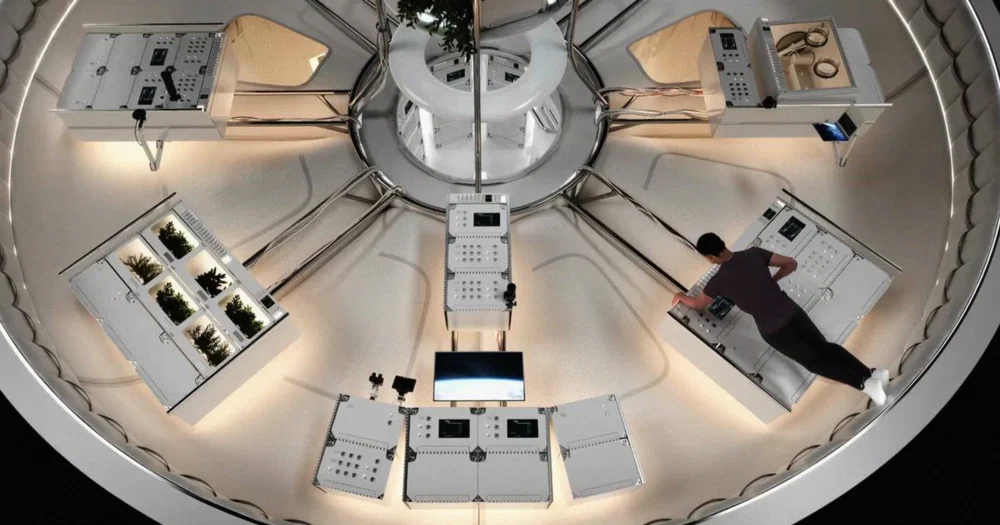
In a bold leap forward for humanity’s presence beyond Earth, a fledgling space startup named Max Space has unveiled audacious plans for its Thunderbird Station, an inflatable orbital habitat designed to blossom to a colossal size from a single launch, promising a future of unprecedented spaciousness and versatility in low Earth orbit. This revolutionary approach stands in stark contrast to the laborious, segment-by-segment construction that characterized the iconic International Space Station (ISS), offering a tantalizing glimpse into a more efficient, economically viable, and ultimately more expansive era of space habitation.
For decades, the ISS represented the pinnacle of international collaboration and engineering prowess, a sprawling orbital complex painstakingly assembled over years through dozens of complex rocket launches and hundreds of hours of dangerous spacewalks. Each module, constrained by the payload fairing dimensions of its launch vehicle, offered limited internal volume, resulting in a somewhat cramped, albeit functional, living and working environment for astronauts. The logistical and financial demands of this traditional assembly model have long been a significant barrier to expanding humanity’s footprint in space, making the concept of an "inflatable" habitat, which maximizes internal volume from a compact launch package, a game-changer.
Max Space’s Thunderbird Station epitomizes this radical paradigm shift. Designed to launch compactly aboard a single SpaceX Falcon 9 rocket – a workhorse of commercial spaceflight – the habitat is engineered to unfurl and inflate once in orbit, expanding to a staggering 12,300 cubic feet (approximately 348 cubic meters). To put this into perspective, this single module would provide roughly one-third of the total habitable volume of the entire International Space Station, a facility that required more than 40 assembly flights over a decade. Such volumetric efficiency is not merely a convenience; it’s a fundamental economic advantage, drastically reducing launch costs and accelerating deployment timelines, thereby making sustained human presence in space far more accessible.
The company is targeting an ambitious launch date of 2029 for the Thunderbird Station, a timeline that aligns critically with the impending retirement of the ISS, currently slated for 2030. NASA has openly acknowledged the need for commercial successors to ensure a continuous human presence in low Earth orbit for scientific research, technological development, and potential future commercial ventures. The agency’s Commercial Low Earth Orbit Destinations (CLD) program specifically calls upon private industry to develop these next-generation space stations, and Max Space, with its innovative design, is poised to answer that call.
Saleem Miyan, CEO of Max Space, articulated the strategic timing of their announcement, stating, "It was pretty clear that was an opportunity for us to put a proposal forward to show how these modules can really be used for human habitation. That CLD proposal gave us an incentive to strategically look at how we would bring forward the roadmap, and so that’s exactly what we’ve done." This initiative underscores a significant shift in space exploration, moving from purely government-funded mega-projects to a more agile, commercially driven model, where efficiency and innovation are paramount.
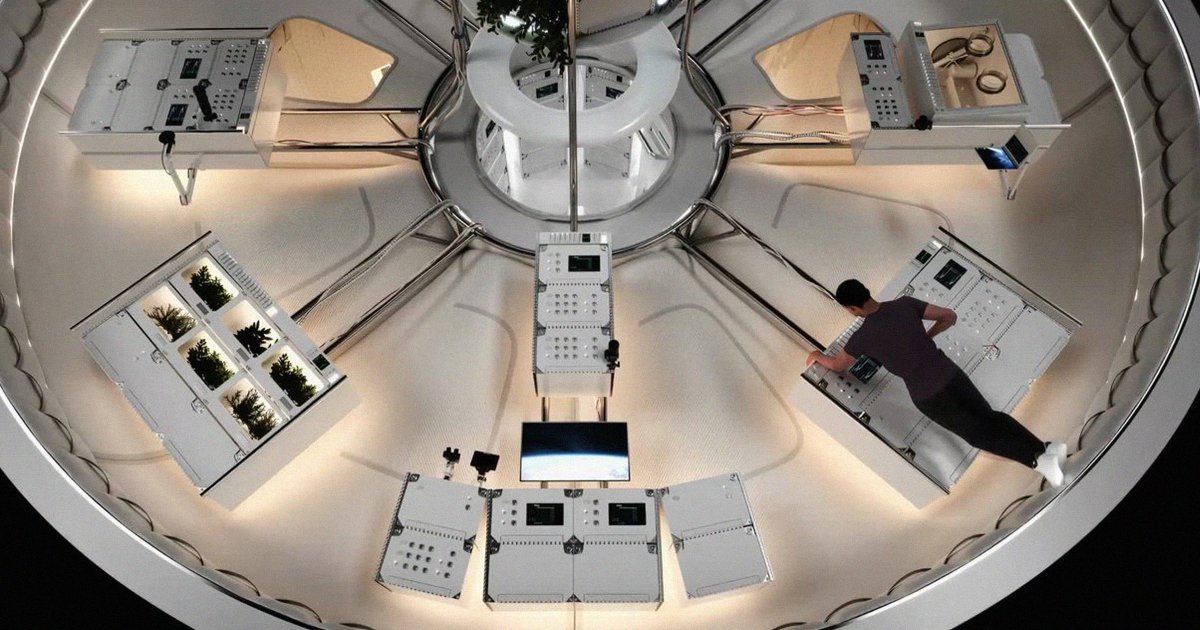
Beyond its impressive volume, the Thunderbird Station concept promises a significantly enhanced quality of life for its occupants. The design incorporates large, domed windows, offering astronauts breathtaking panoramic views of Earth and the cosmos – a stark departure from the small portholes common in existing modules. Inside, "huge screens for live Earth and space views" are envisioned to double as integrated entertainment and communication hubs, providing a sense of connection and comfort in the vastness of space. Crucially, the station features individual pods designed to afford astronauts much-needed privacy, a commodity often scarce in current orbital habitats. Furthermore, the interior layout is described as reconfigurable, allowing crews to "adapt and create working and living areas inside the space station that are fit for purpose – even during a mission," offering unparalleled flexibility for diverse research, manufacturing, or even tourism objectives.
However, the path from concept to orbital reality for inflatable habitats is paved with significant engineering challenges and a history of both promise and setbacks. The core technology relies on advanced, multi-layered flexible materials designed to withstand the harsh vacuum, extreme temperature fluctuations, and relentless radiation of space, all while maintaining internal pressure. Radiation shielding, often achieved through dense materials or water, is particularly critical for long-duration missions. A primary concern for any inflatable structure in orbit is the threat posed by micrometeoroids and orbital debris (MMOD). Space is an increasingly crowded environment, with millions of pieces of defunct satellites and rocket stages hurtling around Earth at incredible speeds. A collision, even with a tiny particle, could compromise the habitat’s integrity.
Max Space will need to demonstrate robust MMOD protection, likely involving multiple layers of protective fabric acting as "whipple shields" to dissipate impact energy, combined with advanced self-sealing technologies. The recent incident where China’s Tiangong space station required astronauts to install additional debris protection panels after one of its docked spacecraft sustained damage serves as a potent reminder of this ever-present danger. The company plans to launch a scaled-down prototype no sooner than early 2027 via a SpaceX rideshare mission, a crucial step to validate its material science, inflation mechanisms, and structural resilience in the unforgiving orbital environment.
Max Space is not alone in pursuing inflatable habitat technology. The concept gained significant traction with Bigelow Aerospace, which successfully launched and deployed its Bigelow Expandable Activity Module (BEAM) on the ISS in 2016. BEAM has since proven the viability and durability of inflatable structures in space, enduring years of orbital operation. However, Bigelow Aerospace ultimately ceased operations, highlighting the immense financial and logistical hurdles inherent in commercial space ventures. More recently, Sierra Space, a prominent competitor, has been developing its Large Integrated Flexible Environment (LIFE) habitat. While the LIFE project has seen success in ground testing, a full-scale prototype unfortunately exploded under pressure during a test in 2022, underscoring the complexities and the high stakes involved in pushing the boundaries of aerospace engineering. Max Space will undoubtedly draw lessons from both the successes and failures of its predecessors and contemporaries.
Despite the inherent difficulties, the potential benefits of inflatable habitats are too significant to ignore. Saleem Miyan’s vision extends far beyond Earth’s immediate vicinity. He sees the Thunderbird Station as a foundational technology that could be adapted for lunar and even Martian missions. For deep-space exploration, where every kilogram of mass and cubic centimeter of stowed volume is critically important, inflatable habitats offer an unparalleled advantage, enabling larger, more comfortable, and psychologically healthier living spaces for astronauts embarking on arduous journeys to other celestial bodies or for establishing permanent bases on the Moon and Mars.
The emergence of Max Space and its Thunderbird Station represents a pivotal moment in space exploration. It signifies a collective ambition to move beyond the limitations of past designs and embrace innovative solutions for sustainable human expansion into the cosmos. While formidable engineering, financial, and operational challenges lie ahead, the promise of a future where space stations can unfurl like magnificent flowers from a single capsule, offering vast, reconfigurable interiors and stunning views, paints an incredibly exciting picture. This isn’t just about building another space station; it’s about fundamentally altering how humanity lives and works off-world, ushering in an era of more accessible, more comfortable, and ultimately more inspiring commercial space endeavors.