anjir abdul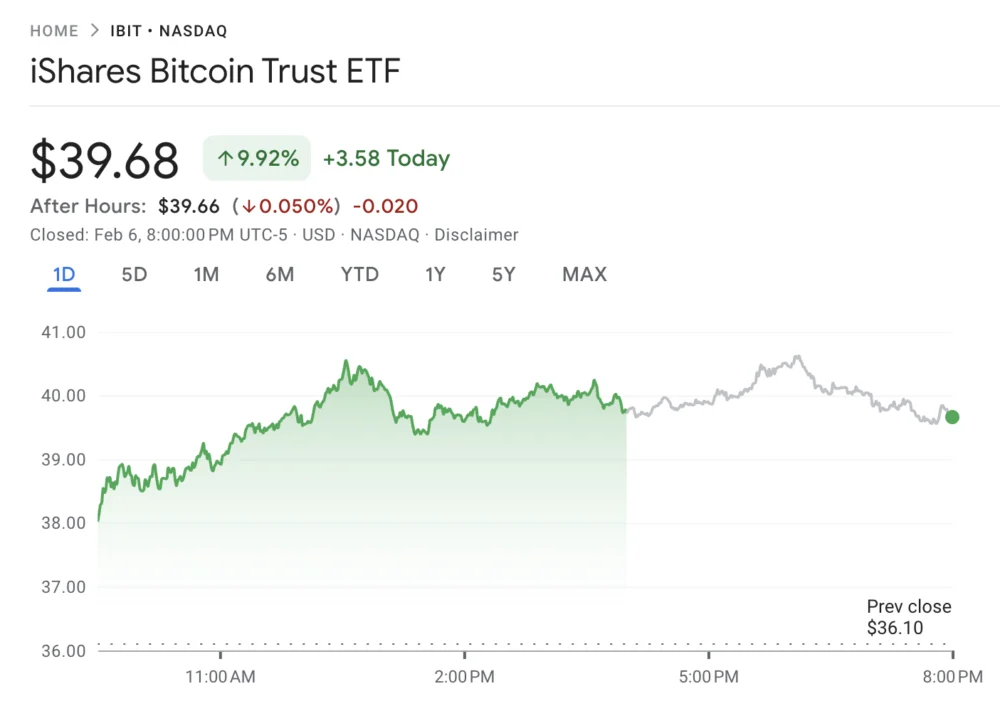
The week leading up to Friday’s recovery had been particularly challenging for digital assets, with Bitcoin’s price experiencing sharp declines that shook investor confidence. The iShares Bitcoin Trust (IBIT) bore the brunt of this downturn, witnessing a combined $548.7 million in total outflows on Wednesday and Thursday alone. This pronounced exodus of capital from BlackRock’s ETF coincided with a dramatic slump in crypto market sentiment, which plummeted to near record-low levels as Bitcoin’s price briefly dipped below the psychologically significant $60,000 threshold on Thursday, according to data compiled by Farside. Such a rapid and substantial price correction, following a period of sustained bullish momentum, sent ripples of anxiety across the entire crypto ecosystem, prompting concerns about the asset’s immediate future trajectory.
However, Friday offered a much-needed reprieve. Preliminary data from Farside indicated a collective resurgence of interest across the nine US-based spot Bitcoin ETF products, which together accumulated $330.7 million in inflows. This positive shift came on the heels of three days of collective outflows totaling a staggering $1.25 billion, underscoring the extreme volatility and rapid swings in investor sentiment that characterized the week. The abrupt reversal from significant outflows to strong inflows suggests a potential re-evaluation by investors, perhaps viewing the recent price dip as a buying opportunity rather than a sign of a prolonged downturn.
The performance of Bitcoin ETFs, particularly those from major financial players like BlackRock, serves as a vital barometer for investor sentiment and institutional adoption of the digital asset. Since their groundbreaking launch in January 2024, these ETFs have provided a regulated and accessible pathway for traditional investors to gain exposure to Bitcoin, fundamentally altering its market dynamics. For IBIT, a relatively young product, the original news indicated that "So far in 2026, IBIT has posted just 11 trading days of net inflows." Interpreting this as a likely typo for 2024 or a reference to a recent period of limited positive flow, it highlights the challenging environment and the significance of each day of net inflows. Each positive flow day reinforces the narrative of sustained interest and capital allocation, even amidst significant market headwinds. Conversely, days of outflows can signal profit-taking, risk aversion, or a broader lack of confidence.
The recent market turbulence saw Bitcoin’s price tumble by 24.30% over the past 30 days. At the time of publication, Bitcoin was trading at $69,820, according to CoinMarketCap. This significant correction from its recent all-time highs above $73,000 left many investors wondering about the resilience of the current bull cycle. Factors contributing to this downturn were multifaceted, including profit-taking after a robust rally, liquidations of overleveraged positions in the derivatives market, persistent macroeconomic concerns regarding inflation and the Federal Reserve’s interest rate policy, and even geopolitical uncertainties that often prompt a flight to safer, less volatile assets.

Amidst this tumultuous period, BlackRock’s IBIT demonstrated remarkable activity, even in its downturn. On Thursday, the ETF notably "crushed its daily volume record," with an astonishing $10 billion worth of shares changing hands, as reported by Bloomberg ETF analyst Eric Balchunas. This surge in trading volume during a sharp price decline can be interpreted in several ways: it could signify capitulation from weaker hands, panic selling, but also aggressive accumulation from opportunistic buyers who saw value in the dip. Balchunas further highlighted the severity of the price drop, noting that IBIT fell by 13% on Thursday, marking its "second-worst daily price drop since it launched." Its largest single-day decline, a 15% fall, occurred on May 8, 2024. These figures underscore the inherent volatility of Bitcoin, even when packaged within a regulated ETF structure, and the rapid price swings that investors must be prepared for.
However, the tide turned decisively on Friday. BlackRock’s iShares Bitcoin ETF staged a robust recovery, soaring by 9.92% and closing at $39.68, according to Google Finance. This strong rebound not only recovered a significant portion of the previous day’s losses but also provided a much-needed psychological boost to the market. It suggested that institutional appetite for Bitcoin remains strong, and that dips are increasingly being viewed as opportunities for accumulation rather than signals for a prolonged bear market.
Seasoned ETF analyst James Seyffart from Bloomberg Intelligence offered valuable context to the recent market movements. He noted on Wednesday that while Bitcoin ETF holders were indeed facing their "biggest losses" since the US products launched in January 2024 – with paper losses estimated around 42% for those who bought at the peak with Bitcoin below $73,000 – the recent outflows, though substantial, still "pale compared with the inflows seen at the market’s peak." This observation is critical. It implies that despite the recent correction, the overall net capital accumulation in these ETFs remains robust, suggesting that a significant portion of the earlier inflows are sticky and represent long-term conviction rather than speculative short-term plays.
Indeed, a broader perspective on the net inflows into spot Bitcoin ETFs reinforces this view. Before the recent market correction (referred to as the "October downturn" in the original text, likely signifying a period preceding the recent high or a previous major market peak), spot Bitcoin ETF net inflows had reached approximately $62.11 billion. Following the recent turbulence, these figures have adjusted to around $55 billion. While this represents a notable drawdown, the fact that tens of billions of dollars remain invested underscores the enduring institutional interest and the long-term capital commitment to Bitcoin through these investment vehicles. The difference between the peak inflows and current figures highlights the profit-taking and rebalancing that occurs in volatile markets, but also the underlying foundation of committed capital.
The recent surge in Google search volume for ‘Bitcoin’ amid its price swings, as noted in a related article, further illustrates the heightened public interest and engagement during periods of volatility. Such spikes in search activity often precede or accompany significant price movements, reflecting both public curiosity and potential new investor interest.

The narrative surrounding Bitcoin and its ETFs is complex, driven by a confluence of factors ranging from macroeconomic indicators like inflation and interest rate policies from central banks (particularly the U.S. Federal Reserve) to geopolitical events that can trigger risk-off sentiment. The recent Bitcoin halving event in April 2024, which reduced the supply of new Bitcoin entering the market, is also a crucial long-term catalyst that market participants are closely watching. Historically, halvings have preceded significant bull runs, and while the immediate impact might not always be evident, its supply-side implications are fundamental to Bitcoin’s long-term value proposition.
The institutionalization of Bitcoin through ETFs marks a profound shift in its market perception. BlackRock, as the world’s largest asset manager, brings unparalleled credibility and reach to the cryptocurrency space. Its ability to attract substantial inflows even after a period of intense selling pressure speaks volumes about the growing acceptance of Bitcoin as a legitimate asset class, albeit one characterized by high volatility. The interplay between retail investors, often driven by sentiment and social media, and institutional players, who tend to operate with longer time horizons and more sophisticated risk management strategies, creates a dynamic and often unpredictable market environment.
In conclusion, the week’s events, culminating in BlackRock’s IBIT posting a strong $231.6 million inflow on Friday, encapsulate the inherent drama and evolving landscape of the Bitcoin market. After a turbulent period marked by significant price drops and heavy outflows, the rebound signifies a degree of resilience and renewed investor confidence. While Bitcoin’s journey remains characterized by volatility and susceptibility to both internal market dynamics and external macroeconomic forces, the sustained interest from institutional behemoths like BlackRock, reflected in the steady accumulation of assets in their ETFs, underscores a growing conviction in its long-term value. Investors will continue to closely monitor ETF flows as a key indicator of market sentiment and the ongoing institutionalization of the world’s leading cryptocurrency. As always, the inherent risks associated with such volatile assets dictate that investors conduct thorough due diligence and consider their risk tolerance before making investment decisions.