anjir abdul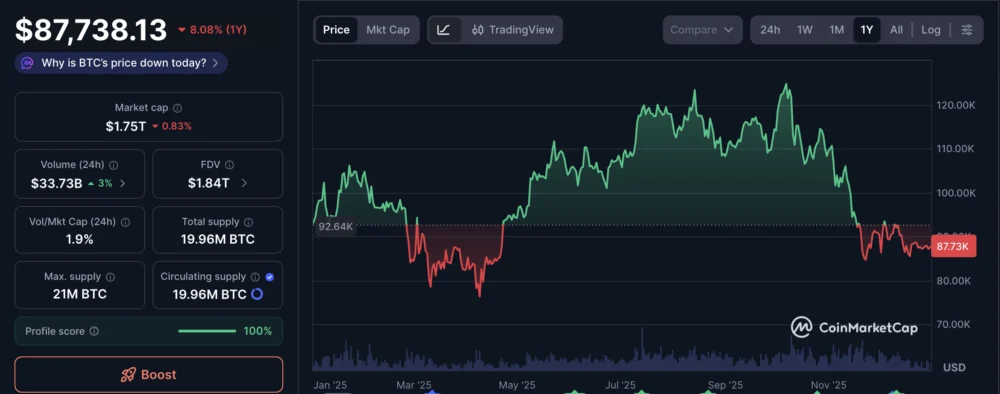
As the cryptocurrency market looks ahead, a consensus is forming among analysts that Bitcoin (BTC) faces a challenging year in 2026, with many anticipating an extension of the downturn that began in late 2025. This projected price softening, however, tells only half the story. Simultaneously, early adopters and industry experts suggest that 2026 could mark a pivotal moment for Bitcoin’s real-world utility, as dedicated efforts to enhance payment infrastructure mature, making BTC a significantly simpler and more accessible medium of exchange for the global populace. This intriguing dichotomy presents a narrative of short-term price pressure coexisting with fundamental, long-term advancements in adoption and practical application, highlighting Bitcoin’s evolving journey from a speculative asset to a foundational digital currency.
The price trajectory for Bitcoin in 2026 is a significant point of discussion, with prominent voices in the crypto space forecasting a challenging period. Michael Terpin, a seasoned early Bitcoin investor, offers a specific outlook, predicting that BTC’s price could bottom out at approximately $60,000 during the fourth quarter of 2026. Far from being a dire warning, Terpin frames this potential low as a strategic "buying opportunity" for astute investors. His forecast extends beyond 2026, positing that "the end of 2026 will be a great time to buy, as market lows based on fear slowly give way to massive buying in 2028 and 2029 after the next halving leads to potential supply shock." This perspective underscores the cyclical nature of Bitcoin markets, where periods of accumulation often precede significant upward movements, particularly those catalyzed by the programmatic supply reductions inherent in Bitcoin’s halving events.
The "four-year cycle theory" has long been a dominant analytical framework for Bitcoin, suggesting that price peaks and troughs often align with the halving schedule. This theory posits a bull run post-halving, followed by a correction and then a period of consolidation before the next halving. However, 2025’s performance appears to challenge this established pattern. Many analysts had optimistically projected BTC prices ranging from $180,000 to $250,000 by the end of 2025, riding the wave of the previous halving. Yet, contrary to these lofty expectations, Bitcoin is on track to close 2025 at a lower price than the highs observed above $100,000 in January of that year. This divergence from the expected cycle suggests that new macroeconomic factors, increased institutional influence, and evolving global liquidity dynamics are exerting a stronger gravitational pull on Bitcoin’s price action than in previous cycles, potentially breaking the long-held four-year pattern. Terpin acknowledges this shift, noting that while Bitcoin still retains about a 20% chance of forming new highs before the cycle low, these odds are diminishing with each passing month, indicating a departure from the predictable upward momentum often seen in previous post-halving years.

Beyond the intrinsic market dynamics, external macroeconomic and political factors are expected to significantly influence Bitcoin’s performance in 2026. A potential change in the Federal Reserve chair is anticipated to ease macroeconomic conditions, primarily through the lowering of interest rates. Historically, lower interest rates tend to favor risk assets like cryptocurrencies, as they reduce the cost of capital and make alternative investments more attractive compared to traditional, lower-yielding instruments. However, this potential tailwind could be offset by political developments in the United States. Terpin specifically warns that if the Republican Party fails to secure both chambers of Congress in the 2026 US midterm elections, it would "cripple" the nascent pro-crypto regulatory environment. A divided or unfavorable political landscape could lead to increased regulatory uncertainty, stricter oversight, or even punitive measures, thereby stifling innovation and dampening institutional and retail adoption. The interplay of these economic and political forces creates a complex backdrop for Bitcoin, where fundamental demand for the asset may contend with external pressures that influence investor sentiment and capital flows.
Despite the anticipated price slump, the underlying narrative for Bitcoin in 2026 is one of profound technological and practical advancement. Rich Rines, another early Bitcoin adopter and blockchain software developer, eloquently captures this sentiment: "2025 made Bitcoin easier to hold and earn yield on; 2026 should make it easier to actually use." This statement encapsulates the shift in focus from mere hodling and passive income generation to active utility and integration into everyday financial transactions. The maturation of payment infrastructure is poised to be the primary catalyst for this transformation.
Several key developments are driving this surge in utility. The emergence of Bitcoin neobanks is a crucial step forward. These digital infrastructure companies provide online banking services specifically tailored to Bitcoin users, bridging the gap between traditional finance and the decentralized world. Neobanks simplify the process of managing Bitcoin, offering user-friendly interfaces for buying, selling, and spending BTC. They often integrate features like direct deposit services for paychecks, Bitcoin-backed debit cards for seamless point-of-sale transactions, and easy conversion between Bitcoin and fiat currencies. By streamlining these processes, Bitcoin neobanks significantly lower the technical barrier to entry for mainstream users, making Bitcoin feel more like a conventional currency rather than a complex digital asset. This infrastructure is vital for fostering greater confidence and convenience in using BTC for daily economic activities.
Another innovative solution gaining traction is the development of Bitcoin-backed stablecoins. While traditional stablecoins are often pegged to fiat currencies like the US dollar, Bitcoin-backed stablecoins derive their value and stability from Bitcoin itself, often through over-collateralization or other mechanisms. Their purpose is to provide the stability required for everyday transactions while still being rooted in the Bitcoin ecosystem. This is particularly important because Bitcoin’s inherent price volatility, while attractive to speculators, makes it less ideal for immediate payment processing or for storing value for short-term expenses. By offering a stable unit of account within the Bitcoin framework, these stablecoins can facilitate a wider array of payment use cases, enabling users to transact quickly and efficiently without constantly worrying about price fluctuations, thereby enhancing Bitcoin’s functionality as a medium of exchange.

The integration of Bitcoin payments into mainstream commerce is also accelerating. Payments company Square (now Block), a significant player in financial technology, has notably integrated Bitcoin payments into its point-of-sale (PoS) systems. This strategic move allows merchants utilizing Square’s terminals to accept BTC as payment directly from customers. Furthermore, Square offers merchants the option to automatically convert a specified percentage, such as 1%, of their total sales to BTC, if desired. This feature not only simplifies the acceptance of cryptocurrency for businesses but also provides a straightforward mechanism for merchants to gain exposure to Bitcoin as an asset. Such integrations by major payment processors are instrumental in normalizing Bitcoin transactions, making them a viable and convenient option for both consumers and businesses, and paving the way for broader adoption across retail and service industries.
Perhaps the most transformative development in enhancing Bitcoin’s utility for payments is the continuous advancement of the Bitcoin Lightning Network. As a Layer-2 scaling solution, the Lightning Network addresses Bitcoin’s inherent limitations regarding transaction speed and cost. On the main Bitcoin blockchain, transactions can be slow and expensive, particularly during periods of high network congestion. The Lightning Network circumvents these issues by creating off-chain payment channels between parties. Instead of every small transaction being recorded on the main blockchain, multiple transactions can occur within these channels almost instantaneously and at minimal cost. Only the net balance of the payment channel is eventually settled and posted to the main BTC ledger in a single, final transaction.
This innovative approach significantly reduces friction in using BTC for payments. For consumers, it means near-instant confirmation times for purchases, making Bitcoin as fast as, or even faster than, traditional credit card transactions. For merchants, it translates to lower transaction fees and quicker access to funds. The Lightning Network facilitates micro-payments, remittances, and everyday purchases like coffee or groceries, which would be impractical on the main chain. Its growth in capacity and user base is a testament to its effectiveness. Developers are constantly building new applications and services on top of Lightning, including wallets, payment processors, and even gaming platforms, further cementing its role as the backbone for Bitcoin’s future as a global, instant payment rail. The Lightning Network is not just a technical upgrade; it’s a fundamental shift that empowers Bitcoin to compete directly with traditional payment systems in terms of speed and cost, making it genuinely "easier to actually use."
Beyond direct payments, the improved infrastructure also opens doors for other Bitcoin use cases. Developments in sidechains and layer-2 solutions like Stacks are enabling decentralized finance (DeFi) applications to be built on Bitcoin, allowing users to lend, borrow, and trade assets while leveraging Bitcoin’s security. Digital identity solutions leveraging Bitcoin’s blockchain are also in nascent stages, promising self-sovereign identity management. These diverse applications, while perhaps less immediate than payment infrastructure, underscore the growing versatility of Bitcoin’s underlying technology.

In conclusion, 2026 presents a fascinating dichotomy for Bitcoin. While the asset’s price may face a protracted decline, extending the downturn from late 2025 and potentially bottoming out around $60,000, this period of market consolidation is simultaneously fertile ground for significant advancements in its fundamental utility. The anticipated price softening, influenced by macroeconomic factors and a potential break from historical four-year cycles, is viewed by some as a strategic accumulation phase, setting the stage for substantial rallies post-2028 halving. Crucially, this short-term price pressure does not deter the relentless progress in building out Bitcoin’s practical applications. The maturation of payment infrastructure through Bitcoin neobanks, Bitcoin-backed stablecoins, widespread merchant integrations like Square’s, and the continued scaling and adoption of the Lightning Network are poised to make Bitcoin simpler, faster, and more accessible for everyday transactions than ever before. This robust development of utility, even amidst price volatility, underscores Bitcoin’s enduring mission to become a global, censorship-resistant, and decentralized medium of exchange. Thus, 2026, though potentially challenging for market speculators, promises to be a foundational year for Bitcoin’s long-term vision, laying essential groundwork for its inevitable mainstream adoption and cementing its role as a revolutionary financial technology.