anjir abdul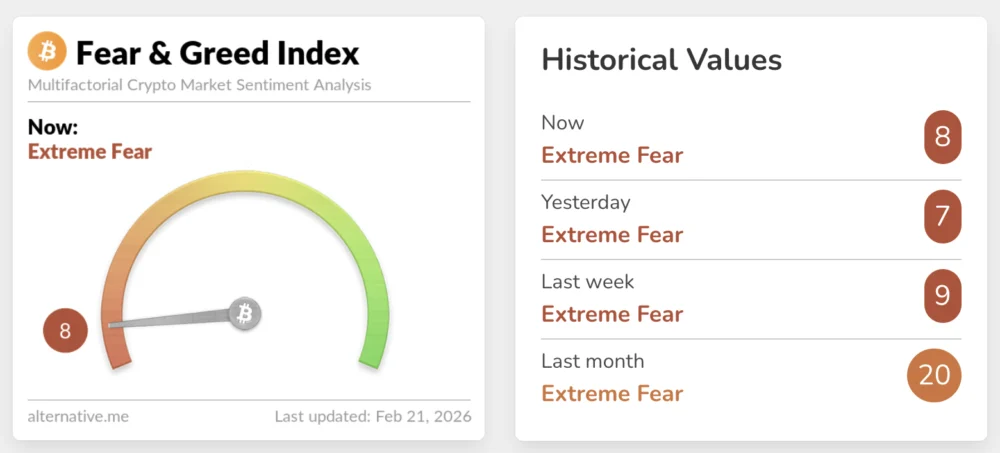
The firm elaborated on this observation in a recent report, stating, "This reduction in FOMO and ‘Lambo’ memes is actually a healthy market indicator. It shows that retail optimism is fading." To fully appreciate why this fading optimism is considered "healthy," one must understand the dynamics of market psychology and the typical lifecycle of a bull market. "FOMO" (Fear Of Missing Out) and "Lambo" (referencing the aspiration to buy luxury cars from crypto profits) memes are cultural touchstones of peak speculative bubbles. They signify a period where rational analysis is often overshadowed by herd mentality, impulsive buying, and unrealistic expectations for rapid wealth accumulation. When such memes and sky-high price targets dominate social discourse, it often signals a market top, as the last wave of retail investors, driven by greed, enters just before a correction. Therefore, the observed reduction in these calls suggests a necessary deleveraging of emotional exuberance, paving the way for a more grounded and potentially enduring growth phase. It implies that the market is shedding the speculative froth that often precedes significant price corrections, allowing for a more fundamental value discovery process. This period of reduced hype can discourage short-term, high-risk trading and instead foster an environment where long-term investors and institutional players might find more stable entry points, contributing to a more robust market structure.
Beyond the ebbing of speculative calls, Santiment’s analysis also registered a notable shift in general Bitcoin sentiment, moving from "extreme bearishness" to "neutral territory." This transition, measured by the ratio of bullish to bearish social media comments and other on-chain indicators, reflects a stabilization of market participants’ emotional state. While "extreme bearishness" often presents a contrarian buying opportunity, as fear is typically highest at market bottoms, a shift to "neutral" indicates that the market has processed much of the negative news and price action, but has not yet re-embraced widespread optimism. This neutral stance can, paradoxically, make trading decisions more challenging. In a market dominated by strong bullish or bearish convictions, traders might find clearer signals for directional bets. However, a neutral environment lacks such distinct biases, suggesting indecision or a waiting game among participants. Santiment advises caution in such scenarios: "Better to avoid trading in these scenarios or at least discount the significance of sentiment metrics in your analysis." This counsel underscores the complexity of a neutral market, where traditional sentiment analysis might offer less actionable insight, prompting investors to rely more on fundamental analysis or other technical indicators.

This recent sentiment shift follows a period marked by particularly aggressive price predictions. During 2025, prominent Bitcoin (BTC) advocates, including BitMEX co-founder Arthur Hayes and BitMine chair Tom Lee, were openly calling for Bitcoin to reach as high as $250,000. These highly ambitious targets fueled much of the retail optimism and speculative activity. However, the asset’s price trajectory diverged significantly from these predictions, peaking at $126,100 in October before entering a sustained downtrend that ultimately saw it end the year lower than where it started. This historical context reinforces Santiment’s current assessment: the market often corrects sharply after periods of unbridled optimism and unrealistic expectations. The downtrend continued into the new year, with Bitcoin dropping to near $60,000 on Feb. 6, but has since edged up to $67,847 at the time of publication, according to CoinMarketCap. This recent recovery, albeit modest, within a neutral sentiment landscape, further supports the idea of a market consolidating rather than experiencing another speculative rush.
While Santiment’s social sentiment metrics point towards a more balanced, neutral market, other indicators suggest that crypto investors are still grappling with significant fear. The Crypto Fear & Greed Index, a widely recognized composite metric that measures overall crypto market sentiment, remained entrenched in "Extreme Fear" territory on Saturday, posting a low score of 8. This index takes into account various factors such as volatility, market momentum/volume, social media, surveys, dominance, and trends, providing a holistic view of investor sentiment. The discrepancy between Santiment’s "neutral" social sentiment and the Fear & Greed Index’s "Extreme Fear" can be attributed to several factors. Santiment’s focus on "calls" for specific price targets might capture a particular segment of social discourse, while the Fear & Greed Index encompasses a broader range of market behaviors and emotional states. "Extreme Fear" typically signals a period where investors are highly cautious, selling off assets, or hesitant to enter the market, often presenting a contrarian buying opportunity for those brave enough to "be greedy when others are fearful." The persistence of "Extreme Fear" in the broader market suggests that while the overt, speculative "Lambo" calls have receded, a deep-seated apprehension still pervades the investor base, likely influenced by the recent downtrend and broader macroeconomic uncertainties.
Despite the positive implications of drying up speculative calls, Santiment also flashed warning signs regarding the overall activity on the Bitcoin network itself. The firm reported that key utility indicators such as transaction volume, active addresses, and network growth are all "steadily declining." These metrics are crucial for assessing the fundamental health and adoption of the Bitcoin network.

- Transaction volume measures the total value of transactions processed on the network, indicating the level of economic activity and utility. A decline suggests less capital is moving on-chain.
- Active addresses represent the number of unique addresses participating in transactions, serving as a proxy for user engagement. A drop here means fewer individuals or entities are actively using Bitcoin.
- Network growth tracks the rate at which new addresses are being created, indicating new user adoption. A decline suggests a slowdown in the onboarding of new participants.
Santiment explained the implications of these trends: "These utility indicators suggest the network is being used less frequently. While not immediately bearish, this dormancy implies traders are sitting on their hands." This "sitting on their hands" phenomenon describes a state of inertia where market participants are holding onto their assets but not actively trading, transferring, or accumulating new positions. It points to a lack of fresh capital inflows or renewed interest, which is essential for sustained market expansion. For a decentralized network like Bitcoin, growing user participation and increasing on-chain activity are fundamental drivers of value and resilience. A period of dormancy, while potentially allowing for consolidation, also raises questions about the network’s short-term growth prospects and ability to attract new users.
In summary, Santiment’s latest analysis paints a nuanced picture of the Bitcoin market. The "drying up" of exaggerated price calls and the fading of retail optimism are healthy signs, indicating a shift away from speculative excesses towards a more mature and potentially sustainable growth trajectory. This psychological deleveraging is often a prerequisite for a healthy market recovery. The shift in social sentiment from "extreme bearishness" to "neutral" further underscores this stabilization, although it introduces challenges for short-term trading decisions. However, the persistent "Extreme Fear" reflected in the Crypto Fear & Greed Index, coupled with the declining network utility metrics (transaction volume, active addresses, network growth), suggest that while the speculative fervor has abated, a significant degree of caution and inactivity still characterizes the broader market. This dormancy implies that while the market may be shedding its speculative skin, it still awaits a catalyst for renewed, fundamental-driven expansion and a genuine increase in user participation to truly break free from its current state of cautious neutrality.