anjir abdul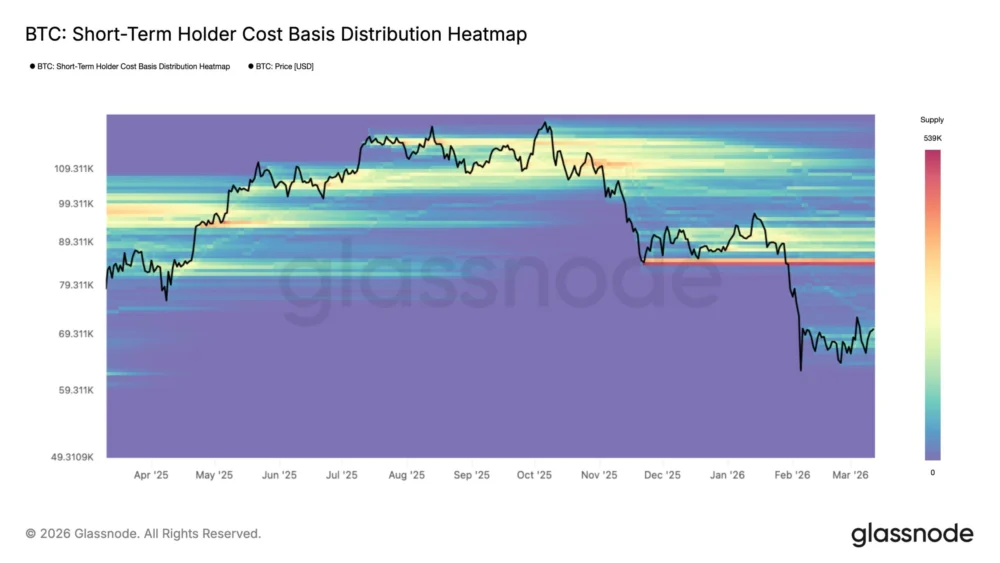
As Friday’s Wall Street open approached, Bitcoin (BTC) surged to eight-day highs, crossing the $72,000 mark on Bitstamp, a level not seen since March 5. This upward momentum occurred against a backdrop of anticipation for key US inflation cues, particularly the Personal Consumption Expenditures (PCE) Index release for January. The cryptocurrency’s resilience in the face of global instability, stemming from the Middle East conflict and its potential impact on oil supplies, has underscored its unique position in the modern financial landscape. While traditional markets often recoil from such geopolitical shocks, Bitcoin has conspicuously avoided a major sell-off, instead demonstrating surprising strength and acting as a barometer of evolving investor sentiment towards decentralized assets.

The week’s macro data from the United States largely conformed to expectations, which helped to mitigate the risk of excessive market volatility, creating a somewhat stable environment for Bitcoin to consolidate its gains. However, the looming PCE Index, known as the Federal Reserve’s "preferred" inflation measure, held significant weight. The previous PCE print had surpassed anticipated levels, reaching its highest point since late 2023, fueling concerns about persistent inflationary pressures. With oil prices always a sensitive indicator in times of geopolitical tension, the prospect of an "oil supply shock" threatened to reignite inflationary forces, complicating the Fed’s monetary policy decisions.
Amidst these intricate economic dynamics, former US President Donald Trump reignited his calls for Fed Chair Jerome Powell to immediately loosen monetary policy. "Where is the Federal Reserve Chairman, Jerome ‘Too Late’ Powell, today? He should be dropping Interest Rates, IMMEDIATELY, not waiting for the next meeting," Trump posted on Truth Social. This political pressure highlights a recurring theme in economic policy, where political ambitions often clash with the Fed’s mandate for price stability and maximum employment. However, market expectations, as gauged by the CME Group’s FedWatch Tool, painted a starkly different picture. Odds of a rate cut at the Fed’s upcoming March 18 meeting had plummeted to below 1% earlier in the week, indicating that traders and analysts largely anticipated the Fed to maintain its cautious stance, especially given the backdrop of potential inflationary pressures from rising energy costs. This divergence between political rhetoric and market reality further underscores the complex environment in which Bitcoin is currently operating, often serving as a hedge against both traditional market anxieties and potential currency debasement.

Within the Bitcoin market, participants were keenly focused on the cryptocurrency’s remarkable price strength amidst the broader macro chaos. On-chain analytics platform Glassnode, in its latest edition of "The Week Onchain," summarized this sentiment: "Bitcoin has remained surprisingly resilient following the recent geopolitical shock." This observation is critical, as it suggests that a growing segment of investors views Bitcoin not merely as a speculative asset but as a legitimate store of value, akin to "digital gold," particularly during periods of geopolitical and economic uncertainty.
Glassnode’s analysis delved deeper, flagging specific options-market activity that indicated a reduced concern among traders about short-term risks. This shift in options sentiment, often reflected in lower implied volatility for near-term contracts, suggests that market participants are less inclined to hedge against immediate downside price movements. Furthermore, Glassnode identified an "accumulation cluster" forming within the $62,000–$72,000 range. This cluster, representing a significant concentration of buying activity, is particularly notable when analyzing the "cost basis" of investors holding BTC for six months or less (short-term holders). While its intensity was described as "modest relative to prior phases that preceded sustained expansions," the accumulation points to a foundational level of support. Glassnode concluded, "Conviction is building, but the foundation for a mid-term breakout remains thin so far." This implies that while bullish sentiment is growing, a more substantial and sustained influx of capital or a clearer resolution of macro uncertainties might be needed to propel Bitcoin into a truly explosive, long-term upward trajectory.

The comparative performance of Bitcoin against other major macro assets since the onset of events in Iran has been particularly striking, cementing its narrative as a "geopolitical stress test" passer. Joe Consorti, head of growth at Bitcoin equity company Horizon, emphatically stated, "Bitcoin is the best-performing major asset since last month’s strikes on Iran." He backed this claim with compelling statistics: "BTC is up 7.3%, the S&P 500 and Nasdaq are down 1-2%, gold is down 3.7%, and silver is down over 10%." This stark divergence in performance offers powerful evidence that Bitcoin is increasingly being perceived as a non-sovereign, decentralized asset that can thrive when traditional markets falter under the weight of state-centric conflicts and economic anxieties.
The underperformance of traditional safe havens like gold and silver, alongside major equity indices, highlights a potential paradigm shift in how investors seek refuge during times of crisis. Historically, gold has been the go-to asset for preserving wealth during geopolitical turmoil and inflationary periods. However, Bitcoin’s superior performance in this recent episode challenges that long-held assumption. Its decentralized nature, finite supply, and global accessibility, combined with growing institutional adoption through vehicles like spot ETFs, are strengthening its appeal. Investors are increasingly recognizing Bitcoin’s unique properties as a hedge against currency debasement and a secure store of value that is impervious to the whims of any single government or central bank, unlike fiat currencies or even traditional commodities which can be influenced by supply chain disruptions or government interventions. The narrative of "digital gold" is not just an analogy but a functional description of Bitcoin’s emerging role in global finance.

Looking ahead, several factors could continue to fuel Bitcoin’s ascent. The upcoming halving event, which reduces the supply of new Bitcoin entering the market, has historically been a strong bullish catalyst. Coupled with sustained inflows into spot Bitcoin ETFs, which continue to attract significant institutional and retail capital, the supply-demand dynamics appear favorable. The continued global macro uncertainty, including potential geopolitical flare-ups and ongoing debates around inflation and interest rates, could further solidify Bitcoin’s position as a preferred alternative asset. However, risks remain. Unexpected severe macro shocks, heightened regulatory scrutiny, or a broader market correction could test Bitcoin’s resilience. The interplay between traditional finance and the nascent crypto ecosystem will continue to evolve, with Bitcoin’s performance during crises serving as a critical indicator of its maturing role in the global financial architecture. As conviction for a breakout builds, the market watches closely to see if Bitcoin can translate its recent resilience into a sustained mid-term rally, further cementing its status as a robust and indispensable asset in an increasingly uncertain world.
This article does not contain investment advice or recommendations. Every investment and trading move involves risk, and readers should conduct their own research when making a decision. While we strive to provide accurate and timely information, Cointelegraph does not guarantee the accuracy, completeness, or reliability of any information in this article. This article may contain forward-looking statements that are subject to risks and uncertainties. Cointelegraph will not be liable for any loss or damage arising from your reliance on this information.