anjir abdul
At the heart of the contention lies a fundamental competition for a finite and increasingly valuable resource: electricity. Bitcoin mining, a process that secures the network by solving complex cryptographic puzzles, is inherently energy-intensive. Similarly, the training and operation of advanced AI models, requiring vast data centers filled with specialized hardware, consume prodigious amounts of power. This direct competition for energy infrastructure and supply has ignited a fierce economic rivalry, with significant implications for both industries.
Crypto trader Ran Neuner, a prominent voice in the digital asset space, minced no words in his recent assertion, declaring, “AI has killed Bitcoin forever.” Neuner’s provocative statement, made on a widely followed social media platform, underscored his belief that AI has emerged as Bitcoin mining’s most formidable competitor. He elaborated that the core issue is not merely the demand for electricity, but AI’s willingness and ability to pay a significantly higher premium for it. According to Neuner’s analysis, Bitcoin mining typically generates revenue per megawatt (MW) in the range of $57 to $129. In stark contrast, AI data centers can command revenues up to eight times higher, ranging from $200 to $500 per MW for the same amount of electricity. This staggering disparity in profitability, he argued, is the primary driver behind the observed pivot of numerous mining operations.
The shift isn’t just theoretical; several high-profile examples underscore the trend. Earlier this month, Core Scientific, one of the largest publicly traded Bitcoin miners in North America, secured a substantial credit facility of up to $1 billion from Morgan Stanley. Crucially, this financing is earmarked not for expanding its Bitcoin mining operations, but for the development of its high-performance computing (HPC) data centers specifically designed for AI hosting. This strategic realignment signals a clear intent to diversify revenue streams into the more lucrative AI sector. Similarly, MARA Holdings, another major player in the Bitcoin mining industry, recently filed with the SEC, signaling its strategic intent to potentially sell some of its Bitcoin holdings. This move is widely interpreted as a means to free up capital and fund its own pivot towards AI infrastructure, recognizing the superior economic returns offered by AI compute services. Further cementing this trend, Hut 8, a Canadian-based digital asset miner, announced a monumental $7 billion AI infrastructure agreement with Google in December. Such partnerships indicate a deep integration into the AI ecosystem, leveraging existing infrastructure and energy expertise for a new purpose.
The trend extends beyond publicly traded giants. Cipher Mining, for instance, has reportedly reduced its Bitcoin hashrate commitment to reallocate resources towards AI compute. Even industry pioneers are making the switch. Jihan Wu, a co-founder of Bitmain, the world’s largest designer of Bitcoin mining ASICs, has reportedly ceased his personal mining activities to fully pivot into the AI domain. Neuner encapsulated the miners’ dilemma succinctly: “So if I were a miner, it wouldn’t be a tough decision. And that’s why every day more and more miners are leaving the network.” This sentiment paints a grim picture for Bitcoin, suggesting a steady erosion of its computational security due to economic pressures.
However, the narrative is far from universally accepted as a "doomsday scenario" for Bitcoin. A robust counter-argument posits that Bitcoin’s inherent design, particularly its self-adjusting difficulty mechanism, is specifically engineered to withstand such pressures and maintain network integrity. Bitcoin pioneer and renowned cryptographer Adam Back, for instance, offered a more sanguine perspective. He argued that the difficulty adjustments, a core feature of the Bitcoin protocol, would simply force out the least efficient miners, ultimately leading to improved profitability for those who remain.
Back’s explanation hinges on the elegant simplicity of Bitcoin’s difficulty adjustment. Approximately every two weeks (or every 2,016 blocks), the Bitcoin network automatically recalibrates the difficulty of mining new blocks. This adjustment is designed to ensure that, on average, a new block is found every ten minutes, regardless of the total computational power (hashrate) dedicated to the network. If miners leave, the hashrate decreases, causing blocks to be found less frequently. The difficulty adjustment mechanism then lowers the difficulty, making it easier to find blocks and thus more profitable for the remaining miners. As profitability improves, it incentivizes new or returning miners to join the network, stabilizing the hashrate over time. Back’s concise mantra, "What happens to Bitcoin is simple: tick tock, next block! Difficulty adjusts downwards, the least efficient and AI switchers move out, and Bitcoin mining profitability converges to AI profitability. QED,” encapsulates this fundamental principle.
Investor Fred Krueger echoed this sentiment, emphasizing the practical mechanics: “If AI outbids miners for electricity, miners just turn off until the difficulty adjusts and it’s profitable again, that’s literally how Bitcoin works.” This perspective highlights Bitcoin’s adaptive nature, suggesting that the network is not brittle but rather designed to find equilibrium in a dynamic economic landscape. Historical precedents also lend credence to this view; Bitcoin has weathered numerous challenges, including significant shifts in mining geography (e.g., the China mining ban), regulatory crackdowns, and market crashes, each time seeing its hashrate recover and often surpass previous peaks following difficulty adjustments.

Despite these assurances of Bitcoin’s resilience, Neuner continued to voice concerns regarding the tangible impact of falling hashrates. He pointed out that hashrates have indeed declined by 14.5% since their peak in October, indicating a reduction in the computational power dedicated to securing the network. A lower hashrate, he warned, translates to fewer miners verifying transactions and solving blocks, which in turn increases the potential vulnerability to a “51% attack.” A 51% attack occurs if a single entity or a coordinated group gains control of more than half of the network’s total hashrate. Such control would allow them to double-spend coins, reverse transactions, or even censor specific transactions, fundamentally undermining Bitcoin’s integrity and trust. While such an attack would still be incredibly costly and difficult to execute, especially against a network as vast as Bitcoin, a significant and sustained drop in hashrate could theoretically lower the barrier to entry.
Neuner acknowledged that past bear markets have seen similar declines in hashrate, which were ultimately corrected by the network’s automatic difficulty adjustments. However, he argued that "this time is different because we don’t have the energy." This suggests a more profound, systemic issue than mere market fluctuations. The increasing demand for electricity from both Bitcoin mining and AI, coupled with potential grid limitations and rising energy costs, creates a bottleneck that might not be easily resolved by simple difficulty adjustments alone. The "hashprice," a metric reflecting the expected revenue for a given amount of hashing power, is currently near an all-time low, further illustrating the economic squeeze faced by miners and reinforcing Neuner’s concerns.
However, not everyone agrees with Neuner’s assessment of the energy dilemma. Daniel Batten, a specialist in Bitcoin’s Environmental, Social, and Governance (ESG) aspects, offered a contrasting view, asserting that "the evidence tells us that AI is dependent upon Bitcoin for its expansion." Batten’s argument posits a symbiotic relationship rather than a purely competitive one. He highlighted several ways Bitcoin mining can actually facilitate AI’s growth:
Firstly, Bitcoin mining has a proven track record of utilizing "stranded energy." This refers to energy sources (like flare gas from oil wells, remote hydroelectric power, or excess renewable energy) that are geographically isolated or intermittently available, making them uneconomical to transmit to population centers. Bitcoin miners can set up operations directly at these sources, monetizing otherwise wasted energy. This infrastructure for capturing and utilizing stranded energy could then be adapted or expanded to power AI data centers in locations where traditional energy infrastructure is lacking or expensive.
Secondly, Bitcoin mining acts as a "flexible load balancer" for energy grids. Miners can quickly ramp up or down their operations in response to grid demand, consuming excess power during periods of low demand (e.g., strong winds for wind farms) and curtailing operations when grid stress is high. This flexibility helps stabilize grids and integrate more intermittent renewable energy sources. This capacity for flexible energy consumption could be invaluable for AI data centers, which might have highly variable power needs depending on their computational tasks, allowing them to optimize energy costs and grid reliability.
Lastly, Batten suggested that the existing infrastructure and even older equipment used by Bitcoin miners could be repurposed or co-located to provide cheaper energy solutions for AI. This implies a future where mining companies evolve into multi-faceted data center operators, offering both hash power for Bitcoin and high-performance computing for AI, thereby diversifying their revenue streams and mitigating the risks of a singular focus.
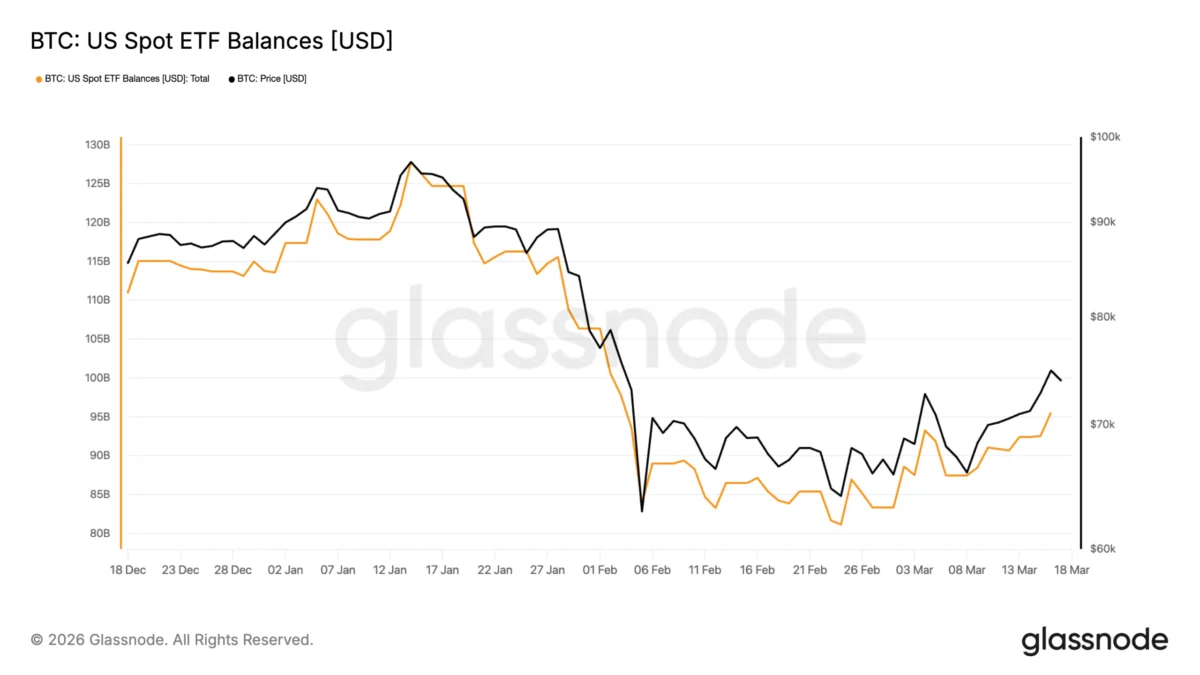
Ultimately, Neuner concluded that Bitcoin’s ability to withstand the AI challenge might hinge on a crucial factor: its price. He posited that "one green candle" – a sustained upward movement in Bitcoin’s value – could be the antidote to the mining exodus. A significant price surge would instantly boost miner profitability, making Bitcoin mining competitive with, or even more attractive than, AI compute services, regardless of electricity costs. He mused on potential catalysts for such a surge, suggesting geopolitical events like war or new regulatory frameworks could play a role. The current market context underscores this point: after experiencing five consecutive monthly "red candles" – a streak not seen since the 2018 bear market – Bitcoin has shown signs of recovery in March, gaining 8% so far. This nascent positive momentum offers a glimmer of hope against Neuner’s "Bitcoin doomsday" scenario, where continued price depreciation would exacerbate the shift to AI and potentially cripple the network.
The ongoing debate surrounding Bitcoin miners’ pivot to AI highlights a critical juncture for the cryptocurrency. While the economic incentives for shifting to AI are compelling and the movement of prominent mining entities is undeniable, Bitcoin’s core architecture, particularly its difficulty adjustment mechanism, provides a powerful self-correcting force. Furthermore, the potential for synergy, where Bitcoin mining infrastructure and expertise could actually facilitate AI’s expansion by leveraging stranded energy and providing grid flexibility, presents a more nuanced future than a simple zero-sum competition. The trajectory of Bitcoin’s price, influenced by broader market dynamics and geopolitical factors, will undoubtedly play a pivotal role in shaping the decisions of miners and, by extension, the security and long-term viability of the network in this evolving technological landscape. The ultimate outcome will likely be a testament to Bitcoin’s adaptive design and the ingenuity of its ecosystem in finding new equilibria amidst technological disruption.