anjir abdul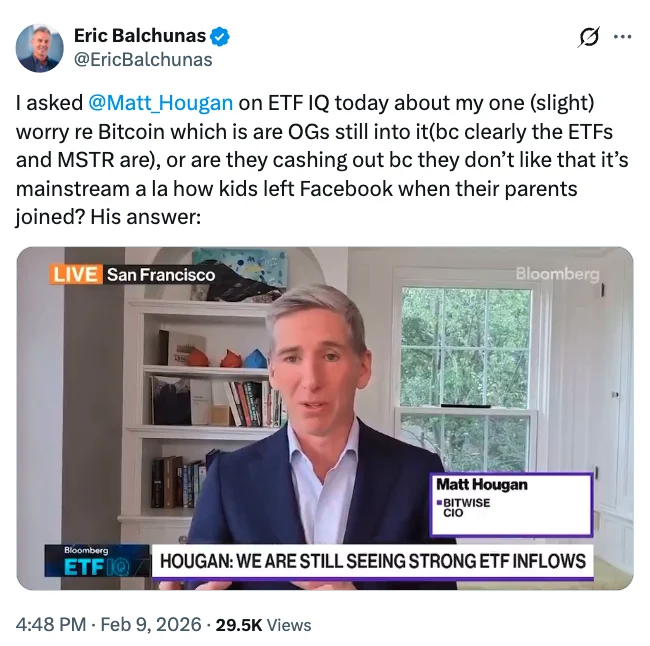
The cryptocurrency market is showing nascent signs of renewed institutional confidence as US spot Bitcoin exchange-traded funds (ETFs) staged a tentative rebound, attracting significant net inflows following a period of sustained selling pressure. Last Friday alone, these ETFs garnered $371 million in net inflows, a robust indicator that the tide may be turning for institutional demand. This positive momentum continued into the new week, with spot Bitcoin (BTC) ETFs seeing an additional $145 million in inflows on Monday. These figures, reported by data platforms SoSoValue and CoinGecko, occurred as Bitcoin’s price comfortably hovered around the crucial $70,000 mark, demonstrating a resilience that belies recent market anxieties.
While these recent inflows have not yet fully offset the substantial outflows observed in previous weeks – notably, $318 million last week and a cumulative $1.9 billion in redemptions year-to-date – the slowing pace of losses is a critical development. According to CoinShares, a prominent digital asset investment firm, this deceleration could signal a potential inflection point for crypto investment products. James Butterfill, CoinShares’ head of research, articulated this sentiment in a recent update, stating, “Outflows slowed sharply to $187 million despite heavy price pressure, with the deceleration in flows historically signaling a potential inflection point.” This suggests that even in the face of downward price movements, the institutional appetite for divesting crypto assets is waning, potentially paving the way for a more sustained recovery.
Early Bitcoin Holders Remain Steadfast Amid Institutional Inflows, Bitwise Report Suggests
A compelling narrative emerging from the market is the unwavering conviction of early Bitcoin investors, even as the asset experiences a significant influx of institutional capital. Matt Hougan, Chief Investment Officer at asset manager Bitwise, underscored that Bitcoin’s expanding institutional footprint has not dislodged its foundational investors. This perspective is particularly pertinent given the substantial outflows experienced by some ETFs during the latest crypto sell-off, which momentarily pushed BTC’s price back towards levels not seen since October of the previous year.
Research firm Bernstein further reinforced this view, characterizing the recent market downturn as the “weakest bear case” in Bitcoin’s history. Analysts pointed to the conspicuous absence of major industry failures – such as bankruptcies of exchanges or lending platforms – which have historically accompanied and exacerbated deeper crypto market stresses. Unlike previous cycles marred by the collapses of entities like Mt. Gox, Celsius, or FTX, the current downturn appears to be a more market-driven correction rather than a systemic crisis. This fundamental difference suggests a maturing ecosystem that is more resilient to shocks, partly attributable to the increased transparency and regulatory oversight that often accompanies institutional involvement.
The volatility observed in the market has prompted some observers to link it directly to Bitcoin’s increasing institutionalization, including the proliferation of ETFs. Concerns have been voiced that this broader financialization could, in the long run, dilute Bitcoin’s cherished scarcity narrative and its original ethos as a decentralized, anti-establishment asset. However, Bitwise’s Matt Hougan, in comments to Bloomberg ETF analyst Eric Balchunas, offered a more nuanced perspective, arguing that this shift has not meaningfully deterred early adopters.
Hougan acknowledged the existence of a “cypherpunk, libertarian OG core” of Bitcoin supporters who might feel uneasy with the growing influence of colossal asset managers like BlackRock. Yet, he described this group as a “shrinking minority.” His argument posits that the vast majority of early investors, those who initially committed modest sums and have since seen their investments swell into millions, are not abandoning the market. Instead, many are strategically taking partial profits after substantial gains, while largely remaining invested. This behavior contradicts the notion that the original proponents are exiting en masse dueowing to institutional encroachment. Hougan emphasized, “They invested a few thousand dollars and ended up with millions… The vast majority are still in it, and they’re being augmented by new institutional investors. I think the story that most of OG crypto is giving up on the space just doesn’t align with the people that we talk to with the investors that are working with Bitwise.” This indicates a pragmatic approach from long-term holders who recognize the benefits of market maturation, even if it comes with a shift in market dynamics.

Broadening Institutional Interest: Ethereum and XRP ETFs Also See Inflows
The resurgence of institutional interest is not confined solely to Bitcoin. The broader altcoin market is also experiencing a tailwind, with spot altcoin ETFs posting gains on Monday. Ethereum (ETH), the second-largest cryptocurrency by market capitalization, saw significant inflows of $57 million into its spot ETFs. This interest in Ethereum is particularly noteworthy as the market eagerly anticipates potential approval of spot Ethereum ETFs in the United States, following the precedent set by Bitcoin. Such an approval would likely unlock another wave of institutional capital, further legitimizing the asset and providing a regulated investment vehicle for a wider range of investors.
Similarly, XRP (XRP) ETFs also attracted notable inflows, bringing in $6.3 million. XRP, while distinct in its use case and regulatory journey compared to Bitcoin and Ethereum, continues to command a loyal investor base and institutional curiosity, particularly given its role in cross-border payments. These inflows across multiple digital assets underscore a broader trend of institutional diversification within the crypto space, moving beyond just Bitcoin to include other major cryptocurrencies that offer different value propositions and risk profiles. Data from SoSoValue comprehensively tracks these movements, highlighting the increasing sophistication and breadth of institutional engagement in the digital asset market.
Market Context and Future Outlook
The current market environment, characterized by stabilizing Bitcoin prices and renewed institutional inflows across leading digital assets, paints a picture of a maturing crypto landscape. The “weakest bear case” assessment from Bernstein, coupled with the resilience of early investors and the expanding ETF ecosystem, suggests that the market may be entering a new phase of development. This phase is less prone to the catastrophic failures of past cycles and more integrated with traditional finance, offering enhanced liquidity and accessibility.
While concerns about the dilution of Bitcoin’s scarcity narrative due to financialization persist, the prevailing sentiment among many market participants and analysts is that institutional integration brings legitimacy, stability, and broader adoption. The potential for spot Ethereum ETF approvals looms large, promising to replicate the positive market impact seen with Bitcoin ETFs. Such developments would not only enhance capital inflows but also foster greater regulatory clarity, reducing uncertainty for both retail and institutional investors.
Looking ahead, the interplay between macroeconomic factors, such as inflation trends, interest rate decisions by central banks, and geopolitical events, will continue to influence the broader crypto market. However, the foundational shift towards institutional acceptance and the establishment of regulated investment products like spot ETFs are fundamentally altering the investment landscape for digital assets. This ongoing evolution suggests that cryptocurrencies are increasingly being viewed not just as speculative instruments, but as legitimate, long-term components of diversified investment portfolios, attracting a diverse range of investors from seasoned early adopters to conservative institutional funds. This dynamic interplay of traditional finance and innovative digital assets continues to shape the future trajectory of the global financial system.