anjir abdul
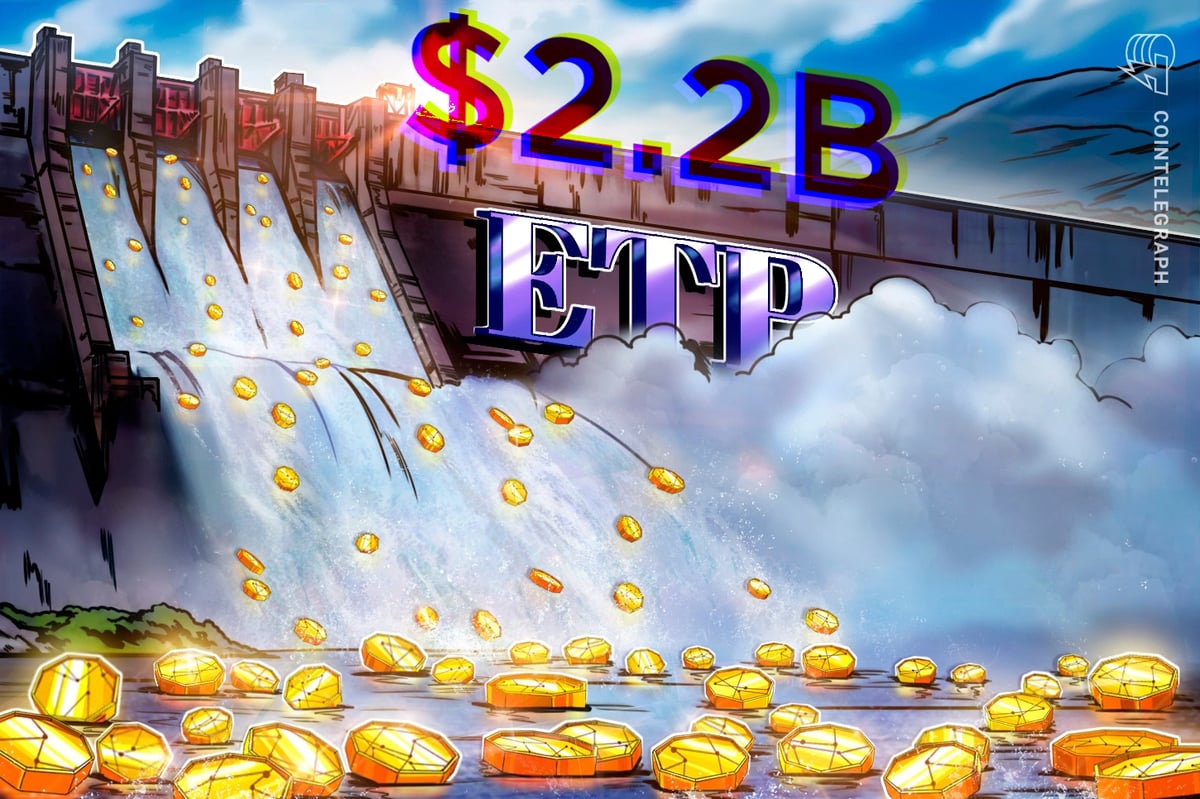
Crypto investment products continued their impressive momentum last week, witnessing an influx of capital that surpassed every other week in 2026 so far and marked the largest gains since October, signaling robust and growing institutional interest in the digital asset space. The latest report from European crypto asset manager CoinShares, published on Monday, revealed that crypto exchange-traded products (ETPs) collectively attracted a substantial $2.17 billion in inflows, underscoring a significant shift in investor sentiment towards digital assets. This surge in capital represents a pivotal moment, highlighting the increasing integration of cryptocurrencies into mainstream financial portfolios through regulated and accessible investment vehicles.
Exchange-traded products (ETPs) serve as a bridge between traditional finance and the nascent cryptocurrency market, allowing investors to gain exposure to digital assets without directly owning the underlying coins. These products, which include exchange-traded funds (ETFs) and exchange-traded notes (ETNs), are listed on regulated stock exchanges and are accessible through conventional brokerage accounts, offering liquidity, transparency, and often lower entry barriers compared to direct crypto purchases. The robust inflows into these ETPs are a clear indicator of burgeoning institutional confidence and retail investor demand, as market participants seek diversified investment opportunities amidst evolving global economic landscapes.
While the overall weekly performance was overwhelmingly positive, the distribution of inflows was not entirely uniform across the week. The bulk of the capital injections occurred earlier in the week, driven by a generally optimistic market outlook and specific catalysts within the crypto ecosystem. However, Friday saw a notable shift in sentiment, with $378 million in outflows recorded. This late-week reversal was attributed by James Butterfill, CoinShares’ head of research, to a confluence of macroeconomic and geopolitical concerns. Specifically, geopolitical escalation in Greenland and fresh tariff worries on the global stage sparked caution among investors, leading to a de-risking trend across various asset classes, including cryptocurrencies. Such events typically prompt investors to move towards perceived safer assets or to liquidate positions to preserve capital, underscoring the interconnectedness of the crypto market with broader global financial and political developments.
Further dampening market enthusiasm was speculation surrounding the United States Federal Reserve. Butterfill noted that "sentiment was also weighed down by suggestions that Kevin Hassett, a leading contender for the next US Fed Chair and a well-known policy dove, is likely to remain in his current role." While Hassett is known for favoring monetary policies that support economic growth through lower interest rates (a stance generally beneficial for risk assets like crypto), the market might have been anticipating a more aggressive dovish shift or a new appointment that could signal a more expansionary monetary policy. The confirmation of the status quo, therefore, could have been interpreted as a missed opportunity for even stronger tailwinds, leading to some investor disappointment and contributing to the late-week outflows.
Bitcoin, the undisputed leader of the cryptocurrency market, once again demonstrated its dominance by attracting the lion’s share of last week’s fund gains. Bitcoin (BTC) ETPs alone garnered an impressive $1.55 billion of inflows, accounting for more than 71% of the total weekly haul. This significant preference for Bitcoin highlights its role as a primary gateway for institutional investors entering the crypto market, often viewed as a "digital gold" or a hedge against inflation and economic uncertainty. The sustained interest in Bitcoin ETPs can also be linked to the increasing adoption of spot Bitcoin ETFs in major markets like the US, which have provided regulated and highly liquid avenues for traditional investors to gain exposure to BTC. This institutional legitimization, coupled with Bitcoin’s inherent scarcity and robust network security, continues to solidify its position as the preferred digital asset for large-scale capital deployment. Recent price rallies, with Bitcoin trading above $97,000 as noted in related reports, likely further fueled this investor confidence, reinforcing the perception of BTC as a strong-performing asset.
Ethereum (ETH) funds also showcased remarkable strength, drawing $496 million in inflows. This figure is particularly noteworthy as it exceeded the total inflows into all crypto products combined during the previous week, indicating a surge in specific interest for the second-largest cryptocurrency. Ethereum’s appeal stems from its foundational role in the decentralized finance (DeFi) ecosystem, its robust smart contract platform, and its ongoing technological advancements, such as the upcoming Dencun upgrade and future developments like Pectra. Investors are increasingly recognizing Ethereum’s potential as a programmable blockchain that underpins a vast array of decentralized applications, NFTs, and other innovative Web3 projects. The anticipation of potential spot Ethereum ETFs in the future also contributes to its attractiveness, as investors look to position themselves ahead of further institutional adoption.
Beyond the two market leaders, other altcoins also registered significant inflows, albeit on a smaller scale. XRP (XRP) funds pulled in approximately $70 million, demonstrating continued investor interest in Ripple’s enterprise-focused blockchain solution, particularly for cross-border payments. Solana (SOL) funds followed closely with around $46 million in inflows, reflecting its growing popularity as a high-throughput blockchain platform known for its speed and scalability, making it a favorite for DeFi, NFTs, and gaming applications. These inflows suggest a broadening appetite among investors for diverse blockchain technologies that offer unique value propositions.
Smaller altcoins also saw positive movements. Sui (SUI) recorded inflows of $5.7 million, indicating emerging interest in this relatively newer Layer 1 blockchain, which focuses on developer-friendliness and high performance, leveraging the Move programming language. Hedera (HBAR) also saw $2.6 million in inflows, highlighting its enterprise-grade distributed ledger technology, which appeals to businesses seeking reliable and efficient solutions for various applications. The diversification of inflows into these varied altcoins suggests that investors are not just focusing on the top two, but are also exploring promising projects with distinct technological advantages and use cases.
CoinShares’ Butterfill also highlighted a crucial point regarding market resilience: Ether and Solana inflows held up despite ongoing regulatory uncertainties. Specifically, these inflows persisted even with "CLARITY Act proposals in the US Senate Banking Committee that could limit stablecoin yield offerings." The CLARITY Act (Clearing Regulatory Ambiguity for Stablecoin Transactions Act) aims to establish a comprehensive regulatory framework for stablecoins in the US. While the intent is to bring clarity and oversight, proposals that could restrict yield offerings for stablecoins within DeFi protocols introduce a layer of uncertainty for the broader decentralized finance ecosystem, which heavily relies on stablecoins for liquidity and lending. The fact that ETH and SOL, both foundational to DeFi, continued to attract capital despite these legislative discussions underscores investor confidence in their long-term value propositions and their ability to adapt to evolving regulatory landscapes.

Amidst the general positivity, two specific categories recorded monthly outflows by Friday. Multi-asset investment products, which typically offer exposure to a basket of different cryptocurrencies, saw $32 million in outflows. This could suggest a shift towards more targeted, single-asset strategies, perhaps driven by a desire to capitalize on specific bullish trends like Bitcoin’s strong performance. Similarly, short Bitcoin investment products, which allow investors to bet against Bitcoin’s price, recorded $8.6 million in outflows. This indicates a prevailing bullish sentiment for Bitcoin, as investors are less inclined to short the asset when it is demonstrating significant upward momentum and strong inflows into its long-only ETPs.
The robust inflows were not confined to specific assets but were broadly distributed across major issuers, reflecting widespread institutional participation. BlackRock’s iShares exchange-traded funds (ETFs) led the pack, demonstrating immense market power with $1.3 billion of inflows. BlackRock, one of the world’s largest asset managers, has significantly impacted the crypto ETP landscape since its entry, leveraging its vast distribution network and institutional trust to attract substantial capital. Its dominant performance underscores the increasing role of traditional finance giants in legitimizing and driving the adoption of crypto investment products. Following BlackRock, Grayscale Investments, a long-standing player in the crypto fund space, secured $257 million in inflows. Fidelity Investments, another financial services titan, also showed strong performance with $229 million. The collective success of these major financial institutions highlights the mainstreaming of crypto as an investable asset class and the increasing confidence among their diverse client bases.
From a geographical perspective, the United States once again dominated the inflows, accounting for a staggering $2 billion. This reflects the immense size and maturity of the US financial market, as well as the positive impact of regulatory developments, particularly the approval of spot Bitcoin ETFs, which have unlocked a massive pool of institutional and retail capital. In contrast, Sweden and Brazil saw minor outflows of $4.3 million and $1 million, respectively. These smaller outflows could be attributed to specific regional market conditions, local regulatory nuances, or profit-taking by investors in those jurisdictions. However, their relatively small scale does not detract from the overwhelming global trend of capital moving into crypto ETPs, largely driven by the US market.
With the latest wave of inflows, the total assets under management (AUM) in crypto funds have climbed above $193 billion. This marks a significant milestone, being the first time AUM has reached such levels since early November. The rebound in AUM signifies a strong recovery in market capitalization and investor confidence, suggesting that the crypto market is not only attracting new capital but also retaining and growing its existing asset base. This sustained growth in AUM underscores the increasing maturity and resilience of the digital asset ecosystem, positioning it as a significant component within the broader financial landscape.
In conclusion, the past week’s performance, characterized by over $2 billion in ETP inflows led overwhelmingly by Bitcoin, signifies a crucial phase in the institutional adoption of cryptocurrencies. Despite minor late-week headwinds from geopolitical concerns and Federal Reserve speculation, the underlying demand for digital asset exposure through regulated products remains exceptionally strong. Bitcoin’s continued dominance, coupled with Ethereum’s robust showing and a diversified interest in altcoins, paints a picture of a maturing market that is increasingly integrated into traditional finance. The significant contributions from major issuers like BlackRock, Grayscale, and Fidelity, predominantly in the US market, further solidify this trend. As total assets under management continue to climb, the trajectory indicates sustained growth and increasing confidence in cryptocurrencies as a legitimate and high-performing asset class for the foreseeable future.